
Backyard Living Redefined: Exploring ADU Possibilities in the Bay Area and Los Angeles

Updated: Dec 24, 2025

Building an ADU is currently the smartest equity play for California homeowners. By leveraging new 2024 laws that streamline permits and reduce setbacks, you can bypass the state’s high land costs to create immediate rental income or essential multi-generational housing. Whether you choose a rapid permit-free office or a full custom dwelling, an ADU transforms your passive backyard into an active financial asset, securing both your property value and your family's future flexibility.
This guide explores how these units are reshaping backyard living, the regulatory differences between the Bay Area and Los Angeles, and the practical steps homeowners must take to unlock their property’s full potential.
The Win-Win: Why ADUs Are Reshaping California

ADUs are gaining massive popularity because they offer a rare "win-win" for both homeowners and the broader community.
For the Homeowner: They provide additional income potential through rentals, accommodate multi-generational living, and significantly increase property value.
For the Community: They expand the housing supply in densely populated areas without altering the neighborhood's essential character.
In cities like Los Angeles, the impact is undeniable: over the last six months alone, ADUs have constituted more than 20% of new housing units. This shift is not just about adding square footage; it is about creating "micro compounds" that allow families to stay connected while maintaining privacy and independence.
The Accelerants: Housing Shortages and Remote Work

The demand for ADUs was already growing after landmark 2017 state laws eased zoning restrictions, but two factors accelerated this trend into a mainstream movement:
The Housing Crisis: With the second-lowest homeownership rate in the U.S., California desperately lacks "starter homes." ADUs are increasingly becoming the only supply of attainable entry-level housing.
The Post-2020 Shift: The pandemic forced families to reconsider their living arrangements. Remote work transformed backyards into the "ultimate home office solution," while the desire to bring aging parents closer—or house returning college students—became a core design requirement.
Regional Deep Dive: Bay Area vs. Los Angeles

While state laws provide a baseline, the experience of building an ADU varies significantly between California’s two major metropolitan hubs.
The Bay Area: Innovation at a Premium
In Silicon Valley cities like Palo Alto and San Jose, ADUs are viewed through the lens of sustainability and high-end design.
Costs: Construction costs often exceed $400 per square foot.
Trends: A heavy focus on modular/prefab designs that emphasize eco-friendly features like solar-ready roofs.
Unique Regulations: Cities like San Jose are pioneers, allowing homeowners to sell ADUs as condos under AB 1033, creating new paths to homeownership.
Los Angeles: Solving the Density Puzzle
In Los Angeles, the focus is on maximizing utility in tighter urban lots.
Costs: Labor and material prices remain high but are generally more competitive than peak Bay Area rates.
Design Trends: LA homeowners lean toward "hybrid concepts"—ADUs that double as pool houses with outdoor-access bathrooms.
Growth: The volume of permits is soaring as the city uses ADUs as a primary tool to address chronic housing shortages.
Choosing Your Path: Permit-Free vs. Custom

Homeowners have three primary paths when adding a structure, each with distinct trade-offs.
Permit-Free Structures (Under 120 Sq Ft)
Best For: Home offices, art studios, or gyms.
The Benefit: Bypasses "bureaucratic hurdles." No permit fees (saving $1k–$10k) and installation takes as little as two days.
The Limitation: Cannot legally be used as permanent sleeping quarters.
Prefab ADUs
Best For: Predictable timelines and precision craftsmanship.
The Risk: The industry is facing "growing pains." Ensure the company is financially stable to avoid supply chain issues.
Custom ADUs
Best For: Complete design freedom and matching the main home’s architecture.
The Trade-off: Significantly higher costs and longer construction timelines.
Navigating the Legal Landscape: 2024 Updates

California’s legislative environment is becoming increasingly "ADU-friendly." Key updates include:
Height Limits: Laws like SB 897 have eased restrictions, making it simpler to build two-story ADUs on small lots.
Setbacks: State law generally requires a minimum of only 4 feet from side and rear property lines.
Approval Timelines: AB 2221 aims to "cut the red tape," streamlining the permit process.
Condo Conversions: Under AB 1033, select cities now allow ADUs to be sold separately from the main house.
Financial Reality: Costs & ROI

Building an ADU is a major financial undertaking. Here is the realistic breakdown:
Construction Costs: A full ADU typically ranges from $100,000 to $300,000. To stay under $200k "all-in" (including permits and finishes), manufactured or prefab options are often the only viable choice.
ROI: In high-demand areas, rental income can offset a significant portion of the primary mortgage, while the structure itself boosts long-term property appreciation.
Common Challenges and Solutions

The ADU market can feel like the "Wild West." Avoid these pitfalls:
The "Rendering" Trap: Some builders offer beautiful visuals but lack build experience. Solution: Always verify completed local projects.
Permitting Delays: Local planning can be slow. Solution: Hire professionals experienced in your specific jurisdiction (e.g., specific LA zoning vs. SF zoning).
Budget Overruns: Site prep is often underestimated. Solution: Never accept "all-in" pricing before a site evaluation is performed.
Smart Space Planning with DreamDen AI
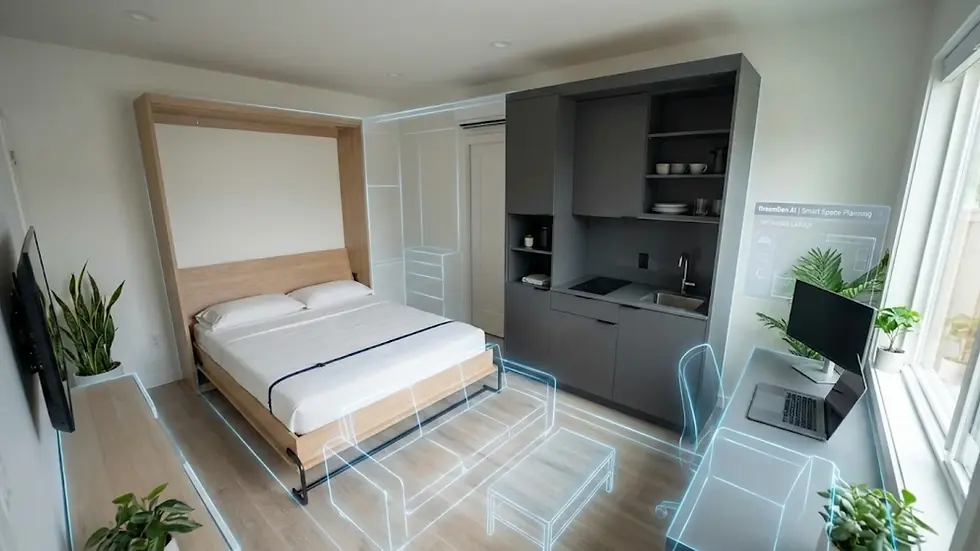
One of the greatest challenges for homeowners is visualizing how a small backyard structure will actually feel. This is where DreamDen AI serves as a vital planning tool.
Visualize Before You Build: Upload photos of your proposed shell to experiment with styles—from "Icelandic Minimalist" to "Modern California."
Optimize Small Spaces: DreamDen AI helps test floor plans to ensure Murphy beds, kitchenettes, and workspaces coexist without feeling cramped.
Eliminate Guesswork: See how natural light interacts with your chosen interior colors throughout the day, preventing costly design errors before construction begins.
Conclusion: The New California Dream
Backyard living is undergoing a fundamental evolution. ADUs are no longer just a trend; they are a lifestyle shift that offers financial stability and family cohesion.
Think of your property as a smartphone. For years, you only used the "primary" functions. Building an ADU is like downloading a powerful new app: it doesn’t change the physical size of the device, but it fundamentally expands what it can do for you—turning a simple home into a multi-functional hub for work, family, and income.


Comments