
Build Your Own Backyard Putting Green

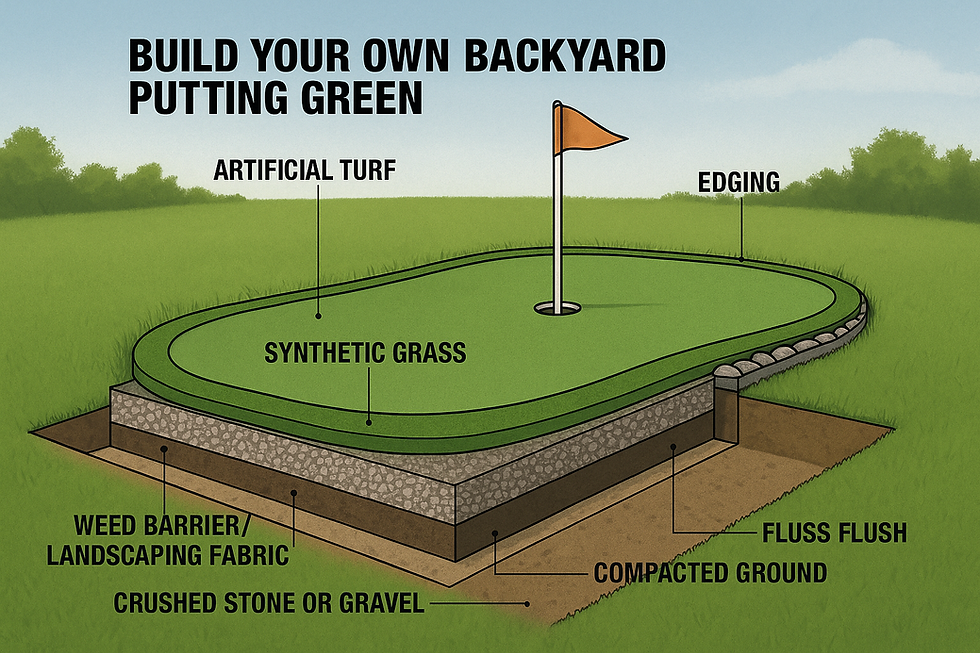
If you’ve been thinking about turning part of your backyard into a putting green, you’re not alone. Backyard putting greens — especially those built with artificial turf — are growing in popularity for good reason. They combine convenience, recreation, and long-term savings, while giving you a lawn that looks great year-round.
In this post, you’ll find:
Why a putting green is a smart addition to your home
Key design and planning considerations
A detailed step-by-step DIY installation guide
Pros and cons of artificial turf vs natural grass
Maintenance, costs, and long-term value
Realistic statistics and data to help you decide
Why Install a Backyard Putting Green?
Practice Anytime — Convenience at Home
If you’re a golf enthusiast, having a putting green at home removes major barriers: no scheduling tee times, no travel to a course, and no time lost going back and forth. A backyard green gives you the freedom to practice putting or chipping any time — morning, evening, or weekend.
The convenience alone turns your home into a place where you can sharpen your short game on your own schedule.
Low Maintenance and Long-Term Savings
One of the biggest appeals of an artificial putting green is how little maintenance it requires compared to a natural grass lawn. According to landscaping sources, homeowners typically spend around 150 hours per year maintaining a natural lawn (mowing, watering, fertilizing, weeding).
With synthetic turf, you avoid most of that work. No more mowing, no frequent watering, no fertilizers or pest control — just occasional brushing or cleaning.
Over a 10-year period, for example, maintaining a natural grass lawn can cost between $10,000 and $29,000 when factoring in watering, lawn treatments, mowing, and reseeding. AGL Grass Meanwhile, the cost of maintaining artificial turf over the same period typically stays between $5,000 and $16,000 — a significant saving for many homeowners.
Eco-Friendly & Water Conservation (Especially in Drought-Prone Areas)
In regions where water is scarce or watering restrictions are common, artificial turf helps cut water use dramatically. For instance, replacing a natural lawn with synthetic turf can save tens of thousands of gallons of water per year.
One estimate suggests that a yard of about 1,800 square feet — when converted from natural grass to artificial turf — can save roughly 99,000 gallons of water annually, which may constitute around 70% of a typical homeowner’s irrigation water bill. Western Resource Advocates
That level of water saving isn’t just good for your wallet; it’s also beneficial for local water conservation efforts and sustainable landscaping.
Customization, Aesthetic Appeal & Lifestyle Value
Artificial putting greens are highly customizable. You can design them to fit almost any space — small or large — and tailor the layout with features like gentle slopes, multiple holes, fringe areas, chipping zones, or even curved shapes.
Beyond function, they add curb appeal. A well-mounted, manicured green can elevate the look and feel of your backyard, making it an attractive spot for relaxation, practice, or social time with friends and family.
What to Plan Before You Start
Before you pick up your shovel or order turf, a bit of planning will go a long way.
Choose the Right Location
Ground condition and drainage: Ideally, pick a spot with good drainage or slightly sloping ground. Poor drainage or low-lying spots can cause water pooling — bad for turf and playability.
Sunlight and shade: While turf doesn’t need sunlight to stay “alive,” too much shade can encourage moss or mildew on moist turf; too much direct sun (without drainage) may heat up the surface excessively.
Space and shape constraints: Whether you’ve got a narrow side yard or a larger open lawn, the shape of your green will be determined by available space. You might opt for a compact putting strip, a small circular green with a single hole, or a larger, multi-hole layout.
Accessibility and visibility: Think about how you’ll use the green — walkable paths, proximity to your house or patio, and how visible it will be for enjoyment or practice.
Size, Shape, and Features — What Do You Want?
Backyard greens don’t have to mimic a full golf course. Depending on your goals, you might choose:
A single “practice line” / putting strip: good for quick putts, short practice drills.
A compact green with 1–2 holes: works well in small yards but still offers a realistic putting experience.
A larger, more creative layout: multiple holes, gentle slopes, fringe or chipping zones — closer to the feel of an actual course.
Features to consider for a realistic feel: slight undulations, slope towards holes, fringe or rough-style turf zones, optional chipping or approach areas. Professionals installing putting greens often plan contours carefully so the green feels more like a real golf surface rather than just flat turf.
Material: Synthetic Turf vs. Natural Grass
You can build a putting green with real grass — but maintenance requirements, climate, and upkeep costs make that a serious commitment. Synthetic turf, on the other hand, offers a consistent surface, low maintenance, and durability. That’s why it’s become the preferred choice for backyard greens.
Still, synthetic turf isn’t perfect (more on that later). But for many homeowners, the tradeoffs lean toward turf because of convenience, water savings, and long-term value.
How to Build It: Step-by-Step DIY Guide
If you've done basic outdoor work before and don’t mind a little heavy lifting, building your own backyard putting green can be a rewarding project. Here's a general plan that works for many DIYers.
Step 1: Clear and Prepare the Site
Mark out the area where you want your green (stakes + string, spray-paint, chalk, etc.).
Remove existing lawn, rocks, topsoil — anything that may interfere with a flat, stable base.
Excavate enough soil so that once your layers are down, the final surface sits slightly above or flush with surrounding landscape (depending on design).
Step 2: Build the Base
A solid base is crucial for good drainage, turf stability, and smooth ball roll.
Spread a layer of crushed stone or gravel (often 2–4 inches, depending on soil and drainage) across the excavated area.
Use a plate compactor (or similar tool) to compress the base until it’s firm and level. Uneven base = uneven ball roll.
For even smoother finish, some builders add a thin layer of fine stone dust or sand on top of the gravel — this helps in leveling and provides a cushioning surface for turf.
A well-prepared base ensures that after rainfall or watering your green drains properly and doesn’t develop uneven spots as seasons pass. Synthetic Turf Northwest+1
Step 3: (Optional but Recommended) Weed Barrier / Landscaping Fabric
If weeds are a concern or you want to give your green added longevity, lay landscaping fabric over the compacted base. This helps prevent grass/weeds from pushing through your artificial turf, keeping the putting surface clean and neat for years.
Step 4: Lay the Turf
With the base ready:
Unroll your synthetic putting green turf carefully over the base.
If using multiple turf pieces, align them carefully — seams should be as flat and even as possible to avoid ball bounce, slow roll or turf shift.
Trim excess turf around the edges using a utility knife to make it fit neatly.
Use seam tape or adhesive (if required) to join multiple turf pieces securely. Flat seams are essential for consistent ball roll.
Fix the turf edges with landscape staples or garden pegs around the perimeter to prevent shifting or lifting over time.
Step 5: Install Cups / Holes & (If Needed) Infill
Before turf laying (or soon after), mark the hole locations.
Dig out or recess cup sleeves properly so that the top edge sits flush or slightly below the turf surface.
Cut the turf carefully around cup edges so the hole sits cleanly.
If your turf design requires infill (often sand or silica), spread it evenly and brush it into the turf fibers using a stiff broom. Infill adds weight, helps turf fibers stand upright, and improves putting performance.
Step 6: Edge & Finish — Make It Look Clean & Polished
Add edging material (bricks, stones, wood, or plastic borders) around the turf as needed — this gives a clean boundary and keeps turf from shifting.
Consider landscaping touches — a small fringe / “rough” zone around the green, decorative stones, stepping stones, lighting, or a seating area to enjoy the green. This makes your green not just functional, but a pleasant outdoor space.
Artificial Turf vs Natural Grass: Pros, Cons & Trade-offs
Using synthetic turf for a putting green brings clear advantages — but it’s not a perfect substitute for natural grass. It’s worth being honest about both sides before you commit.
✅ Pros of Artificial Turf
Low maintenance: No mowing, watering, fertilizing, or weeding. Just occasional cleaning.
Water savings: A synthetic green eliminates the need for regular irrigation, translating into substantial water savings — beneficial in drought-prone areas or places with strict water restrictions.
Durability and consistent performance: Well-installed turf resists wear and tear from frequent use, foot traffic, or weather. It keeps a uniform look and playing surface year-round.
Customization and flexibility: You can build the green to fit almost any backyard shape or size — small strips, single-hole patches, multi-hole greens, even creative curves or chipping zones.
Time savings and lifestyle value: You save countless hours on lawn care. That time can go toward practicing your game, relaxing, entertaining, or spending time with family — not yard work.
⚠️ Trade-offs & Cons of Artificial Turf
Upfront cost is higher: Installing synthetic turf (especially a proper putting green base + turf + drainage + cups) costs more initially than planting grass.
Surface heat and environmental considerations: Artificial turf can get much hotter than natural grass under direct sun. In one analysis, turf fields were measured to be 182% hotter than comparable natural grass fields under midday conditions — affecting comfort and safety. ResearchGate+1
Environmental trade-offs: While turf saves water and reduces the need for chemicals, it has its own environmental impacts: plastic production, limited permeability (affecting runoff and groundwater recharge), microplastic pollution, and limited end-of-life recyclability.
Surface feel difference: Synthetic turf often doesn’t feel exactly like real grass underfoot. And while modern turf can approximate the feel and ball roll of a real green, there may still be subtle differences in bounce or “green speed.”
Drainage and installation quality matter a lot: A poorly planned base or bad drainage can lead to water pooling, turf shifting, or uneven putting surface. Proper base construction is essential — if you cut corners, the green may not perform well.
Cost, Maintenance & Long-Term Value: What the Numbers Show
Putting your own green in the backyard is not just about lifestyle — it’s also an investment. Here’s how the costs and savings stack up over time.
Maintenance Cost Comparison: Natural Grass vs Artificial Turf
Category / Time Period | Natural Grass Lawn (10 years) | Artificial Turf Lawn (10 years) |
Watering, irrigation, water bill | Significant (varies by region; can be $300–$1,000 per year) | Zero (or minimal, only occasional rinsing) |
Lawn treatments (fertilizer, weed control, pesticides) | $200–$500 per year | $0–negligible |
Mowing / landscaping services | $300–$800 per year | None |
Resodding / reseeding (every few years) | $1,000–$3,000 per event (depending on yard size) | Not needed |
Total 10-year cost (approx.) | $10,000–$29,000+ | $5,000–$16,000 |
Even if the initial installation for artificial turf is higher, over a decade you may end up saving thousands in upkeep, water, and lawn care expenses — a strong incentive if you value convenience or live in a water-sensitive area.
Water Savings — What They Look Like in Reality
Replacing natural grass with synthetic turf isn’t just about reducing maintenance — it can also make a big difference in water usage.
One source estimates that a turf lawn of 1,800 square feet can save about 99,000 gallons of water per year, roughly equal to 70% of a typical homeowner’s water bill on irrigation.
Other estimates suggest that replacing 1,000 sq. ft. of grass lawn with artificial turf may save over 50,000 gallons of water each year.
Over a 10–20 year lifespan of a turf installation, water savings could cumulatively reach 500,000–1,000,000 gallons, depending on yard size and watering frequency.
This makes synthetic putting greens (or turf lawns) particularly attractive in regions where water is expensive, scarce, or regulated.
Long-Term Durability & Lifespan
Many artificial turf installations are designed to last 10–15 years, sometimes even longer with quality materials and proper maintenance.
During that time, you benefit from:
A consistently green, manicured appearance regardless of season or weather
A stable, flat putting surface that doesn’t need constant care
Lower long-term costs and reduced time spent on lawn maintenance
Potential Drawbacks & What to Watch Out For
Heat and Surface Temperature
One notable downside of artificial turf — especially in sunny, hot climates — is surface heat. Synthetic turf can get significantly hotter than natural grass under direct sunlight. In one study, a turf surface was measured to be 182% hotter than a natural grass field during midday readings.
This heat can make the green uncomfortable to walk or practice on, especially in warm weather. In some situations, people even lightly water turf before use to cool it — though that undermines some water-saving benefits.
If you live in a hot or sunny region (or experience long, hot summers), this is a serious factor to consider — perhaps even opting for partial shade, small-scale installation, or a hybrid design where turf is balanced with natural landscaping.
Environmental Impact & End-of-Life Issues
While artificial turf saves water and cuts chemical use, it isn’t perfect from an environmental standpoint. Some concerns and trade-offs include:
Synthetic turf is made of plastic (typically polyethylene, polypropylene, or nylon), which means manufacturing, transport, and eventual disposal have a carbon and environmental footprint.
Artificial turf often has limited permeability compared to natural grass. That can interfere with groundwater recharge and increase stormwater runoff — potentially a problem in areas prone to flooding or heavy rainfall.
Microplastic pollution and end-of-life disposal are also concerns. Many turf systems end up in landfills; recycling options are limited in many places.
If environmental sustainability is a major priority for you, these trade-offs deserve serious consideration.
Surface Feel and Authenticity
For many golfers, natural grass has a certain “feel” — underfoot softness, subtle variation in ball roll, natural turf resistance. Artificial turf may approximate that, but often it won’t feel identical.
For a simple home putting green or practice patch, that difference is usually acceptable — but if you’re training seriously for course golf, you may want to mix real-grass practice with your backyard turf.
Importance of Proper Installation
A backyard putting green is only as good as its base and installation. A poorly prepared base (bad compaction, poor drainage, uneven grading) can lead to a turf that shifts, subsides, or drains badly — ruining your green’s playability and aesthetic.
If you aren’t comfortable doing that groundwork yourself, professional installation or careful DIY with proper materials and tools is highly recommended.
Maintenance & Care — What You’ll Need to Do (and What You Will Avoid)
One of the biggest advantages of an artificial turf putting green is how little maintenance it needs. But “low maintenance” doesn’t mean “no maintenance.” Here’s a realistic look at what you’ll need to do:
Regular cleaning: Remove leaves, twigs, pet waste, dust and debris with a leaf blower, soft rake, or garden broom. This keeps the turf clean and prevents buildup.
Occasional brushing or sweeping: Over time, turf fibers may flatten — brushing helps them stand upright again, maintaining a realistic look and better ball roll.
Check and maintain drainage: After heavy rainfall or irrigation (if used intermittently), check that water drains well. Poor drainage can lead to soggy spots or turf degradation over time.
Edge and boundary upkeep: If you use border stones, bricks, or edging, inspect them periodically to ensure they remain in place and don’t shift.
Minimal water use (if needed): Some homeowners lightly rinse turf occasionally to clean dust or cool the surface — but that should be rare if you want to preserve water savings.
Compared to traditional lawn upkeep — mowing, watering, fertilizing, reseeding — maintenance for an artificial green is minimal and inexpensive.
Is DIY the Right Choice — or Should You Hire a Pro?
DIY backyard putting green installation can be deeply satisfying and cost-effective — but it does require careful work. Here’s how to think about whether to go DIY or hire professionals.
When DIY Makes Sense
You have basic landscaping or DIY skills and experience.
You’re comfortable doing ground work: leveling, excavating, compacting, laying base rock.
You have the tools needed (shovel, compactor, utility knife, broom, etc.).
You’re willing to commit time and effort to get the base right — because base = foundation of performance and longevity.
Your green will be small-to-medium in size (so the amount of work remains manageable).
When to Consider Professional Installation
Your yard has complicated grading, drainage issues, or heavy clay/dense soil.
You want a larger or more complex green (multiple holes, slopes, custom shape).
You don’t have the time or physical ability to do heavy labor.
You want the highest probability of perfect base compaction, drainage, turf alignment, and longevity.
You care about a polished finish and minimal risk of future problems (shifting turf, subsidence, poor drainage).
A well-done professional install can cost more upfront — but it significantly reduces the risk of problems down the line.
Sample Scenario: What It Costs and Saves — A Hypothetical
Let’s say you have a small backyard in a region where water is moderately expensive. You decide to build a 1,800 sq ft backyard putting green using artificial turf.
Natural grass alternative
Watering + irrigation (annual): high — say $500–$1,000/year depending on rainfall & municipal water price.
Lawn maintenance: mowing, fertilizing, weed control — $500–$1,000/year combined.
Over 10 years: $10,000–$25,000 total, plus ongoing time and effort.
Artificial turf green
Upfront cost (base prep, turf, installation): higher — but let’s assume $6,000–$10,000 (depending on materials and labor or DIY costs).
Annual maintenance: minimal — occasional brushing/cleaning — maybe $0–$50/year.
Water savings: potentially ~99,000 gallons per year versus natural lawn (if previously used that much) — major savings on water bills.
Over 10 years: total spend might be $6,500–$11,000 — less than half of the natural lawn option, plus major time savings and less labor.
Over longer spans (15–20 years), the savings — both monetary and in time — can be even more substantial.
Realistic Benefits: What Homeowners Actually Get
From combining the information above, here’s a realistic picture of what you, as a homeowner, can expect if you build a backyard putting green with artificial turf:
A low-maintenance, evergreen lawn that looks good in all seasons.
Huge water savings, especially in dry or water-restricted climates — tens of thousands of gallons per year.
Time saved: no more mowing, no fertilizing, no regular watering, no weeding — perhaps 100+ hours per year saved.
A consistent putting surface for practice, short-game drills, or casual fun.
Increased property value: a well-designed green can make your home more attractive, offering leisure and lifestyle value beyond simple landscaping.
Long-term cost savings: over a 10–20 year horizon, you may spend significantly less compared to maintaining a traditional grass lawn, especially when accounting for water, lawn care, and maintenance.
What About Downsides? Let’s Lay Them Out Honestly
No decision is perfect — here are the potential drawbacks to be aware of:
The initial investment is higher than planting natural grass.
In hot climates, turf can get uncomfortably warm — making usage less pleasant mid-day or in summers.
Over the long run, environmental costs (plastics, disposal, microplastics, reduced groundwater recharge) may offset some of the water or maintenance benefits, depending on your values.
The feel and authenticity of synthetic turf remains slightly different from natural grass — for purists, that may matter.
If you don’t install or prepare the base properly, the green may shift, drain poorly, or degrade sooner than expected.
Tips & Best Practices Before You Start
If you decide to build a backyard putting green, here are some recommendations to increase chances of success:
Spend time on base preparation — don’t rush the compacting and leveling. A solid base means stable turf and better ball roll.
Plan drainage carefully, especially if your area gets heavy rain. Even if turf doesn’t absorb water, the base must allow water to flow away.
Choose good-quality turf meant for putting greens. Turf meant for general landscaping may not give the right “roll” or feel.
Design with use in mind — if this green is for casual practice or family use, a small or medium green may suffice. If you want serious short-game drills, consider size, slope, and hole placement carefully.
Account for local climate — if you live in a hot, sunny region, plan for partial shade, or consider materials or installation techniques that mitigate heat.
Allow for maintenance — even though turf is low maintenance, occasional cleaning, brushing, and inspection helps longevity.
Final Thoughts: Is a Backyard Putting Green Worth It?
For many homeowners, a backyard putting green — especially one built with synthetic turf — offers a balanced mix of recreation, convenience, savings, and lifestyle enhancement.
If you love golf, value low maintenance, want to reduce water usage, and don’t mind a somewhat higher upfront cost, a synthetic putting green can be a worthwhile investment that pays off over time.
That said, it’s not a perfect solution. Heat, environmental impacts, and the difference from natural grass are real considerations. But when done right — with careful planning, good turf, and a solid base — you end up with a versatile, evergreen piece of yard that’s great for putting practice, outdoor fun, and simple relaxation.
If you’re ready, go ahead and plan your green. With the right approach, you—and maybe your friends or family—could be enjoying a hole-in-one in your own backyard within weeks.


Comments