
Which Way Should a Ceiling Fan Turn in Summer? Direction Guide & Energy Tips

Updated: Apr 4
There is a specific kind of magic in a summer breeze. Whether it is the rustle of leaves outside your window or the gentle hum of a ceiling fan overhead, that movement of air is often the only thing standing between a relaxing afternoon and a sweltering, uncomfortable mess. We have all been there: the sun is beating down, the humidity is climbing, and you are desperately trying to find a way to stay cool without sending your electricity bill into the stratosphere. You look up at your ceiling fan, spinning away, and a thought crosses your mind: "Is this actually doing anything, or is it just moving hot air around?"
It is a fair question. Most of us treat our ceiling fans like "set it and forget it" appliances. We pull the chain or hit the remote, and as long as the blades are moving, we assume the job is being done. However, there is a hidden setting on almost every ceiling fan that can make the difference between a mediocre breeze and a powerful cooling effect. It all comes down to the direction of the spin. Understanding which way your ceiling fan should turn in the summer is one of the simplest, most effective home maintenance "hacks" you can master. It is not just about comfort; it is about efficiency, energy savings, and making your home a sanctuary during the hottest months of the year.
The Direct Answer: Which Way Should a Ceiling Fan Turn in Summer?

If you are looking for the quick answer so you can get back to your day, here it is: In the summer, your ceiling fan should turn counterclockwise.
When you stand directly under the fan and look up at the blades, they should be moving from the right, across the top, and down to the left. This specific rotation is designed to work with the angle of the fan blades to push air directly downward in a concentrated column. This creates what experts call a "downdraft."
Why does this matter? It is all about the "wind-chill effect." While the fan does not actually lower the temperature of the room (more on that later), the downdraft it creates helps moisture evaporate from your skin more quickly. This evaporation process carries heat away from your body, making you feel significantly cooler—often by as much as 6 to 8 degrees Fahrenheit. It is the same reason why a breeze feels so refreshing on a hot day at the beach, even if the air temperature remains the same.
Feature | Summer Setting | Winter Setting |
Direction | Counterclockwise | Clockwise |
Airflow Pattern | Downdraft (Directly Down) | Updraft (Pulls Air Up) |
Fan Speed | High or Medium | Low |
Primary Goal | Create a cooling breeze | Circulate trapped warm air |
Effect on People | Feels 6-8°F cooler | Feels warmer/more consistent |
Setting your fan to spin counterclockwise is the "Summer Setting" for a reason. It is the most efficient way to use the appliance to combat heat. If your fan is spinning clockwise right now, it is actually pulling air up toward the ceiling, which is great for the winter but counterproductive when you are trying to beat the July heat.
If you need to redesign your floor ceiling, get in touch with our experts.
Detailed Explanation: Why Fan Direction Matters

To truly appreciate why that counterclockwise spin is so important, we need to look at the physics of how a ceiling fan interacts with the air in your room. It is easy to think of a fan as a "cooling machine," but in reality, it is an "air mover." The distinction is crucial because it changes how you should use the device to get the best results.
The Science of the Downdraft
Ceiling fan blades are not flat; they are set at a specific angle, known as the "pitch." Because of this pitch, the direction in which the blades rotate determines whether the air is pushed down or pulled up. When the fan rotates counterclockwise, the leading edge of the blade (the part that "cuts" the air) is angled in a way that forces the air underneath it downward.
This creates a column of moving air directly beneath the fan. As this air hits you, it speeds up the natural evaporation of sweat from your skin. Since evaporation is an endothermic process—meaning it absorbs heat—it literally pulls heat away from your body. This is the "wind-chill effect" in action. The room temperature hasn't changed, but your perception of the temperature has shifted dramatically.
Fans Cool People, Not Rooms
One of the most common misconceptions about ceiling fans is that they work like air conditioners. An air conditioner uses a refrigeration cycle to remove heat and humidity from the air, physically lowering the room's temperature. A ceiling fan does none of that. If you leave a fan running in an empty room for three hours, the temperature in that room will stay exactly the same (or might even rise slightly due to the heat generated by the fan's motor).
This is why the direction matters so much. If the fan is spinning the wrong way, it isn't creating that direct downdraft on your skin. Instead, it is creating an "updraft," pulling the cool air from the floor up toward the ceiling and pushing the warm air trapped at the ceiling down the walls. While this is perfect for the winter when you want to circulate heat, it does very little to provide that immediate "chilled" feeling you need in the summer.
Impact on Humidity and Comfort
In many parts of the world, summer heat is made worse by high humidity. When the air is saturated with moisture, your body's natural cooling mechanism—sweating—becomes less effective because the sweat cannot evaporate into the already-moist air. By setting your fan to the correct summer direction and running it at a higher speed, you are manually forcing air over your skin, which aids in evaporation even in humid conditions. This can make a "sticky" room feel much more breathable and comfortable.
Clockwise vs. Counterclockwise: A Side-by-Side Comparison

Understanding the difference between the two directions is key to year-round home comfort. While our focus today is on the summer, knowing the "why" behind the winter setting helps reinforce the importance of the summer rotation.
The Summer Rotation (Counterclockwise)
As we have established, the counterclockwise rotation is all about the downdraft. In this mode, you generally want the fan to run at a medium to high speed. The faster the blades spin, the stronger the downdraft, and the more significant the cooling effect on your skin. This is the setting you should use from the first warm days of spring until the crisp air of autumn arrives.
The Winter Rotation (Clockwise)
When the seasons change and you turn on your heater, you should head to your fan and flip the switch. In the winter, your fan should rotate clockwise at a low speed.
Heat naturally rises, meaning the warmest air in your home is often trapped uselessly against the ceiling while you shiver on the couch. By spinning clockwise, the fan creates an updraft.
It pulls the cool air from the floor up toward the center of the fan, which in turn pushes the warm air at the ceiling out toward the walls and back down into the living space. By running it on low, you ensure that you are circulating the heat without creating a strong, chilly breeze that would make you feel colder.
When to Make the Switch
A good rule of thumb is to change your fan direction whenever you change your clocks for Daylight Saving Time, or more practically, whenever you switch your HVAC system from "Cool" to "Heat." If you find yourself reaching for a sweater inside, it is probably time to go clockwise. If you are reaching for a glass of ice water, make sure you are spinning counterclockwise.
Step-by-Step Guide: How to Check and Change Your Fan Direction
Now that you know why it matters, let's make sure your fan is actually doing what it is supposed to do. Checking and changing the direction is usually a thirty-second task, but the method varies depending on the age and model of your fan.
Method 1: The Visual Check

This is the easiest way to tell which way your fan is spinning.
1.Turn the fan on to its medium or high setting.
2.Stand directly under the fan blades.
3.Look up and watch the rotation.
4.If the blades are moving from the right, across the top, and to the left (counterclockwise), you are all set for summer.
5.If they are moving from the left, across the top, and to the right (clockwise), you need to change the setting.
Pro Tip: If the fan is moving too fast to see the direction, turn it off and watch the blades as they slow down. The direction will become clear as it comes to a halt.
Method 2: The "Breeze Test"
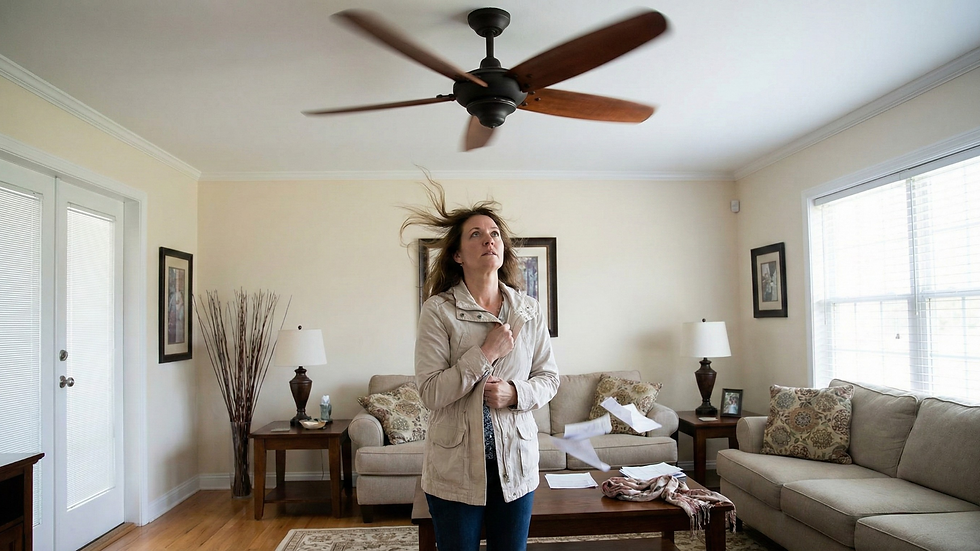
If you are still unsure, let your body be the judge.
1.Stand directly under the fan while it is running on high.
2.Do you feel a strong, immediate breeze blowing directly down on you? If yes, it is in summer mode.
3.If you feel only a very slight movement of air or if the breeze seems to be coming from the
sides of the room rather than directly above, it is likely in winter mode.
How to Change the Direction

Once you have identified that your fan needs a change, here is how to do it:
1. The Manual Toggle Switch Most traditional ceiling fans have a small slide switch located
on the motor housing (the metal part just below the blades or above the light fixture).
•Turn the fan off and wait for it to stop completely.
•Use a ladder or a sturdy stool to reach the motor housing.
•Flip the switch to the opposite position.
•Turn the fan back on and verify the new direction.
2. The Remote Control your fan came with a remote, look for a button labeled "Reverse," "Summer/Winter," or an icon showing two arrows in a circle.
•With the fan running, press and hold the reverse button.
•Some fans will slow down, stop, and then automatically start spinning in the other direction.
3. The Pull Chain On some older or specific models, the direction is controlled by a pull chain. This is less common but usually involves a specific sequence of pulls or a separate chain dedicated to the motor direction. Check your manual if you see multiple chains and no toggle switch.
4. Smart Fan have a modern "Smart Fan" connected to your Wi-Fi, you can likely change the direction through an app on your smartphone or via voice command (e.g., "Alexa, set the living room fan to summer mode"). This is the ultimate convenience, as you don't even have to get up from the couch.
Energy Saving Benefits: Cooling Your Home Without Breaking the Bank
In an era where energy costs seem to be constantly on the rise, finding ways to stay cool without relying solely on your air conditioner is more than just a matter of comfort—it is a financial necessity. This is where the humble ceiling fan, when used correctly, becomes your most valuable ally. The energy-saving potential of a properly directed fan is often underestimated, but the numbers tell a compelling story.
The "4-Degree Rule"
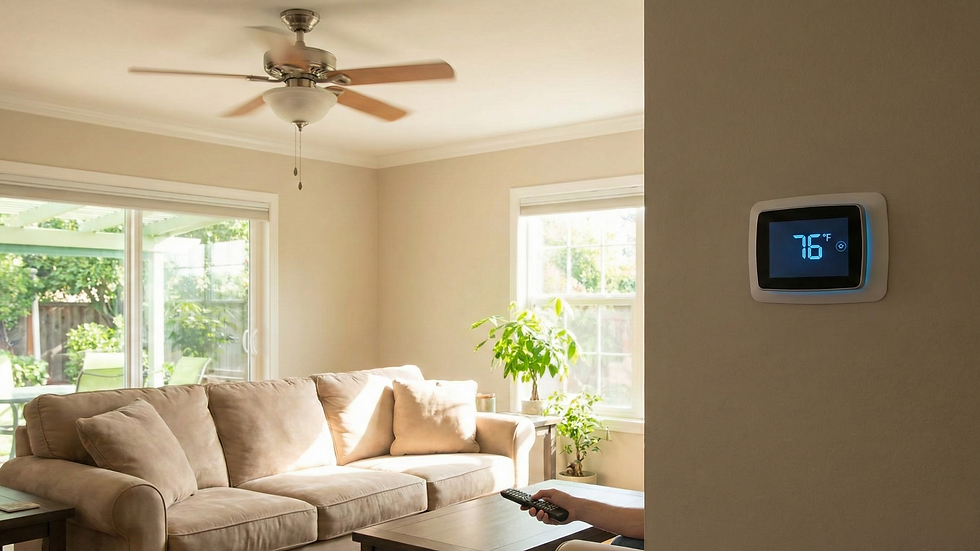
The most significant way a ceiling fan saves you money is by allowing you to raise the thermostat setting on your air conditioner. According to the U.S. Department of Energy, if you use a ceiling fan to create a cooling breeze, you can raise your thermostat by about 4 degrees Fahrenheit without any reduction in comfort.
For example, if you usually keep your AC at 72°F, you can set it to 76°F while the fan is running. This might seem like a small change, but it has a massive impact on your utility bill. In most homes, every degree you raise the thermostat in the summer can save you between 3% and 5% on your cooling costs. By raising it 4 degrees, you could be looking at a 12% to 20% reduction in your monthly AC expenses.
Wattage Comparison: Fans vs. AC

To understand why this works so well, we have to look at the power consumption of these devices. A typical central air conditioning unit uses between 2,000 and 5,000 watts of electricity per hour. In contrast, a standard ceiling fan uses only about 50 to 100 watts, even on its high setting.
"Running a ceiling fan for an entire day often costs less than running your central AC for just one hour."
By shifting some of the "cooling load" from your AC to your fans, you are replacing a high-energy process with a low-energy one. It is one of the most effective ways to go green and save green at the same time.
Environmental Impact

Beyond the personal financial benefits, using fans more and AC less is better for the planet. Air conditioners are among the largest consumers of residential electricity, and reducing their usage lowers the demand on the power grid. This, in turn, reduces the carbon emissions associated with electricity generation. It is a simple step that contributes to a more sustainable lifestyle without requiring a major sacrifice in quality of life.
Deep Dive: The Economics of Ceiling Fans vs. Air Conditioning

To truly appreciate the value of your ceiling fan, it helps to look at the long-term financial impact. While we often think about our monthly utility bills, the cumulative savings over a decade can be staggering. Consider a typical household in a warm climate. If that household relies solely on central air conditioning for four months of the year, their cooling costs could easily exceed $1,000 per season. By integrating ceiling fans and raising the thermostat by just 4 degrees, that same household could save $150 to $200 every single year. Over ten years, that is $2,000—enough to replace every fan in the house with a high-end, energy-efficient model several times over.
Furthermore, the "wear and tear" factor is a hidden saving. Air conditioning systems are complex and expensive to repair. The more they run, the faster their components—like the compressor and fan motor—reach the end of their lifespan. By using ceiling fans to reduce the load on your AC, you are effectively extending the life of your most expensive home appliance. A ceiling fan motor is a simple, robust piece of machinery that can last for decades with minimal maintenance. In contrast, an overworked AC unit might require a multi-thousand-dollar replacement years earlier than expected.
Room-Wise Fan Direction & Placement Tips
While the general rule of "counterclockwise for summer" applies everywhere, the way you use your fans can vary depending on the specific room and its layout. Optimizing your fan usage room-by-room ensures that every corner of your home remains a cool retreat.
The Bedroom: Prioritizing Sleep Quality

Sleep is often the first thing to suffer during a heatwave. A bedroom ceiling fan should be positioned directly over the bed to provide maximum airflow during the night.
•Setting: Use a medium speed for a consistent breeze that isn't too noisy.
•Benefit: The white noise of the fan can also help drown out street sounds, leading to a deeper, more restful sleep.
•Tip: If you have a guest room that isn't in use, keep the fan off to save energy. Remember: fans cool people, not rooms.
The Living Room: Sizing for the Space

The living room is often the largest area in the home, requiring a fan that can move a significant volume of air.
•Sizing: For rooms larger than 225 square feet, look for a fan with a blade span of at least 52 to 60 inches.
•Placement: If your living room has a "great room" layout with high ceilings, the fan's placement becomes even more critical.
•High Ceilings: If your ceiling is higher than 9 feet, a standard flush-mount fan won't be effective. You will need a downrod to bring the fan down to the optimal height of 8 or 9 feet from the floor. This ensures the downdraft actually reaches the people sitting on the furniture below.
The Kitchen: Managing Heat and Odors

The kitchen is naturally one of the warmest rooms in the house due to cooking appliances.
•Benefit: A ceiling fan helps dissipate the heat from the stove and oven quickly.
•Air Quality: It also helps circulate air to clear out cooking odors and smoke.
•Maintenance: Because of kitchen grease, fan blades in this room tend to get dirty faster. Make sure to wipe them down monthly to maintain efficiency.
Outdoor Spaces: Patios and Porches

Outdoor ceiling fans are a game-changer for summer entertaining.
•Safety First: Ensure your outdoor fan is UL-rated for "wet" or "damp" locations. Standard indoor fans will warp or short-circuit if exposed to humidity or rain.
•Bug Control: A high-speed counterclockwise spin creates a downdraft that is too strong for many small flying insects, like mosquitoes and gnats, to fly through. It is a natural, chemical-free way to keep your patio bug-free.
Advanced Placement: Beyond the Basics
While we have discussed the main rooms, there are other areas where a ceiling fan can make a surprising difference.
The Home Office: Boosting Productivity

With more people working from home than ever before, the home office has become a critical space for comfort. Heat is a known productivity killer; when you are uncomfortably warm, your focus drifts, and your energy levels dip. A ceiling fan in the office provides a gentle, consistent breeze that keeps you alert without the distracting noise of a portable fan or the dry air of an AC vent blowing directly on your face.
•Tip: Position the fan so it isn't directly over your desk if you work with a lot of physical paperwork, as the downdraft can be strong enough to blow pages around. A slightly offset placement still provides the cooling effect without the "paper storm."
The Laundry Room: Managing Humidity

Laundry rooms can become incredibly humid and warm, especially when the dryer is running. A small ceiling fan can help circulate that moist air, preventing the room from feeling like a sauna and helping to prevent the growth of mold or mildew in damp corners. It also helps clothes that are air-drying to dry significantly faster by increasing the rate of evaporation.
The Garage or Workshop: A Summer Necessity
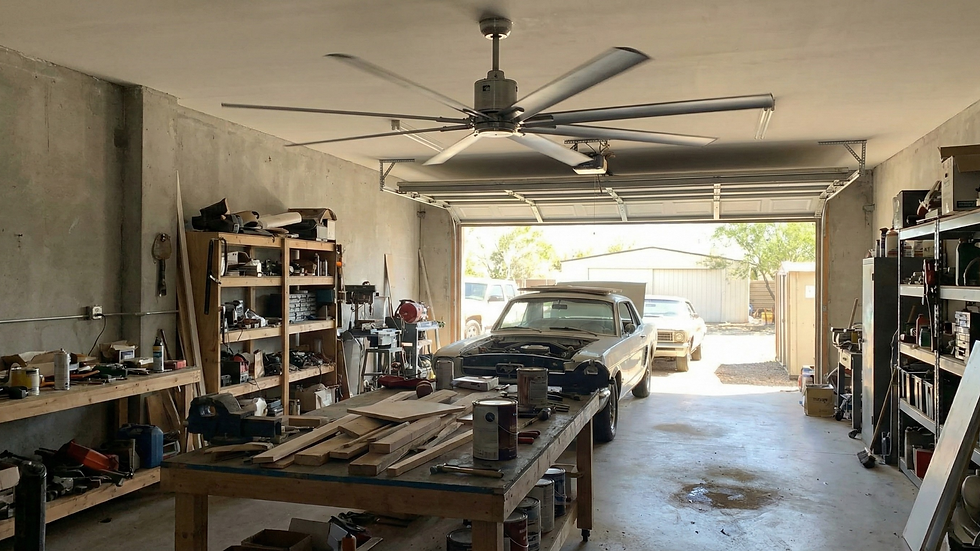
For those who enjoy DIY projects or spend time in the garage, summer can be a brutal time to work. A heavy-duty, industrial-style ceiling fan can make a world of difference. These fans often have a higher "CFM" (Cubic Feet per Minute) rating, meaning they move a much larger volume of air. In a garage setting, this doesn't just keep you cool; it also helps to dissipate fumes from paints, stains, or automotive fluids, making the space safer and more pleasant to work in.
Common Mistakes to Avoid

Even with the best intentions, it is easy to fall into habits that negate the benefits of your ceiling fan. Here are the most common pitfalls to watch out for:
1. The "Empty Room" Syndrome
This is the number one mistake people make. Because we associate the breeze with "cooling," we often leave fans running in empty rooms, thinking we are keeping the room cool for later. As we discussed, fans don't lower the temperature; they only cool the people in the room. Leaving a fan on in an empty room is simply wasting electricity. Always turn the fan off when you leave the room.
2. Neglecting the Blades
Dust is the enemy of airflow. Over time, a thick layer of dust can build up on the leading edge of your fan blades. This changes the aerodynamics of the blade, making it less effective at pushing air down. It can also cause the fan to become unbalanced and wobble. A quick wipe with a damp cloth or a dedicated fan duster once a month will keep your fan running smoothly and quietly.
3. Using the Wrong Size
A fan that is too small for a room will have to run on high speed constantly to make a difference, which can be noisy and inefficient. Conversely, a fan that is too large can create an uncomfortably strong wind in a small space. Always measure your room before purchasing a new fan to ensure you get the right blade span for the square footage.
4. Forgetting the Seasonal Switch
It is easy to forget to reverse the direction when winter rolls around, or to forget to switch it back to counterclockwise when summer hits. Make it a part of your seasonal home maintenance checklist. If you feel a chill in the winter or aren't feeling cool enough in the summer, the direction switch is the first thing you should check.
Conclusion: Your Path to a Cooler, Greener Summer
As we have seen, the humble ceiling fan is far more than just a decorative fixture. It is a powerful tool for home comfort and energy efficiency—provided you know how to use it. By simply ensuring your fan is spinning counterclockwise during the summer months, you can transform your living space into a much cooler environment without the heavy financial burden of constant air conditioning.
Remember the key takeaways:
•Counterclockwise is for summer: It creates the essential downdraft that makes you feel 6-8 degrees cooler.
•Fans cool people, not rooms: Turn them off when you leave to maximize your savings.
•Raise the thermostat: Use your fan as a partner to your AC, allowing you to set the temperature higher and save up to 15% on your bills.
•Maintenance matters: Keep those blades clean and ensure you have the right size and height for your space.
Taking five minutes today to check the direction of the fans in your home is one of the easiest ways to improve your quality of life this summer. It is a small change that yields big results—lower bills, a smaller carbon footprint, and, most importantly, a home that feels like a true "Dream Den" even when the mercury is rising.
So, go ahead—grab a stool, look up, and make sure your home is ready for the heat. Your wallet, the planet, and your comfort will thank you.
Final Thoughts on Home Comfort
At the end of the day, home comfort is about more than just a number on a thermostat. It is about how your space feels. It is about being able to cook a meal without breaking a sweat, sleeping through the night without tossing and turning, and enjoying your home without dreading the next utility bill. The simple act of checking your ceiling fan direction is a small but powerful way to take control of your environment. It is a testament to the idea that sometimes the most effective solutions aren't the most high-tech ones—they are the ones that work with the simple laws of physics to make our lives just a little bit better.
FAQ Section: Your Ceiling Fan Questions Answered
We have covered a lot of ground, but you might still have a few specific questions. Here are the most common queries we hear from homeowners:
Q: Does fan direction matter if I have vaulted or very high ceilings?
A: Yes, absolutely. In fact, it matters even more. In a room with high ceilings, the "stack effect" causes a lot of heat to be trapped far above your head. In the summer, you need a downrod to bring the fan close enough to the living area (8-9 feet) so that the counterclockwise downdraft can actually reach you. Without a downrod, the air will just circulate in the upper half of the room, leaving you hot on the floor.
Q: Can I leave my ceiling fan on 24/7?
A: Technically, yes, most modern fan motors are designed for continuous use. However, you shouldn't leave it on if you aren't in the room. It doesn't provide any benefit to an empty room and will only increase your electricity bill and wear out the motor faster.
Q: Why is my fan wobbling after I changed the direction?
A: Changing the direction shouldn't cause a wobble, but the act of reaching up to flip the switch might have slightly bumped a blade out of alignment. Check to see if any of the screws connecting the blades to the motor are loose. If the wobble persists, you may need a simple "fan balancing kit," which consists of small weights you can clip to the blades.
Q: What if my fan doesn't have a reverse switch?
A: While rare, some very old or very basic models may not have a reverse function. If you can't find a switch on the motor, a button on the remote, or a setting in the app, your fan might be a "single-direction" model. In this case, it is almost certainly set to the summer (counterclockwise) direction by default, as that is the most common use for a fan.
Q: Is it better to run the fan on low, medium, or high in the summer?
A: For maximum cooling, high speed is best as it creates the strongest downdraft. However, if the noise is distracting or the wind is too strong (e.g., blowing papers off a desk), medium is a great compromise. The key is that you feel the air moving over your skin.


Comments