
Front Door Ideas That Transform Your Home's Curb Appeal in 2026

Your front door is more than just an entry point—it's the first handshake your home offers to visitors, neighbors, and potential buyers. This single architectural element has the power to elevate your entire home's curb appeal, express your personal style, and even increase property value by up to 4% according to real estate studies.
Whether you're preparing to sell, refreshing your home's exterior, or simply craving a change, your front door represents one of the most impactful and cost-effective updates you can make. The right combination of color, material, hardware, and styling can completely transform how your home looks and feels from the street.
Here, you'll discover everything you need to know about front door design—from bold color choices and material selection to hardware details and complete style breakdowns. We'll explore classic wooden doors, modern minimalist designs, farmhouse charmers, and everything in between. You'll learn which materials perform best in different climates, how to avoid common design mistakes, and practical tips for creating a welcoming entryway that reflects your unique taste.
Plus, you'll see how DreamDen.ai can help you visualize these transformations before making any commitments, letting you experiment with colors, styles, and hardware combinations using your own home's photo.
What Makes a Great Front Door Design?

Before diving into specific ideas, it's essential to understand the fundamental principles that separate an ordinary entrance from an extraordinary one.
Color Impact and Visual Weight - Your front door color should create intentional contrast or harmony with your home's exterior. A well-chosen color draws the eye, creates a focal point, and establishes an emotional tone. The color should be bold enough to stand out but
cohesive enough to feel integrated with your home's overall palette.
Material Durability and Climate Suitability - The best front door material depends heavily on your local weather conditions. Wood offers timeless beauty but requires maintenance in humid climates. Fiberglass provides versatility and insulation. Steel delivers security and affordability. Your material choice affects not just aesthetics but long-term performance, energy efficiency, and maintenance requirements.
Architectural Cohesion - Your front door should feel like it belongs to your home's architectural style. A sleek modern door on a traditional colonial looks out of place, while a rustic farmhouse door complements cottage-style homes beautifully. Consider your home's era, proportions, roofline, and window styles when selecting door designs.
Lighting and Hardware Integration - The details matter enormously. Hardware finishes (brass, matte black, oil-rubbed bronze) should coordinate with other exterior fixtures. Outdoor lighting should illuminate your entrance functionally while adding ambiance. Sidelights and transom windows can flood your entryway with natural light while maintaining privacy.
Balance of Beauty and Function - A great front door protects your home from weather and intruders while making a style statement. It should open smoothly, seal properly, provide adequate insulation, and incorporate features like peepholes or smart technology. Never sacrifice security or weather resistance for aesthetics alone.
Top Front Door Ideas to Elevate Your Home
1. Bold & Vibrant Painted Doors

Nothing transforms curb appeal faster than a coat of bold, confident color. Vibrant front doors in jewel tones, saturated primaries, or unexpected hues create instant personality and make your home memorable.
Why It Works: A pop of color creates a focal point that draws the eye and makes even modest homes feel custom and intentional. Bold colors photograph beautifully and stand out in neighborhood streetscapes.
Best Home Styles: Works across nearly all architectural styles—traditional colonials, contemporary builds, craftsman bungalows, and mid-century ranches all benefit from strategic color.
Material Suggestions: Any paintable surface works, but smooth fiberglass and steel doors provide the best canvas for vibrant, even color application. Wood doors offer texture that adds depth to rich colors.
Color Pairings:
Bright red (#D72638) with crisp white trim and black hardware
Sunny yellow (#F4D03F) with gray siding and brushed nickel fixtures
Turquoise (#1ABC9C) with cream trim and bronze hardware
Coral (#FF6B6B) with white brick and matte black accents
Maintenance Tips: High-quality exterior paint with UV protection prevents fading. Repainting every 3-5 years maintains vibrancy. Clean regularly with mild soap to prevent dirt buildup that dulls color.
Cost Guidance: Professional painting runs $200-500 depending on prep work needed. DIY costs $50-150 for premium exterior paint and supplies.
We at DreamDen have best contractors and interior designers to suggest you best doors & windows and interior design at competitive price.
2. Classic Wooden Doors

Solid wood doors exude warmth, craftsmanship, and timeless elegance. The natural grain patterns, rich stains, and substantial feel create an unmistakable quality that synthetic materials struggle to replicate.
Why It Works: Wood communicates authenticity and permanence. Each door is unique, with grain patterns telling their own story. Wood doors age beautifully when properly maintained, developing character over decades.
Best Home Styles: Traditional homes, craftsman bungalows, colonial revivals, Tudor styles, and any architecture emphasizing natural materials and classic proportions.
Material Suggestions: Mahogany offers rich color and rot resistance. Oak provides durability and prominent grain. Cherry delivers sophisticated reddish tones. Alder and fir offer budget-friendly options with proper sealing.
Color Pairings: Natural wood stains in honey, chestnut, or espresso tones pair beautifully
with stone accents, brick facades, or neutral siding. Painted wood doors in deep navy, forest green, or charcoal create sophisticated contrast.
Maintenance Tips: Apply fresh sealant or exterior-grade varnish annually. Clean with wood-specific cleaners. Address scratches and dings promptly to prevent moisture penetration. Consider covered entries to extend wood life.
Cost Guidance: Solid wood doors range from $800-3,500 depending on species, size, and detailing. Installation adds $300-600.
3. Modern Minimalist Doors

Clean lines, flush surfaces, and minimal ornamentation define modern front doors. These designs emphasize geometry, quality materials, and subtle sophistication rather than decorative elements.
Why It Works: Minimalist doors create calm, uncluttered entries that let architectural forms speak. They feel current and timeless simultaneously, avoiding trendy details that date quickly.
Best Home Styles: Contemporary builds, mid-century modern homes, Scandinavian-inspired designs, and any architecture featuring clean lines and simple forms.
Material Suggestions: Smooth fiberglass in matte finishes, powder-coated steel, aluminum with thermal breaks, or sleek composite materials. Flush wood doors with concealed hinges offer organic warmth.
Color Pairings:
Matte black with concrete surrounds and stainless accents
Warm gray with natural wood siding and black window frames
Pure white with black trim for stark graphic contrast
Natural wood tones with glass inserts and minimal hardware
Maintenance Tips: Smooth surfaces show dirt easily—clean regularly with microfiber cloths. Touch up scratches in painted finishes promptly to maintain pristine appearance.
Cost Guidance: Quality modern doors range from $1,200-4,000. Custom sizing and specialized finishes increase costs. Sleek hardware adds $150-400.
4. Craftsman-Style Entry Doors

Characterized by distinctive geometric glass panels, substantial proportions, and handcrafted details, craftsman doors celebrate artisanal quality and honest materials.
Why It Works: Craftsman doors balance decorative interest with functional beauty. The signature divided-light windows provide natural light while maintaining privacy. Solid construction communicates quality and permanence.
Best Home Styles: Bungalows, arts and crafts homes, prairie-style houses, and contemporary builds seeking warmth and character.
Material Suggestions: Oak, mahogany, or fir in natural stains showcase wood grain. Fiberglass convincingly replicates wood texture at lower maintenance. Steel offers security in traditional styling.
Color Pairings: Rich wood stains in medium to dark tones pair with stone, brick, or earth-tone siding. Painted versions in deep green (#2C5F2D), barn red (#722F37), or classic brown maintain period authenticity.
Maintenance Tips: Wood versions need annual sealing. Clean glass panels with streak-free cleaners. Check weatherstripping around divided lights for energy efficiency.
Cost Guidance: Authentic craftsman doors run $1,500-3,500. Reproduction fiberglass versions cost $800-2,000. Custom beveled or art glass increases pricing significantly.
5. Glass Panel Doors

Incorporating glass—whether full-length sidelights, decorative transoms, or artful inserts—floods entryways with natural light while creating visual interest and elegance.
Why It Works: Glass creates connection between indoors and outdoors, makes small entryways feel larger, and allows you to see visitors before opening. Decorative glass adds artistry and privacy simultaneously.
Best Home Styles: Works across styles from traditional to contemporary. Full glass suits modern designs; divided lights complement traditional homes; art glass enhances period architecture.
Material Suggestions: Tempered safety glass for security. Low-E coatings improve energy efficiency. Textured, frosted, or stained glass provides privacy. Insulated dual-pane glass prevents heat loss.
Color Pairings: Let door frame color take precedence. Classic black or white frames showcase glass beautifully. Wood tones add warmth. Bronze or brass frames create vintage elegance.
Maintenance Tips: Clean glass regularly with appropriate cleaners. Check seals around glass inserts for air leaks. Consider window film for UV protection and added privacy.
Cost Guidance: Basic glass panel doors start at $600. Custom art glass or extensive glazing runs $2,000-5,000. Sidelight pairs add $800-2,000 to total cost.
6. Double Door Designs

Grand, symmetrical, and impressive, double doors create a sense of occasion and luxury while providing practical benefits for moving furniture and creating dramatic entries.
Why It Works: Double doors make a powerful first impression, suit larger homes and grand architectural styles, and create visual balance. They frame entries beautifully and feel welcoming.
Best Home Styles: Mediterranean villas, colonial estates, French country homes, contemporary mansions, and any architecture with generous proportions and formal presence.
Material Suggestions: Mahogany for luxury and durability. Fiberglass for low maintenance with high-end appearance. Steel for security in traditional styling. Glass and iron combinations for European flair.
Color Pairings: Natural wood tones for warmth, glossy black for sophistication, crisp white for traditional elegance, or bold colors like deep blue (#1B4965) for memorable impact.
Maintenance Tips: Ensure both doors seal properly. Adjust hardware regularly for smooth operation. Keep threshold clear. Coordinate weatherstripping on meeting stiles.
Cost Guidance: Quality double doors range from $2,500-8,000 depending on materials and size. Custom iron and glass combinations can exceed $10,000. Installation requires professional expertise.
7. Arched Mediterranean Doors

Featuring rounded tops, rustic hardware, and often incorporating wrought iron details or carved elements, Mediterranean doors bring Old World romance and warmth.
Why It Works: Arched doors create architectural interest, soften rectangular home facades, and evoke vacation-home luxury. The curves add elegance and distinguish your entry from typical rectangular doors.
Best Home Styles: Spanish colonial, Mediterranean, Tuscan, hacienda, and southwestern adobe homes. Also works beautifully with stone or stucco exteriors.
Material Suggestions: Solid wood (especially mahogany or knotty alder) for authentic character. Wood with decorative iron grilles or speakeasy windows. Fiberglass replicating wood texture with arch profiles.
Color Pairings: Rich wood stains showcasing grain, or painted finishes in terracotta (#C9765C), warm cream (#F5E6D3), aged turquoise (#5B9AA0), or rustic red-brown tones.
Maintenance Tips: Wood arched doors need careful sealing, especially along curved top where water can pool. Clean iron elements to prevent rust. Touch up chipped paint promptly.
Cost Guidance: Arched doors command premium pricing due to custom framing requirements: $2,000-5,000 for materials, plus $800-1,500 for specialized installation including arch framing.
DreamDen.ai Advantage: See whether an arched door suits your home's architecture and visualize how different arch profiles (subtle vs. dramatic curves) integrate with your roofline and window shapes.
8. Black Steel Industrial Doors

Sleek, modern, and impossibly chic, black steel doors bring urban sophistication and gallery-worthy aesthetics to residential entries. Narrow sightlines and expansive glass create dramatic contemporary statements.
Why It Works: Black steel communicates confidence and modernity. The dark frames create stunning contrast against light interiors visible through glass. The industrial aesthetic feels current and design-forward.
Best Home Styles: Modern farmhouses, industrial lofts, contemporary builds, renovated historic properties, and minimalist designs prioritizing clean lines.
Material Suggestions: Powder-coated steel for authentic industrial look. Aluminum for lighter weight and rust resistance. Steel-look fiberglass for maintenance-free alternative.
Color Pairings: Matte black (#2B2B2B) is signature, but charcoal gray (#4A4A4A) offers subtle softness. Pair with white brick, light wood siding, concrete, or stucco exteriors for maximum contrast.
Maintenance Tips: Clean regularly to prevent fingerprints and smudges from showing on dark surfaces. Touch up chips promptly to prevent rust. Use appropriate cleaners that won't damage powder coating.
Cost Guidance: Authentic steel doors with narrow frames cost $3,500-8,000. Steel-look a
alternatives run $1,500-3,500. Custom sizing and configurations increase pricing substantially.
DreamDen.ai Advantage: Black steel creates dramatic change—use virtual visualization to ensure this bold modern look harmonizes with your home's existing style before making this significant aesthetic commitment.
9. Rustic Farmhouse Doors
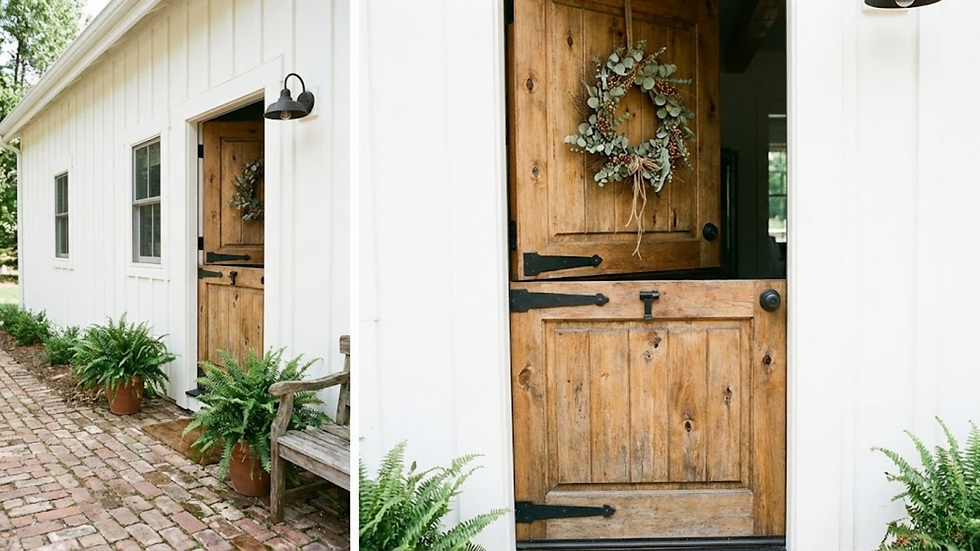
Emphasizing natural textures, weathered finishes, and handcrafted details, farmhouse doors create cozy, approachable entries with countryside charm and authentic character.
Why It Works: Farmhouse doors feel warm, inviting, and unpretentious. Textured surfaces, visible wood grain, and casual hardware create relaxed elegance perfect for family-focused homes.
Best Home Styles: Farmhouse styles (modern and traditional), country cottages, ranch homes, barn-inspired architecture, and rustic mountain retreats.
Material Suggestions: Knotty wood species celebrating natural imperfections. Reclaimed or barn wood for authentic patina. Wood with decorative X-bracing, board-and-batten styling, or plank construction.
Color Pairings: Natural wood stains, crisp white (#FDFEFE) for modern farmhouse, soft gray (#949494), sage green (#9CAF88), or barn red (#722F37) for traditional country charm.
Maintenance Tips: Distressed finishes hide wear beautifully. Seal wood properly despite rustic appearance. Clean hardware regularly as matte black or bronze finishes show fingerprints.
Cost Guidance: Rustic wood doors range from $800-2,500. Custom barn-door style entries cost $1,500-4,000. Reclaimed wood options command premium pricing for authentic weathered character.
DreamDen.ai Advantage: Experiment with different levels of rustic detailing—from subtle texture to dramatic barn-style hardware—finding the perfect balance between farmhouse charm and refined elegance for your home.
10. Smart Doors with Tech Features

Integrating keyless entry, video doorbells, smart locks, and even biometric security, tech-enabled doors combine convenience, security, and contemporary functionality with attractive design.
Why It Works: Smart features eliminate keys, enable remote access for deliveries or guests, provide security monitoring from anywhere, and integrate with whole-home automation systems.
Best Home Styles: Contemporary and modern homes naturally suit tech integration, but smart features can be retrofit into any architectural style with appropriate hardware finishes.
Material Suggestions: Any door material works—choose based on aesthetic preference. Ensure solid construction for secure hardware mounting. Consider doors pre-wired for electric strikes or smart lock power.
Color Pairings: Match door color to architectural style. Let smart hardware blend (black or silver finishes) or make a statement (bronze or brass smart locks on painted doors).
Maintenance Tips: Update smart device firmware regularly. Replace batteries proactively. Ensure Wi-Fi signal reaches entry. Keep video lenses clean. Maintain backup traditional key access.
Cost Guidance: Door material costs remain standard. Smart locks add $150-400. Video doorbells cost $100-250. Integrated systems with remote access run $300-800. Professional installation recommended.
DreamDen.ai Advantage: While technology is invisible in photos, DreamDen.ai helps you select door styles where smart hardware integrates seamlessly without compromising aesthetic appeal.
11. Cottage-Style Doors

Charming, colorful, and full of personality, cottage doors feature welcoming proportions, often include divided-light windows, and embrace cheerful colors and decorative hardware.
Why It Works: Cottage doors create instant warmth and approachability. Smaller scale and cheerful details make homes feel inviting rather than imposing. Perfect for creating
storybook curb appeal.
Best Home Styles: English cottages, Cape Cod homes, bungalows, coastal properties, and any architecture prioritizing charm over formality.
Material Suggestions: Painted wood or fiberglass in smooth finishes. Traditional plank construction with visible boards. Options with arched tops or decorative glass inserts.
Color Pairings: Classic cottage colors include robin's egg blue (#A7C7E7), butter yellow (#F9E076), coral pink (#FF9AA2), mint green (#B5EAD7), and periwinkle (#CCCCFF) against white or cream trim.
Maintenance Tips: Bright cottage colors need UV-resistant paint to prevent fading. Repaint
every 3-4 years to maintain fresh appearance. Clean regularly as light colors show dirt.
Cost Guidance: Traditional cottage-style doors cost $600-1,800. Custom arched or divided-light versions run $1,200-2,800. Charming hardware adds $100-300.
DreamDen.ai Advantage: Test multiple cheerful cottage colors against your home's exterior to find shades that create charm without overwhelming your home's personality.
Front Door Color Ideas: Psychology and Palettes

Color might be your most powerful design tool—it sets emotional tone, creates focal points, and costs relatively little to change. Understanding color psychology helps you make intentional choices.
Red Doors (#D72638 to #8B0000) Red communicates welcome, energy, and confidence. In feng shui, red attracts positive energy and prosperity. Red works across architectural styles from traditional to modern. Deep crimson reads sophisticated; bright red feels cheerful; burgundy adds elegance.
Best With: White, cream, gray, or brick exteriors. Black, brass, or oil-rubbed bronze hardware.
Blue Doors (#1B4965 to #4A90E2) Blue evokes tranquility, trust, and coastal calm. Navy blue
(#1B4965) offers sophistication and works almost universally. Sky blue (#4A90E2) suits cottage and coastal styles. Teal (#008080) brings trendy personality.
Best With: White siding, stone facades, gray exteriors. Silver, chrome, or brushed nickel hardware.
Black Doors (#2B2B2B) Black reads modern, elegant, and confident. It creates dramatic contrast and shows off architectural details beautifully. Matte finishes feel contemporary; gloss communicates traditional formality.
Best With: Light-colored exteriors, white brick, gray siding. Gold, brass, or matte black hardware creates monochromatic sophistication.
Yellow Doors (#F4D03F to #F9E076) Yellow projects cheerfulness, optimism, and energy. Butter yellow feels cottage-sweet; golden yellow reads traditional; pale yellow offers subtle brightness without overwhelming.
Best With: White, gray, or blue-gray exteriors. Avoid yellow doors on tan or beige homes.
White or black hardware.
Green Doors (#9CAF88 to #2C5F2D) Green suggests nature, growth, and harmony. Sage green (#9CAF88) trends currently and offers sophisticated calm. Forest green (#2C5F2D) brings traditional elegance. Mint green creates cottage charm.
Best With: Brick, stone, wood siding, or cream exteriors. Bronze, brass, or matte black hardware.
White Doors (#FDFEFE) White delivers classic elegance and makes homes feel larger. It suits traditional architecture beautifully but works in modern contexts too. White requires regular cleaning but creates timeless appeal.
Best With: Any exterior color. Black, brass, or stainless hardware. Creates fresh, crisp aesthetic.
Charcoal Doors (#4A4A4A) Charcoal offers sophistication of black with slightly more warmth. It hides dirt better than white while creating similar modern impact. Works across architectural styles.
Best With: White, cream, light gray, or warm wood exteriors. Silver, matte black, or brass hardware.
Front Door Material Options Explained

Choosing the right material affects appearance, performance, maintenance, cost, and longevity. Each material offers distinct advantages depending on your priorities and climate.
Wood
Benefits: Authentic beauty, natural grain patterns, fully customizable, luxurious feel, excellent insulation, repairable
Drawbacks: Requires regular maintenance, susceptible to moisture damage, warping in extreme climates, expensive, needs refinishing every few years
Best For: Traditional homes, covered entries, moderate climates, homeowners committed to maintenance
Climate Considerations: Struggles in very humid or harsh sun conditions without diligent maintenance
Security: Solid wood offers excellent security when properly hung
Energy Efficiency: Natural insulation properties are good; add weatherstripping for best performance
Price Range: $800-$3,500 depending on species and craftsmanship
Fiberglass
Benefits: Low maintenance, excellent durability, resists denting and scratching, can replicate wood grain convincingly, superior insulation, won't warp or rot
Drawbacks: Higher upfront cost, can fade in intense sun without proper finish, difficult to repair if damaged, less authentic than real wood
Best For: All climates, busy families, those wanting wood appearance without maintenance, energy efficiency priorities
Climate Considerations: Performs excellently in extreme heat, cold, humidity, and UV exposure
Security: Very strong and secure when properly installed
Energy Efficiency: Superior insulation values, especially with foam core construction
Price Range: $800-$2,500 for quality fiberglass doors
Steel
Benefits: Excellent security, very affordable, low maintenance, accepts paint well, good energy efficiency with foam core, extremely durable
Drawbacks: Can dent if impacted hard, susceptible to rust without proper finish, less traditional appearance, shows imperfections
Best For: Security priorities, budget-conscious buyers, modern or transitional styles, harsh weather climates
Climate Considerations: Performs well in most climates; ensure proper rust-resistant coating in humid or coastal areas
Security: Superior strength and impact resistance
Energy Efficiency: Very good, especially with polyurethane foam cores
Price Range: $400-$1,500, most affordable option
Aluminum
Benefits: Never rusts, lightweight, low maintenance, modern aesthetic, accepts powder coating finishes beautifully
Drawbacks: Expensive, dents fairly easily, poor insulation without thermal breaks, limited traditional styling
Best For: Modern and contemporary homes, coastal environments, those prioritizing rust resistance
Climate Considerations: Excellent for humid and coastal locations
Security: Moderate security; not as strong as steel
Energy Efficiency: Poor without thermal breaks; better for mild climates Price Range: $1,200-$3,000
Glass (Full Glass or Glass Inserts)
Benefits: Floods entryway with natural light, creates visual connection, makes spaces feel larger, available in countless styles
Drawbacks: Privacy concerns without frosting, potential security weakness, expensive to replace if broken, heat transfer without Low-E coating
Best For: Modern homes, entryways with adequate lighting, creating openness, showcasing interior design
Climate Considerations: Low-E glass essential for energy efficiency; dual-pane insulated glass in cold climates
Security: Use only tempered safety glass; consider less glass in high-crime areas
Energy Efficiency: Variable—depends heavily on glass quality and coatings
Price Range: Wide range, $600-$5,000+ depending on amount and quality of glass
Composite Materials
Benefits: Combines benefits of multiple materials, excellent durability, resists moisture and temperature extremes, customizable
Drawbacks: Can be expensive, varying quality between manufacturers, difficult to assess quality before installation
Best For: Extreme climates, custom applications, those wanting cutting-edge materials
Climate Considerations: Engineered specifically for climate challenges
Security: Generally very good
Energy Efficiency: Typically excellent
Price Range: $1,000-$3,500
Front Door Styles: Complete Style Guide

Traditional Style Doors
Defining Features: Symmetrical panel construction, raised or recessed panels, classic proportions, formal appearance, conventional hardware placement
Color Palettes: Deep reds, forest greens, navy blues, rich wood stains, classic black, traditional white
Panel Patterns: Six-panel colonial, four-panel variants, vertical planking
Glass Styles: Minimal to modest—small decorative lites or sidelights
Hardware Styles: Polished brass, oil-rubbed bronze, brushed nickel—traditional lever or knob sets
Modern Style Doors
Defining Features: Clean lines, flush surfaces, minimal ornamentation, emphasis on materials and geometry, often asymmetrical
Color Palettes: Matte black, warm grays, natural wood tones, pure white, bold accent colors
Panel Patterns: Flush surfaces, horizontal accent grooves, geometric insets
Glass Styles: Large format glass panels, narrow vertical lites, full-length sidelights
Hardware Styles: Matte black, stainless steel, minimal pulls or concealed hardware
Craftsman Style Doors
Defining Features: Divided-light windows with geometric patterns, substantial construction, visible joinery details, arts and crafts motifs
Color Palettes: Natural wood stains, deep greens, barn red, chocolate brown
Panel Patterns: Vertical panels below glass, board-and-batten styling
Glass Styles: Signature multi-light windows in upper door section, art glass options
Hardware Styles: Oil-rubbed bronze, antique brass, substantial plates and handles
Farmhouse Style Doors
Defining Features: Rustic textures, board construction, X-bracing details, weathered or distressed finishes, casual proportions
Color Palettes: Crisp white, natural wood, soft grays, sage green, barn red
Panel Patterns: Horizontal planking, vertical board-and-batten, crossbuck designs
Glass Styles: Simple divided lights, half-glass Dutch door options
Hardware Styles: Matte black, wrought iron appearance, substantial hinges and handles
Mediterranean Style Doors
Defining Features: Arched tops, carved details, wrought iron elements, rustic wood species, Old World craftsmanship
Color Palettes: Rich wood stains, terracotta, aged turquoise, warm cream, rustic reds
Panel Patterns: Decorative carving, iron grille windows, speakeasy openings
Glass Styles: Wrought iron integrated with glass, small decorative windows
Hardware Styles: Wrought iron, aged bronze, large strap hinges, decorative clavos
Mid-Century Style Doors
Defining Features: Horizontal emphasis, combination of wood and glass, geometric patterns, connection between indoor and outdoor spaces
Color Palettes: Natural wood (especially teak and walnut), turquoise, yellow, orange accents
Panel Patterns: Horizontal slats or panels, asymmetrical glass placement
Glass Styles: Large sidelights, decorative panels with geometric patterns
Hardware Styles: Brushed nickel, polished chrome, sculptural pulls
Cottage Style Doors
Defining Features: Charming proportions, friendly scale, decorative glass, painted finishes, welcoming details
Color Palettes: Pastels, cheerful brights, soft neutrals—robin's egg blue, butter yellow, coral
Panel Patterns: Simple raised panels, sometimes arched tops, board-and-batten options
Glass Styles: Divided lights, decorative windows, sometimes full half-glass
Hardware Styles: Polished brass, white porcelain knobs, playful designs
Industrial Style Doors
Defining Features: Steel or steel-appearance, narrow sightlines, expansive glass, urban aesthetic, raw materials
Color Palettes: Black (especially matte), charcoal, raw steel, sometimes bold accent colors
Panel Patterns: Minimal panels, focus on glass framing, clean divisions
Glass Styles: Expansive glass maximized within steel frames
Hardware Styles: Matte black, stainless steel, minimal and functional
Contemporary Style Doors
Defining Features: Current trends, mixed materials, creative combinations, emphasis on individual expression, artistic elements
Color Palettes: Variable—from neutrals to bold statements, natural wood combined with painted elements
Panel Patterns: Asymmetrical, creative layouts, mixed materials within single door
Glass Styles: Creative shapes and placements, sometimes colored or textured glass
Hardware Styles: Statement hardware, mixed metals, sculptural elements
Transitional Style Doors
Defining Features: Bridges traditional and contemporary, classic elements with clean lines, timeless appeal, versatile styling
Color Palettes: Sophisticated neutrals, classic with modern twist—navy, charcoal, soft grays, natural wood
Panel Patterns: Simplified traditional panels, cleaner lines than pure traditional
Glass Styles: Modest amounts, classic placement with modern detailing
Hardware Styles: Transitional finishes like satin nickel, simple classic designs
Hardware, Lighting & Accessories

The details surrounding your front door matter as much as the door itself. Coordinated hardware, thoughtful lighting, and tasteful accessories complete your entry design.
Door Handles and Hardware
Your handle set establishes finish palette for the entire entry. Popular finishes include:
Matte Black: Contemporary, sophisticated, hides fingerprints
Brass (Unlacquered or Satin): Traditional elegance, develops patina over time
Oil-Rubbed Bronze: Warm traditional option, vintage appearance
Brushed Nickel: Versatile transitional choice, works with many styles
Polished Chrome: Crisp modern look, shows fingerprints
Do's: Coordinate all visible exterior hardware (lights, mailbox, house numbers). Choose substantial hardware proportional to door size. Invest in quality construction for daily-use items.
Don'ts: Mix metal finishes randomly. Choose oversized hardware for standard doors. Select purely decorative hardware without functionality.
Door Knockers
While decorative, knockers add character and serve as backup when doorbells fail. Traditional lion heads, elegant geometric designs, or simple ring knockers each create different impressions. Coordinate finish with handle hardware.
House Numbers
Visible, attractive house numbers improve curb appeal while serving essential function for deliveries and emergencies. Options range from traditional brass plaques to modern floating numbers to illuminated displays.
Placement: On door, beside door, on nearby wall, or on porch post—wherever most visible from street. Ensure 4+ inch height for visibility.
Sidelights and Transoms
These glass elements flanking or topping your door flood entryways with natural light. Sidelights should be proportional—typically 10-14 inches wide. Transoms work especially well for tall ceilings. Both can incorporate decorative glass for privacy while maintaining light.
Do's: Ensure consistent glass style between door and sidelights. Use tempered safety glass. Add interior window treatments for privacy control.
Outdoor Sconces and Lighting
Proper lighting provides security, safety, and ambiance. Ideally, install matching sconces flanking your door at 5.5-6 feet high (approximately eye level).
Style Matching: Traditional homes: lantern-style fixtures. Modern homes: geometric or cylindrical up/downlights. Farmhouse: black metal fixtures with Edison bulbs.
Do's: Use warm white bulbs (2700-3000K). Install dimmer switches for ambiance control. Ensure adequate brightness (combined 150+ watts equivalent) for safety.
Don'ts: Hang fixtures too high or low. Choose ornate fixtures that compete with door design. Under-light the entry.
Mail Slots vs. Mailboxes
Mail slots offer vintage charm and security but require interior mail catch. Wall-mounted mailboxes beside door offer convenience. Coordinate material and finish with overall design.
Seasonal Decor
Wreaths remain the classic door decoration. Choose appropriate scale—typically 20-24 inches for standard doors. Secure with wreath hangers that don't damage door finish. Coordinate with seasonal colors and your overall style—modern homes might use minimalist eucalyptus wreaths while traditional homes can embrace fuller designs.
Front Door Makeover Ideas for Maximum Curb Appeal

Transform your entryway without replacing your door by focusing on these high-impact updates:
Fresh Paint and Updated Trim - A quality paint job refreshes your door instantly. Choose a color that creates intentional contrast with your home's exterior. Don't forget to paint trim in complementary color—crisp white trim makes door colors pop beautifully.
Strategic Planters Flank your door with matching planters for instant symmetry and welcome. Choose containers proportional to your entry—typically 16-20 inches tall. Fill with seasonal flowers or evergreens for year-round appeal. Elevate on plant stands if needed to create better proportions.
Layered Outdoor Rug A weather-resistant outdoor rug defines your entry and adds color, pattern, and warmth. Choose durable materials (polypropylene, recycled plastic) that withstand foot traffic and weather. Typical size: 3x5 or 4x6 feet.
Symmetry Arrangements The human eye loves symmetry. Create balanced arrangements with matching lanterns, planters, topiaries, or architectural elements on both sides of your door. This simple principle instantly makes entries feel more intentional and designed.
Foundation Landscaping Clear overgrown plants that hide your door. Add low shrubs, perennials, or ornamental grasses that frame your entry without overwhelming it. Maintain at least 18 inches clearance from door swing.
Path Lighting Illuminate the walkway to your door with low-voltage path lights spaced 6-8 feet apart. This creates welcoming ambiance while improving nighttime safety and security.
Front Door Ideas for Small Entryways

Limited space requires strategic design choices that maximize impact without overwhelming compact entries:
Tall Vertical Glass Panels Vertical elements draw the eye upward, making low ceilings feel taller and small entries feel more spacious. Narrow sidelights or vertical glass inserts within the door achieve this effect beautifully.
Light Colors That Reflect White, soft gray, or pale blue doors reflect light and make small entries feel more open. Dark colors can feel heavy in tight spaces, though matte black can work if you have good lighting.
Narrow Panel Configurations Choose doors with vertical rather than horizontal emphasis. Tall narrow panels create the illusion of height. Avoid wide horizontal panels that emphasize limited width.
Simplified Hardware In tight quarters, choose streamlined hardware without extensive backplates or oversized elements. Simple cylindrical knobs take up less visual space than large lever handles.
Slim Planters and Minimal Accessories Avoid cluttering small entries. Choose one or two slim planters rather than multiple arrangements. Keep wreaths proportional—18-20 inches maximum for compact doors.
Common Front Door Mistakes to Avoid

Even with good intentions, homeowners frequently make these errors that compromise both aesthetics and function:
Choosing Wrong Material for Climate Installing beautiful wood doors in extremely humid climates without committing to maintenance leads to warping, rot, and disappointment. Match material to your climate and maintenance willingness.
Ignoring Door Swing Direction Doors should swing inward toward walls, not into interior rooms or exterior railings. Consider furniture placement, interior layouts, and exterior clearances when determining swing direction.
Oversized or Undersized Hardware Hardware should be proportional to door size and style. Oversized lever handles look cartoonish on modest cottage doors. Tiny knobs disappear on grand double doors.
Wrong Color Against Facade Color choices should create intentional contrast or harmony—not accidental clash. Test large paint samples on your actual door viewing throughout different lighting conditions before committing.
Poor Lighting Placement Hanging sconces too high (above 6.5 feet) or too low (below 5 feet) creates unflattering shadows. Placing single fixture directly above door creates harsh overhead lighting. Flanking fixtures provide best illumination.
Neglecting Weatherstripping and Thresholds Even beautiful doors perform poorly without proper weatherstripping and threshold seals. Energy loss and water infiltration damage homes over time. Maintain seals annually.
Mismatched Architectural Style Ultra-modern doors look wrong on traditional colonials.
Rustic farmhouse doors clash with contemporary architecture. Choose doors that honor your home's architectural character.
Frequently Asked Questions
What is the best color for a front door?
The best front door color creates intentional contrast with your exterior while reflecting your personal style. Navy blue and black offer sophisticated versatility across architectural styles. Red provides welcoming warmth. The ideal color depends on your home's exterior color, architectural style, and the impression you want to create. Test samples in different lighting before committing.
What front door style increases home value?
Classic styles in excellent condition increase value most reliably. Quality craftsman doors, elegant traditional designs, and well-maintained wooden doors appeal to broad buyer demographics. Condition matters more than trendy styles—a pristine, properly functioning door in appropriate style adds 1-4% to home value. Modern black steel doors are currently trending and attracting buyer interest.
Should front door and trim match?
No—your front door should contrast with trim to create a focal point. White or cream trim beautifully frames colored doors, making them stand out. Matching door and trim creates a monochromatic look that can feel flat unless intentionally designed. Create contrast through color while maintaining complementary tones.
What material is best for hot or rainy climates?
Fiberglass performs excellently in both extremes—it won't warp from humidity or fade from intense sun like wood might. Steel doors with rust-resistant coatings work well in rainy climates. Avoid solid wood unless you commit to regular maintenance. In coastal humid environments, aluminum resists rust beautifully. Always ensure proper sealing and weatherstripping regardless of material.
What's the cheapest way to upgrade a front door?
Paint delivers the biggest transformation for the smallest investment—quality exterior paint costs $50-150 and can be DIY. Add updated hardware ($80-200) for significant impact. Include an outdoor rug, fresh house numbers, and planters for complete makeover under $400. Focus on improving what you have before considering full door replacement.
How long do front doors typically last?
Lifespan varies by material: steel and fiberglass doors last 30+ years with minimal maintenance. Quality wood doors can last 50+ years with proper care but require regular refinishing. Composite materials typically last 25-30 years. Proper installation, weatherstripping maintenance, and climate-appropriate material selection significantly impact longevity.
Can I install a front door myself?
Experienced DIYers can install pre-hung doors in standard openings, but professional installation is strongly recommended. Improper installation causes air leaks, security vulnerabilities, operation problems, and moisture infiltration. Complex installations (custom sizes, sidelights, structural changes) require professional expertise. Professional installation typically costs $300-600 and includes warranty protection.
Conclusion
Your front door is a crucial design choice for your home's exterior, influencing first impressions, personal style, security, and energy efficiency. It should balance aesthetic appeal with practical performance, complementing your home's architecture while reflecting your taste. Whether you prefer bold colors, natural wood, modern designs, or rustic charm, the ideal door aligns with style, material, budget, and climate suitability.
Take your time with this decision. Consider local climate and maintenance needs, evaluate color and style interactions with your exterior, and test ideas virtually before making changes.
Remember, front door design includes more than the door—coordinated hardware, lighting, landscaping, and accessories enhance curb appeal. Details like house numbers, rugs, and wreaths add personality. Ultimately, choose a design that makes you smile and reflects who you are, offering a warm welcome to visitors.


Comments