
Hang Your Curtains in Style with Brackets and Finials
- DreamDen AI Editorial Team
- Dec 13, 2025
- 4 min read


Hanging curtains looks simple, but once you start dealing with rods, screws, brackets, and those tiny finials that never sit right the first time, the whole thing turns into a small project of its own. And honestly, these little parts decide whether your curtains look neat or just… off. A good pair of brackets keeps the rod steady, and well-chosen finials make the whole setup look finished.
Understanding the Real Job of Brackets
Most people don’t pay attention to brackets. They grab whatever the store has and hope it works. But brackets literally carry all the weight, such as curtain weight, rod weight, pulling pressure, and daily use. If the bracket is too weak or too thin, you’ll see the rod dipping in the middle, or the screws getting loose, or even the curtains sagging on one side. It happens slowly, and you only notice when the whole thing looks tired.
There are open brackets, closed brackets, double brackets, ceiling mounts, and center-support ones. Each one works differently. Open brackets are easy to slide the rod in and out of, but may loosen if you pull the curtains roughly. Closed brackets hold the rod firmly but are harder to remove during washing.

Ceiling mounts are helpful when the wall space is tight or when you want a tall, stretched look. Double brackets handle two rods ,just as the combination of sheer and blackout curtains.
The trick is measuring the projection, the distance from the wall. If it’s too short, the fabric rubs the wall awkwardly. If it’s too long, the curtains lean forward and look puffy. It’s a small detail that affects the whole flow.
Finials: A Small Decorative Piece That Changes the Whole Setup
Finials feel like decoration only, but they do more than that. They stop the rod from sliding out and cap the ends so things look clean. The styles vary like crazy, and you can have finials in round, carved, metal, crystal, wood, geometric, rustic, matte, shiny, etc. Sometimes the rod is basic, and the finials carry the entire look.
A heavier finial needs a stronger bracket. A light wooden rod with a heavy iron finial is a mismatch that eventually twists the rod or loosens the bracket screws. Some finials screw in; others click in; some slide in with a tiny screw that keeps getting lost. So checking compatibility is worth it, even though it feels boring.
Finding the Right Match: Rod + Brackets + Finials + Curtains
When all parts match well, the curtains hang straight, fold naturally, and move without catching. When something is mismatched, things can feel off, i.e., too much gap on the sides, wrinkles bunching near the brackets, curtains struggling to slide across the rod, noise from friction, or one finial sitting slightly tilted.
The rule of thumb is simple enough:
Heavy curtains – thick rod + closed brackets + firm finials
Sheer curtains – lighter rod + open or small-profile brackets
Layered curtains – double brackets + sturdy rod + medium finials
Long curtains (ceiling to floor) – ceiling-mount brackets to avoid pulling stress
How to Mount Brackets Without the Usual Irritation?
Here’s the part where most people start grumbling, and that is marking the holes. Brackets rarely sit level the first time, even with a level tool. And the wall isn’t always straight. So the trick many installers use is loosely screwing one bracket in first, placing the rod temporarily, and adjusting the second bracket according to how the rod sits. It avoids unnecessary holes and gives a straighter line.
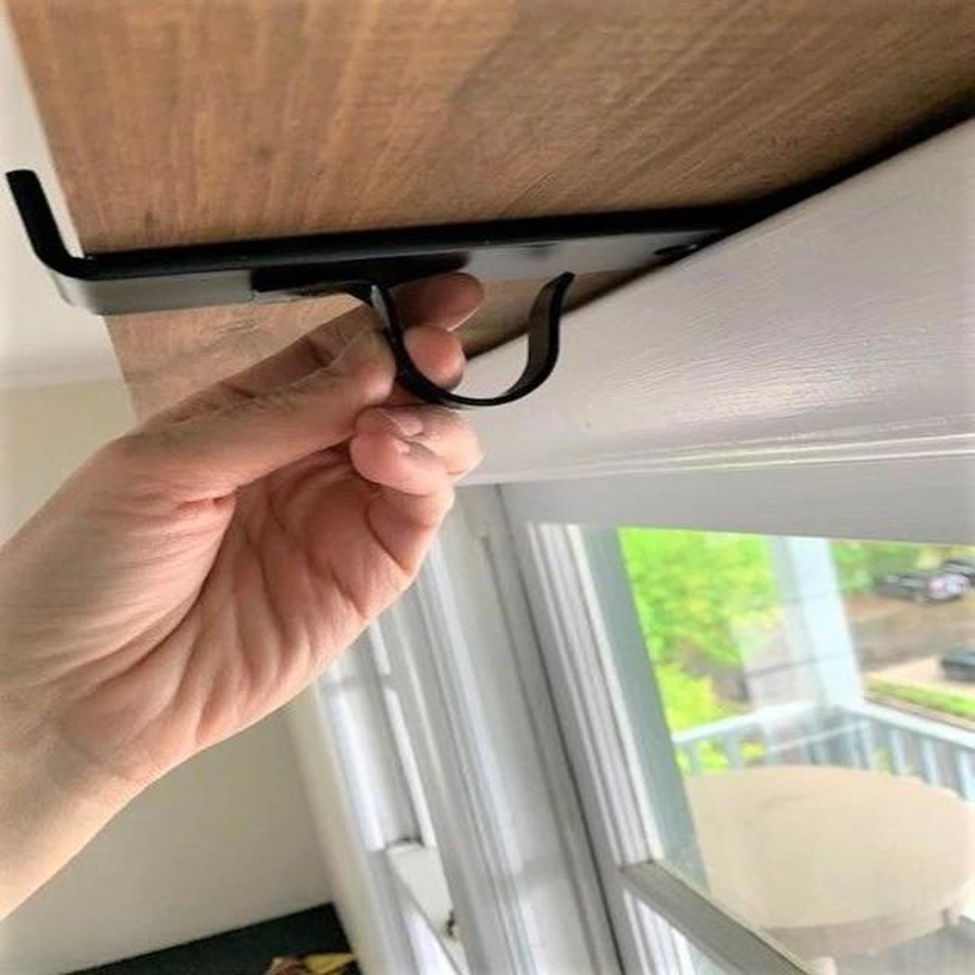
You can use drywall anchors if the wall is hollow. Use longer screws if the wall is concrete. And always check the curtain length before fixing the brackets permanently. Just like people often drill, hang everything, and then realize the curtains puddle too much or float awkwardly above the floor.
Choosing Finials for the Room Style
Finials are usually the fun part because this is where you add personality. But overdoing it makes the windows look heavy. Light rooms (maybe linen curtains or soft tones) look good with small wooden or resin finials. Modern rooms work well with clean metallic shapes. Bedrooms with heavier drapes carry larger classic finials.
Some popular finial styles people use:
Minimal round caps for clean, modern rooms
Crystal-cut or glass ends for brighter spaces
Rustic carved wood for natural rooms
Flat-edge metal for contemporary setups
Leaf or swirl patterns for traditional interiors
Choosing something simple usually looks better in long-term use.
Mixing Curtains and Brackets Without Cluttering
Sometimes the rod itself is the highlight. Other times, the fabric is the star. If the curtain pattern is heavy or bold, go for simple brackets and plain finials. If the curtains are simple, then a carved rod or stylish finials lift the look. Balanced combinations almost always give the cleanest result.
Layering Curtains? Then Brackets Matter Even More
For blackout and sheer combinations, double brackets are essential. The distance between the two rods should be just right. Because if it’s too close, the fabrics will crush each other, and if it’s too far, they stick out awkwardly. Many people don't consider this until the curtains are already mounted. Also, use smooth rods for sheers. Because rough or textured rods snag easily.
Cleaning and Taking Care of Finials and Brackets
Metal brackets need wiping sometimes because dust shows quickly. Wooden finials need gentle cleaning so the finish doesn’t fade. Crystal and glass finials look dull when dusty, so they need more frequent cleaning. If screws loosen over time, tightening them early prevents bigger damage.

When to Replace Brackets or Finials
You don’t replace them often, but signs include tilting rods, frequent loosening, chipped finials, or rust at the screw points. Replacing early keeps the curtains from dragging or hanging crooked.
Final Thoughts
Hanging curtains and Blinds in Dubai feels simple until you start noticing how much it depends on brackets and finials. These pieces don’t scream for attention, yet they shape the final look. A small upgrade in hardware often makes the whole room feel better, such as cleaner lines, better curtain fall, smoother movement, and a more polished finish, even if the curtains themselves are plain.


Comments