
How Rounded Furniture Shapes Improve Flow in Living Rooms
- DreamDen AI Editorial Team
- Feb 5
- 4 min read

Living rooms today serve many purposes. They are places for relaxation, family gatherings, remote work, entertainment, and sometimes even dining. As homes evolve, furniture design is also changing to support comfort, flexibility, and better space usage. One growing shift in interior design is the move away from rigid, sharp-edged furniture toward softer, rounded forms.
Rounded or curved furniture is not just a passing aesthetic trend. It plays a practical role in improving movement, comfort, and visual flow in living rooms. When designed thoughtfully, curved shapes help spaces feel more welcoming, spacious, and easier to navigate.
Understanding Flow in Living Room Design

Before exploring curved furniture, it’s important to understand what “flow” means in interior design.
Flow refers to how comfortably people and the eye move through a space. It includes two main aspects:
Physical Flow
Physical flow describes how easily people can walk around furniture without bumping into obstacles. Poor layout creates tight pathways, awkward corners, and blocked routes.
Visual Flow
Visual flow is how smoothly the eye travels across a room. Too many sharp lines, mismatched furniture, or clutter disrupt visual comfort.
Good living room flow means:
Clear movement paths
Comfortable spacing between furniture
Balanced layout
Visual harmony
No cramped feeling
Rounded furniture naturally supports these goals.
What Is Rounded or Curved Furniture?

Rounded furniture includes pieces designed with soft edges, curves, or circular forms instead of sharp corners.
Common examples include:
Round or oval coffee tables
Circular ottomans
Curved sectionals
Barrel chairs
Oval dining tables in open layouts
Rounded consoles and side tables
Traditional furniture often uses rectangular or square shapes, creating strong angular lines. While functional, too many hard edges can make spaces feel rigid.
Curved furniture introduces softness and flexibility into room design.
How Rounded Furniture Improves Movement Flow

One of the biggest advantages of curved furniture is smoother movement through a space.
Reduced Collision Points
Sharp furniture corners often sit in walking paths. People frequently bump into coffee tables or sofa corners.
Rounded edges remove these harsh impact points, making navigation easier.
Softer Circulation Paths
Curves naturally guide movement in gentle arcs instead of forcing strict straight paths. This creates more intuitive circulation in the room.
Better Use of Central Space
Rounded furniture often allows people to walk around seating areas more easily, especially in compact living rooms.
Ideal for Multi-Use Rooms
Modern homes often combine living, dining, and workspace zones. Curved layouts help connect spaces without rigid separations.
Visual Flow and Psychological Comfort

Design affects emotions more than most people realize. Shape plays a key role in how spaces feel.
Curves Feel More Welcoming
Humans naturally associate curves with comfort and safety. Rounded forms appear softer and less threatening than sharp edges.
Reduced Visual Stress
Too many straight lines create visual tension. Curves soften that effect, making rooms feel calmer.
Balanced Room Composition
Rounded furniture offsets rectangular architectural elements like walls, windows, and ceilings, creating harmony.
This visual softness makes living rooms feel more inviting and relaxed.
Space Perception: Making Rooms Feel Larger

Curved furniture can improve how large or open a room feels.
Reduced Visual Clutter
Sharp angles create visual stops. Rounded forms allow the eye to move smoothly, making rooms feel less crowded.
Improved Corner Usage
Curved sofas or chairs can soften tight corners, reducing boxy layouts.
Better for Small Apartments
In small spaces, removing harsh lines helps create a sense of openness.
Rounded furniture often blends into space instead of visually blocking it.
Safety and Comfort Benefits

Rounded furniture also offers practical comfort and safety advantages.
Safer for Children
Homes with kids benefit from fewer sharp edges that can cause injury.
Pet-Friendly Spaces
Pets moving quickly around furniture are less likely to collide with harsh corners.
Comfortable Seating Zones
Curved sofas encourage social seating arrangements where people face each other naturally.
Relaxed Seating Posture
Curved forms support informal seating, promoting relaxation over rigid posture.
Design Balance: Mixing Curves with Straight Lines

Curves are powerful, but balance is important.
A room filled only with rounded shapes may feel unstructured. Instead, successful design blends curves and straight lines.
Balance Tips
Pair curved sofas with rectangular rugs.
Use round tables with straight-lined shelving.
Mix curved chairs with angular lighting.
Combine soft furniture with structured architectural elements.
The contrast between shapes creates visual interest without chaos.
Practical Ways to Add Rounded Furniture
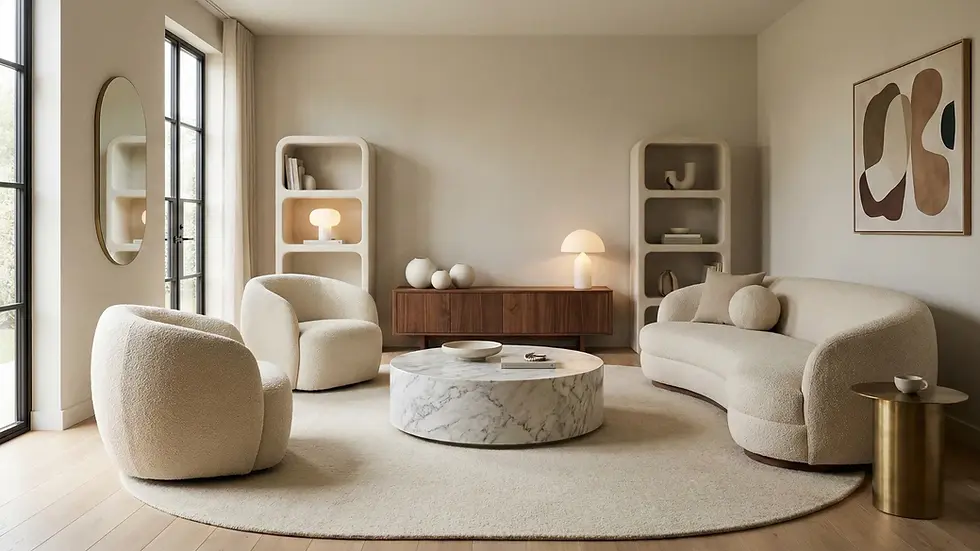
Adding curves does not require replacing all furniture. Small changes can transform flow.
Curved Sofas
Curved or modular sofas soften seating arrangements and improve conversation areas.
Round Coffee Tables
These improve circulation and remove sharp walking obstacles.
Oval Rugs
Rounded rugs soften flooring transitions and anchor curved furniture.
Accent Chairs
Barrel or rounded chairs add comfort without dominating space.
Lighting Fixtures
Pendant lights with circular or dome shapes complement curved furniture.
Decor Elements
Rounded mirrors, vases, and cushions subtly introduce softer forms.
Layout Examples and Styling Scenarios

Rounded furniture works in many layout situations.
Small Living Rooms
Use a curved loveseat or round coffee table to improve movement space.
Open-Plan Living Areas
Curved sofas can define seating zones without blocking sightlines.
Family Living Spaces
Circular seating encourages interaction and shared activities.
Apartment Layouts
Rounded furniture prevents spaces from feeling overly compartmentalized.
Common Mistakes to Avoid
While curved furniture improves flow, mistakes can reduce effectiveness.
Overcrowding Space
Too many large curved pieces reduce walking space.
Ignoring Scale
Oversized curved sofas overwhelm smaller rooms.
Poor Traffic Planning
Furniture should not block entry points or main pathways.
Overusing Curves
Rooms still need structure. Mix shapes thoughtfully.
Future Furniture Trends & Why Curves Are Popular

Interior design trends increasingly prioritize comfort and emotional well-being.
Several lifestyle shifts contribute to the rise of curved furniture:
More time spent at home
Multi-functional living spaces
Focus on relaxation and wellness
Desire for cozy environments
Modern furniture design increasingly emphasizes softness, organic forms, and approachable spaces rather than rigid, formal layouts.
Curves align with these evolving preferences.
Frequently Asked Questions
Is curved furniture good for small living rooms?
Yes. Rounded furniture often improves circulation and reduces visual clutter in compact spaces.
Are curved sofas practical?
They work well in conversation areas and open layouts but require thoughtful placement.
Does rounded furniture cost more?
Not necessarily. Pricing depends on brand, materials, and design complexity rather than shape alone.
Can curved furniture work in modern homes?
Yes. Curved furniture complements modern interiors by softening minimalist spaces.


Comments