
How to Calculate Crushed Stone Amounts for Your Project


When planning a construction or landscaping project, knowing how much crushed stone you need is essential. Whether you are building a driveway, laying a foundation, or creating a garden path, accurate crushed stone amounts help you avoid ordering too much or too little material. This blog will walk you through the process of calculating crushed stone amounts with clear examples and practical tips.
Understanding Crushed Stone Amounts
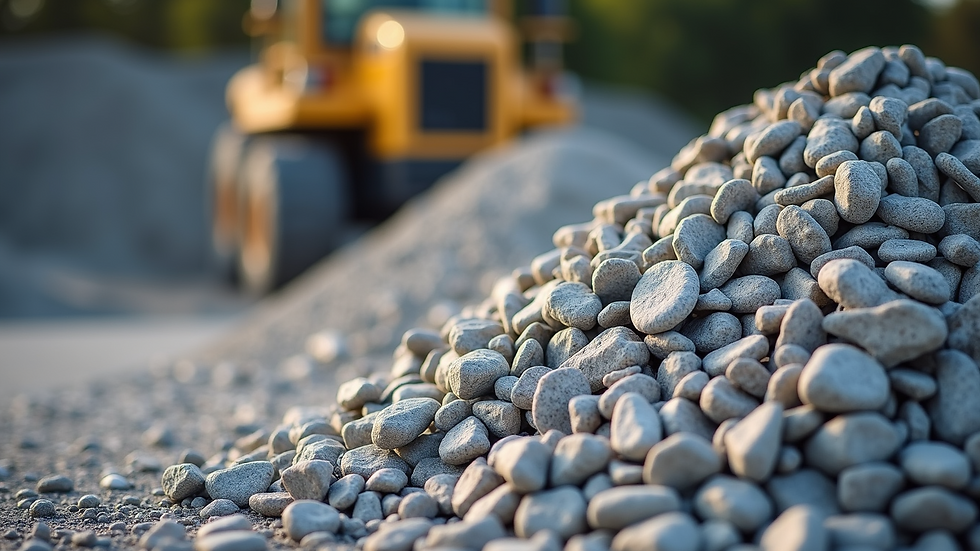
Crushed stone is a versatile material made from natural rock that has been broken down into smaller pieces. It is commonly used in construction for its durability and drainage properties. The amount of crushed stone required depends on the area you want to cover and the depth of the stone layer.
To estimate crushed stone amounts, you need to know three key measurements:
Length of the area (in feet or meters)
Width of the area (in feet or meters)
Depth or thickness of the stone layer (in inches or centimeters)
Once you have these measurements, you can calculate the volume of crushed stone needed in cubic yards or cubic meters.
Example Calculation
Suppose you want to cover a driveway that is 20 feet long and 10 feet wide with a 4-inch layer of crushed stone. Here's how you calculate the amount:
Convert the depth from inches to feet: 4 inches ÷ 12 = 0.33 feet
Calculate the volume in cubic feet: 20 ft × 10 ft × 0.33 ft = 66 cubic feet
Convert cubic feet to cubic yards: 66 ÷ 27 = 2.44 cubic yards
You will need approximately 2.44 cubic yards of crushed stone for this project.
Factors Affecting Crushed Stone Amounts
Several factors can influence the amount of crushed stone you need:
Compaction: Crushed stone compacts over time, so you may need to order extra material to account for settling.
Stone size: Larger stones may require a thicker layer for stability.
Project type: Different projects have different requirements. For example, a base layer for a road may need more stone than a decorative garden path.
Waste and spillage: Always add a buffer of 5-10% to cover waste during installation.
By considering these factors, you can better estimate the crushed stone amounts and avoid costly mistakes.
How much is one cubic yard of crushed stone?
One cubic yard of crushed stone typically weighs between 2,400 and 2,900 pounds, depending on the type of stone and its moisture content. This weight range is important when ordering by weight rather than volume.
For example:
Limestone weighs about 2,700 pounds per cubic yard.
Granite weighs around 2,800 pounds per cubic yard.
Trap rock weighs approximately 2,900 pounds per cubic yard.
Knowing the weight helps when transporting or purchasing crushed stone by the ton. It also assists in calculating the number of truckloads needed for your project.

Step-by-Step Guide to Calculate Crushed Stone Amounts
To make your calculation easier, follow these steps:
Measure the area: Use a tape measure to find the length and width of the space you want to cover.
Decide on depth: Determine how thick the crushed stone layer should be based on your project needs.
Convert measurements: Convert all measurements to the same unit system (feet and inches to feet, or meters and centimeters to meters).
Calculate volume: Multiply length × width × depth to get the volume in cubic feet or cubic meters.
Convert volume: If needed, convert cubic feet to cubic yards by dividing by 27 (since 1 cubic yard = 27 cubic feet).
Add extra material: Include an additional 5-10% to account for compaction and waste.
Order crushed stone: Use your final volume to order the correct amount of crushed stone.
If you want to simplify this process, you can use an online tool to calculate crushed stone quickly and accurately.
Tips for Ordering and Using Crushed Stone
Buy from a reputable supplier: Quality crushed stone ensures better durability and appearance.
Check delivery options: Some suppliers offer delivery, which can save time and effort.
Prepare the site: Clear the area of debris and level the ground before spreading crushed stone.
Use proper equipment: A wheelbarrow, rake, and tamper help distribute and compact the stone evenly.
Maintain the surface: Periodically add more crushed stone to maintain the desired depth and appearance.
By following these tips, you can ensure your project is successful and long-lasting.
Final Thoughts on Crushed Stone Amounts
Calculating crushed stone amounts is a straightforward process when you understand the measurements and factors involved. Accurate calculations save money, reduce waste, and help your project run smoothly. Whether you are working on a small garden path or a large driveway, taking the time to measure and calculate crushed stone amounts will pay off in the end.
Remember to consider compaction, stone size, and project type when estimating your needs. And if you want to save time, use an online calculator to calculate crushed stone with ease.
With the right preparation and knowledge, your crushed stone project will be a success from start to finish.
FAQs About Crushed Stone
1. What is the difference between crushed stone and gravel?
Crushed stone is made by mechanically breaking down larger rocks, giving it sharp edges. Gravel forms naturally through weathering and has smoother, rounded surfaces. Crushed stone is usually preferred for construction because it locks together better.
2. What types of projects commonly use crushed stone?
Crushed stone is used for driveways, foundations, walkways, road bases, drainage systems, retaining wall backfill, concrete mixes, and landscaping designs.
3. Does crushed stone allow for good drainage?
Yes. Crushed stone has gaps between the pieces, which creates channels for water to flow through. This makes it ideal for drainage projects, French drains, and preventing water buildup.
4. What sizes does crushed stone come in?
Crushed stone is available in many sizes, typically ranging from fine dust (called screenings) up to large stones several inches wide. Common sizes include 1/4", 3/8", 3/4", 1", and 2".
5. How do I know which stone size I should use?
Choose the stone size based on the project:
3/8"–3/4" for walkways and driveways
1"–2" for drainage and base layers
Dust or screenings for compacting under pavers
6. Can crushed stone be used under concrete slabs?
Yes. A layer of compacted crushed stone is often placed under concrete slabs to improve drainage, provide stability, and prevent cracking caused by shifting ground.
7. How long does a crushed stone driveway last?
A crushed stone driveway can last 20–30 years with regular maintenance. Occasional resurfacing, regrading, and adding new stone can extend its lifespan.
8. Is crushed stone environmentally friendly?
Crushed stone is considered environmentally friendly because it comes from natural rock and often requires minimal processing beyond crushing. It also supports natural water drainage and reduces runoff.
9. What tools are needed to install crushed stone?
Common tools include a shovel, wheelbarrow, rake, landscape fabric, level, and a tamper or plate compactor to ensure the stone is properly packed.
10. Should I use landscape fabric under crushed stone?
Yes, using landscape fabric helps prevent weeds, keeps the stone from sinking into the soil, and increases the layer’s lifespan by maintaining separation between soil and stone.


Comments