
How to Design a Balcony Garden in Small Apartment
- DreamDen AI Editorial Team
- Jan 21
- 6 min read

Updated: Jan 23
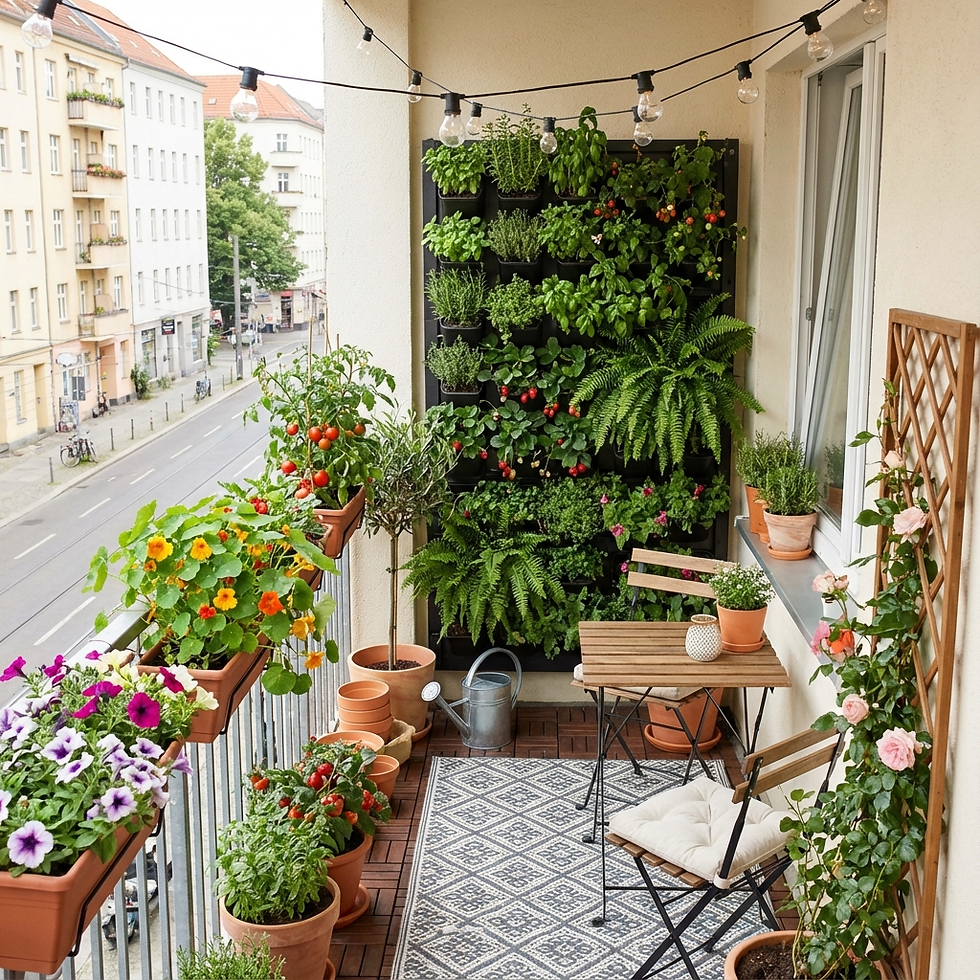
Cultivating plants in a limited area such as a balcony or terrace can be challenging, even for experienced gardeners. However, it also presents an opportunity for creativity and enjoyment. Whether deciding on what to plant—such as a vegetable or tropical garden—or selecting unique containers like an old watering can or a wooden box, the entire process can be thrilling. While you must work within your confined space, numerous strategies exist to maximize every inch. We at DreamDen can help you design your balcony as you wish and in the best possible way. Here are some simple tips to help you get started:
Maximize Your Space
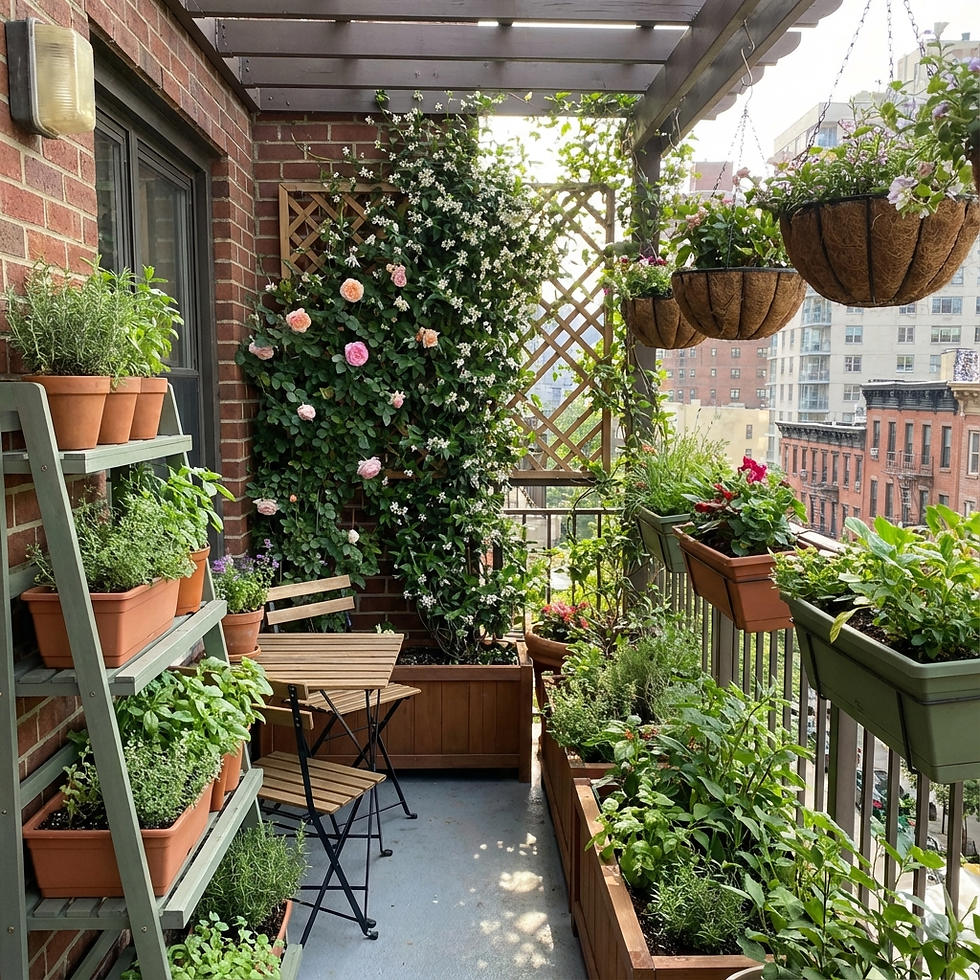
How much space do you need for a balcony garden?
Surprisingly, not much at all if you use walls, railings, and overhead areas.
Turn your balcony into a vertical garden.
You can attach pots, shelves, or trellises to the walls. If your balcony has a ceiling, add some hooks for hanging plants. Use chicken wire on the railings to support climbing plants, or buy plant hangers that can be fixed to the top of a railing.
Think of your balcony garden as part of your indoor space.
If you pick plant colors and textures that match your indoor design, even a small balcony will feel larger and more inviting.
Know Your Restrictions
In addition to the size of your balcony, there might be other restrictions on what and where you can plant. If you live in an apartment or condo, make sure to check the building owner's rules before beginning.
Weight. There could be weight restrictions and guidelines regarding what you can hang from balcony railings and walls. If the balcony is part of your home, be aware of its weight capacity. The total weight of large ceramic pots and wet soil can add up quickly.
Microclimate. The amount of sunlight the area receives is important, but wind exposure and temperature are also key factors.
Wind: Strong winds, common in balcony and rooftop gardens high above the ground, can quickly dry out the soil, strip petals from flowers, and knock over tall potted plants.
Heat: Sunlight reflecting off windows can increase the heat in a balcony garden and scorch delicate leaves. Even the basic structure of your balcony, such as concrete versus wood, will affect its heat retention.
Shade: Many urban balconies are quite shaded due to tall surrounding buildings or overhangs. This can often be managed by placing sun-loving plants near the balcony's edge, where sunlight is more plentiful.
Tip: If wind is a concern on your balcony, consider using balcony privacy screens as windbreaks to protect more delicate plants. Additionally, place wind-sensitive plants in low pots close to a wall for extra protection.
How Do You Water a Balcony garden

Most balcony or rooftop gardens do not have an external water source, so you'll need to use water from a sink or bathtub to keep your plants hydrated. To minimize the number of trips carrying heavy water jugs, consider these plant-watering strategies:
If you have many plants to water, consider buying a large, lightweight watering can that you can fill in the bathtub. Collapsible watering cans are great space savers for balcony gardens as they flatten when not in use.
Place saucers or trays under your plants to catch any excess water, preventing waste. Self-watering pots can also help conserve water and greatly reduce how often you need to water.
Avoid using watering cans altogether by purchasing a lightweight, expandable garden hose that can connect to a kitchen sink with an adapter. These hoses can extend up to 100 feet and retract when not in use for easy storage.
Keep in mind that the hotter and windier your balcony is, the more frequently you'll need to water your plants—possibly even twice a day. If you don't have a convenient water source nearby, make things easier by selecting plants with low water requirements, such as cacti and succulents.
What Can You Grow in a Balcony Garden?
Nearly any plant that can flourish in a container is appropriate for a balcony garden, as long as you have sufficient space and can provide the necessary sunlight or shade. In areas with cold winters, think about selecting plants that are hardy enough to stay outside year-round or can be moved indoors during winter, so you won't have to start over each spring.
Herbs
Vegetables
Small trees, such as dwarf citrus or olive trees
Small shrubs
Annuals and perennials suitable for containers, whether for shade or sun
Succulents
Tropical houseplants, like philodendron or spider plant.
Flowering vines and other climbers, if you have a trellis or another vertical support.
What Containers are Best for a Balcony Garden?
Any container capable of holding soil and providing good drainage is ideal for a balcony container garden. The style can range from sophisticated to whimsical, based on your taste, but the container must be functional and suitable for its intended use. Consider factors like container weight, durability, weather resistance, ease of watering, and cost.
Plastic and fiberglass plant containers are excellent for balcony gardens due to their lighter weight compared to terracotta or ceramic pots and their availability in various styles and sizes. However, they may be easily toppled by the wind on balconies unless secured.
Fabric grow bags present another lightweight container option, with the added advantage of easy storage after the growing season. They also come with handles for easier movement.
Hanging baskets and outdoor railing baskets are great space savers and can be used to cultivate anything from herbs and houseplants to trailing vegetables.
Tiered planters offer another space-saving option, enabling you to use vertical space for your garden instead of taking up valuable floor space on your balcony.
25 Balcony Garden Ideas
Use Your Walls (Vertical Gardening)
When you don't have floor space, look up!
Wall Grids:

Hang a metal grid or "trellis" on the wall to clip small pots onto.
Pocket Planters:

These are fabric bags with pockets that hang over your railing or on a wall. Great for herbs!
Stacked Crates:

Use old wooden crates. Stack them sideways to create "shelves" for your plants.
Floating Shelves:

Install simple weather-proof shelves to hold rows of succulents.
Ladder Planter:

Saddle Planters:

These pots have a "groove" in the middle so they sit right on top of your balcony railing.
Hanging Baskets:

Classic and beautiful. Use them for "trailing" plants like Petunias or Ivy.
S-Hooks:
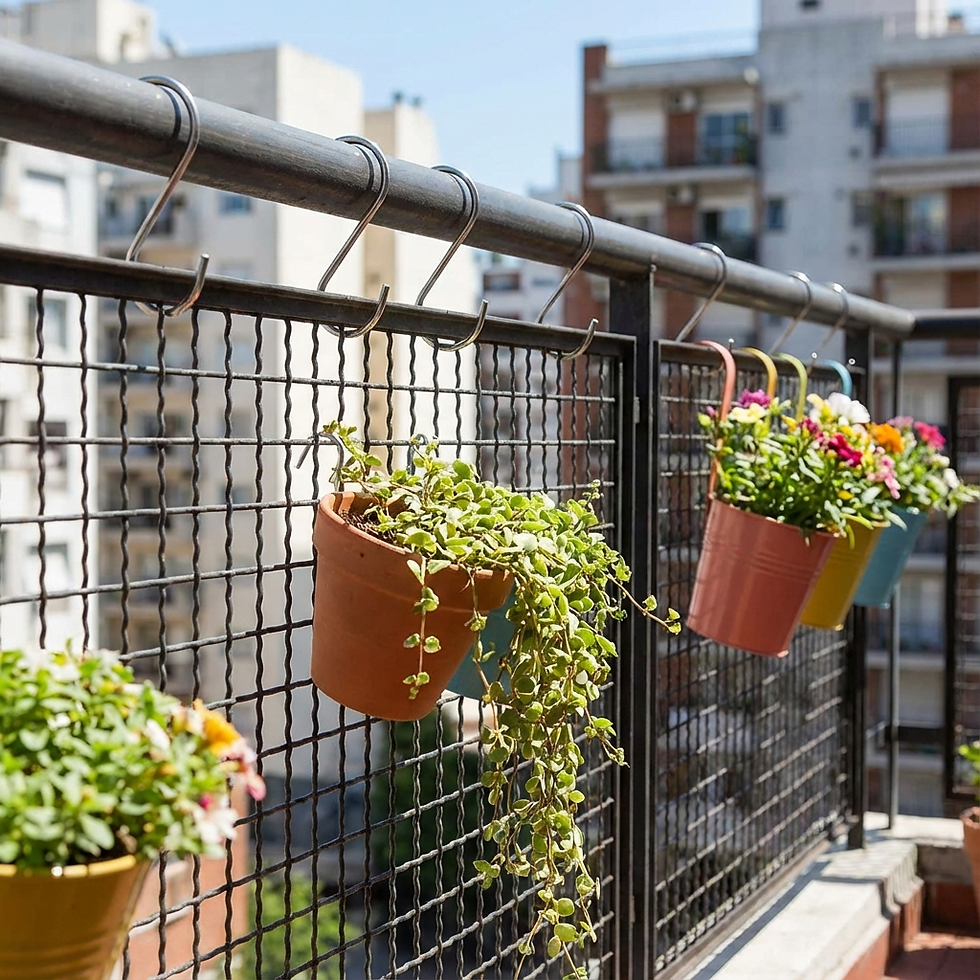
Use S-hooks to hang lightweight pots from the top edge of your balcony screen.
Gutter Gardens:

Attach pieces of rain gutter to your railing to grow shallow-root plants like lettuce or strawberries.
Over-the-Rail Shelves:

You can buy small tables that clip onto your railing—perfect for a coffee cup and a plant.
Grow Your Own Food
You don't need a farm to eat fresh.
The Pizza Garden:

Grow tomatoes, basil, and oregano in one large pot.
Salad Bowl:

Use a wide, shallow bowl to grow a mix of lettuce leaves. You can "cut and come again" all summer.
Pepper Pots:

Bell peppers and jalapeños love the heat of a sunny balcony.
Strawberry Towers:

Use a special "tower" pot to grow dozens of strawberries in just one square foot.
Lemon Trees:

Look for "Meyer Lemon" trees. They are small (dwarf) and can grow in a large pot in a sunny corner.
Decor & Vibe
Make it a place where you actually want to sit.
Outdoor Rugs:

A small, weather-proof rug makes the balcony feel like an extra room.
Solar String Lights:

No outlet? No problem. Wrap solar fairy lights around your railing for a cozy glow.
Privacy Screen:

Use tall plants like Bamboo or Tall Grasses to block the view from neighbors.
Artificial Turf:
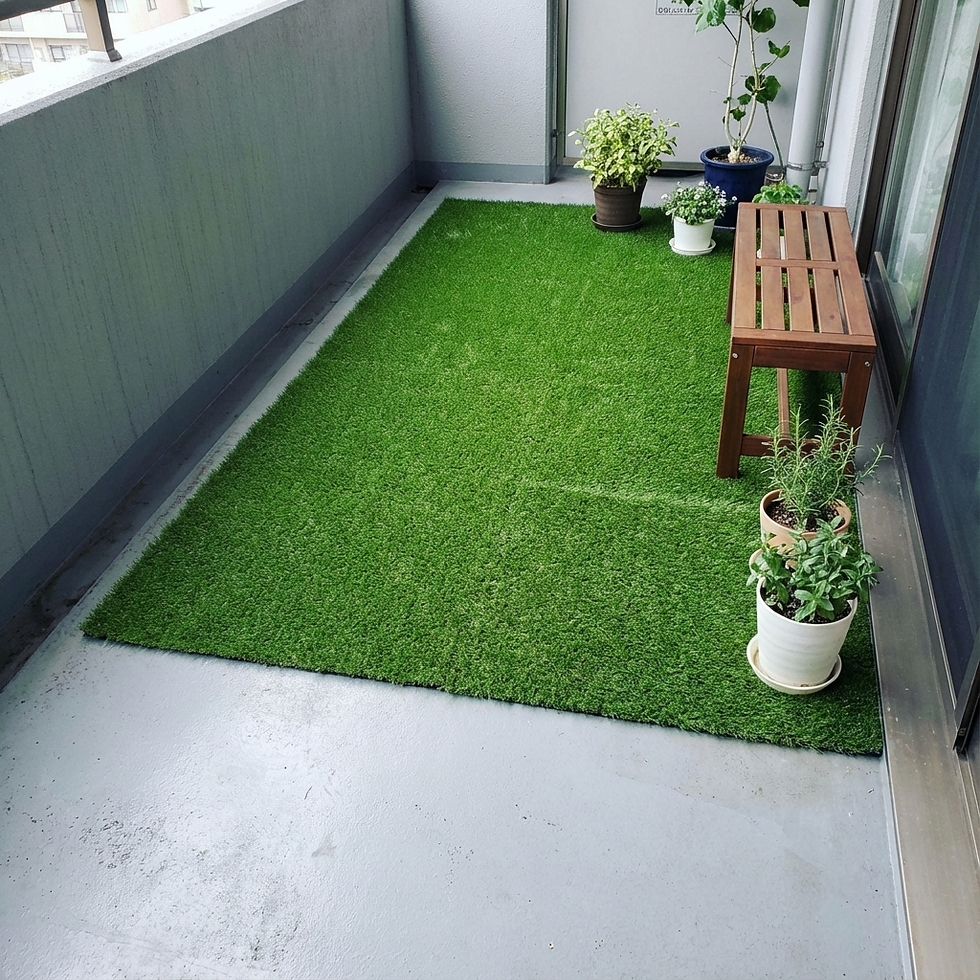
Cover the cold concrete floor with a patch of fake grass to make it feel like a real yard.
Mirrors:

A weather-proof mirror on the wall reflects your plants and makes the balcony look twice as big.
Smart Gardening Hacks
Rolling Plant Stands:
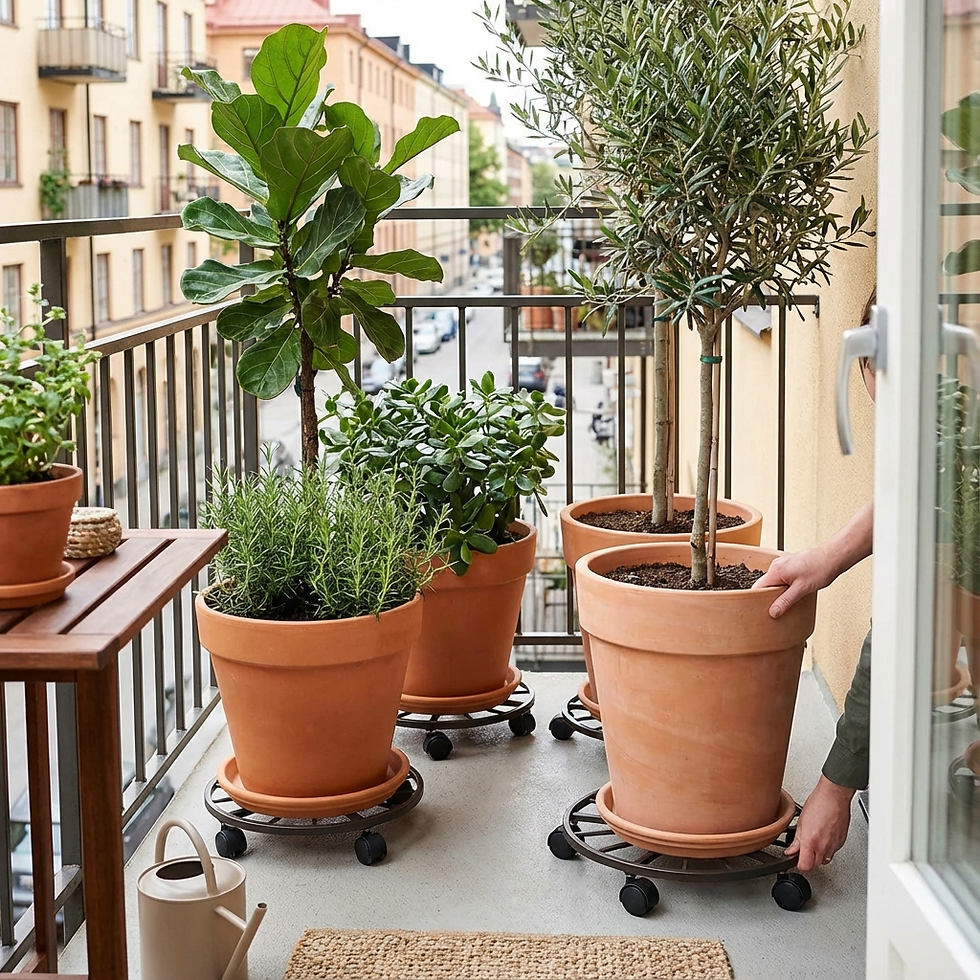
Put your heavy pots on wheels so you can move them easily to clean or catch the sun.
Self-Watering Pots:

If you travel for work, these pots keep your plants hydrated for up to a week.
Color Coding:

Use pots that are all the same color (like all white or all terracotta) to keep the space looking tidy.
Wind Protection:

If you live on a high floor, use heavy ceramic pots so the wind doesn't blow your garden away!
The "One Large Pot" Rule:

If your balcony is tiny, one giant pot with three different plants looks better than 10 tiny, messy pots.


Comments