
How to Finish Decorating Your Home Without Stress


Decorating your home often feels harder than it should. You may have saved hundreds of beautiful photos on Pinterest or Instagram. You may know what styles you like in theory. And yet, when you look around your own space, something feels wrong. The room feels unfinished. The furniture feels disconnected. The space does not feel like the calm, beautiful home you imagined.
This experience is extremely common. Decorating is not just about buying furniture or choosing colors. It is about decision-making, confidence, money, and emotion. Your home is personal, and that makes every choice feel heavy. Many people start decorating with excitement and end up stuck, frustrated, or overwhelmed. Some never finish the way they desired.
The Hidden Truth About Decorating

Before getting into specific problems, it helps to understand one important truth: Decorating is not a single task. It is a process. Most people think decorating should look like this:
Pick a style
Buy furniture
Add decor
Done
In reality, it looks more like this:
Start with excitement
Feel overwhelmed
Second-guess decisions
Pause for weeks or months
Make small changes
Adjust over time
When you expect decorating to be fast and perfect, you feel like you are failing when it is not. But struggling does not mean you are bad at decorating. It means you are human.
1. The Mental Hurdle: Overcoming Analysis Paralysis

Why Starting Feels So Hard
The hardest part of decorating is often the very beginning. Many homeowners feel frozen before they even start. This is called analysis paralysis.
Analysis paralysis happens when:
You are afraid of making the wrong choice
You worry about wasting money
You compare too many options
You want the room to be perfect
You may think:
“What if I hate this sofa in six months?”
“What if this color looks bad in my lighting?”
“What if I make a mistake I can’t undo?”
Because decorating costs money and effort, every choice feels permanent. So instead of choosing something, you choose nothing.
Why Doing Nothing Feels Safer
Not deciding feels safer than deciding wrong. An empty room may feel boring, but a “wrong” room feels like a failure. So people wait.They scroll.They save more photos.They look for certainty that never comes.
The Fix: Create a Clear Vision
The goal is not to find the perfect room. The goal is to narrow your choices.
A vision board helps because it reduces noise.
Instead of looking at random images, do this:
Look at everything you have saved
Notice repeating patterns
Ignore styles you saved “just because”
Ask simple questions:
Do I keep saving rooms with plants and warm wood?
Do I like clean white walls and simple furniture?
Do I prefer cozy spaces or open ones?
Once you see the pattern, name it. This becomes your “vibe.”
When you stick to one vibe, decisions become easier. You are no longer choosing from everything in the world. You are choosing from a smaller, safer group of options.
2. The Scale Struggle: Why Your Rug Looks “Small”
Why Rooms Feel “Off” Even With Nice Furniture
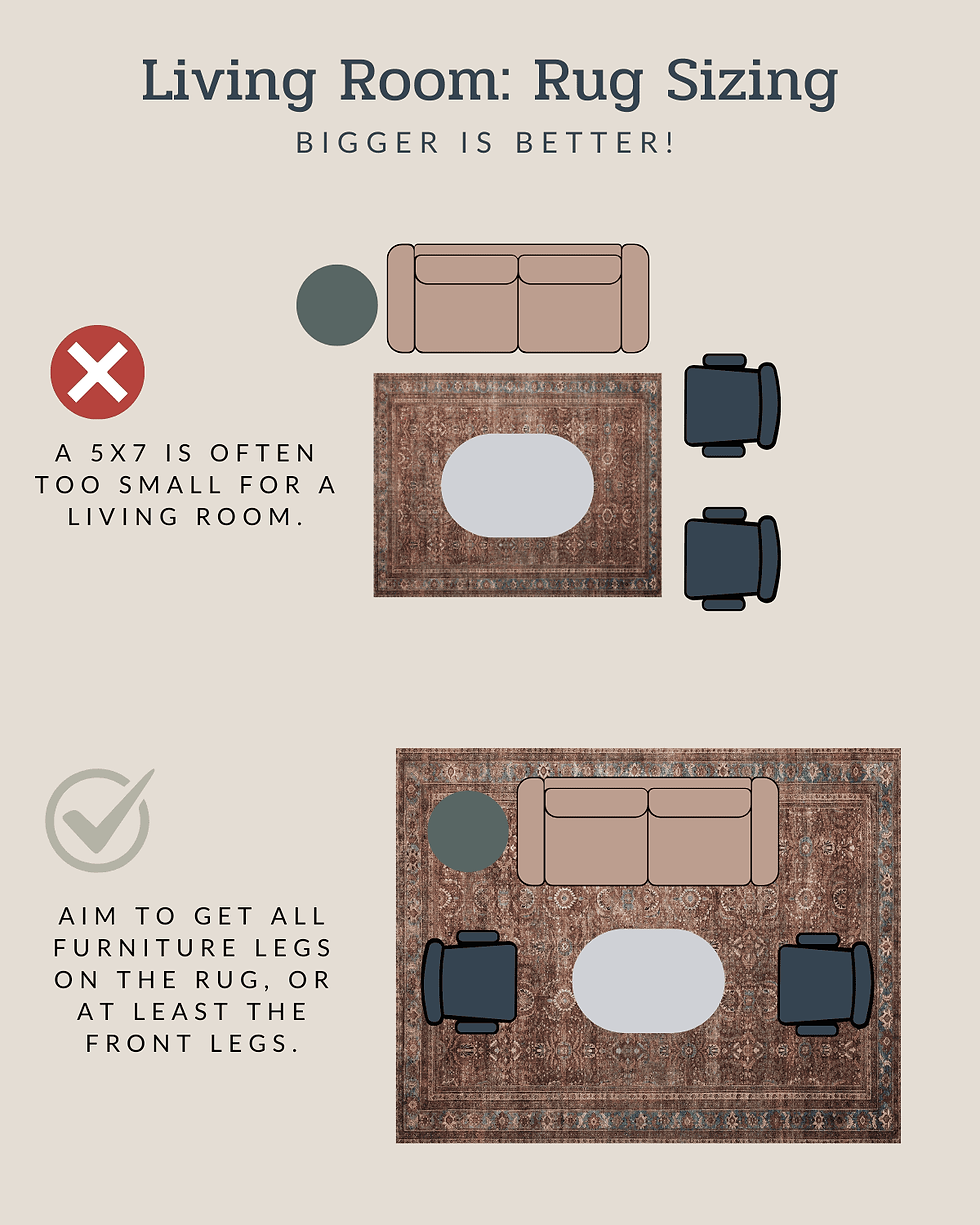
Many people buy good furniture and still feel unhappy with the result. The room looks messy, cramped, or cheap even though the pieces themselves are fine. In most cases, the problem is scale, not style. Scale means how big or small things are compared to the room and to each other.
The Most Common Scale Mistake
The number one mistake is buying a rug that is too small.
A small rug:
Breaks the room into pieces
Makes furniture feel disconnected
Makes the room feel smaller
This happens because people:
Try to save money
Are afraid a big rug will overwhelm the space
Choose the rug last instead of first
The Fix: The “Front Feet” Rule
A simple rule makes this easy. At least the front legs of your sofa and chairs should sit on the rug. If the rug floats alone in the center of the floor, it is too small.
A larger rug:
Grounds the furniture
Makes the room feel finished
Actually makes the space feel bigger
This same idea applies to furniture in general. Pieces that are slightly larger and well-proportioned usually look better than many small pieces.
3. Designing Around the “Unchangeables”

Why Real Homes Are Harder Than Photos
Online photos often show perfect spaces:
White walls
New floors
Clean lines
Real homes are different.
Most people live with:
Old flooring
Odd layouts
Radiators, vents, or pipes
Tiles or cabinets they cannot change
Trying to ignore these features usually makes decorating harder.
The Mistake: Fighting What Already Exists
Many people try to force a style that does not match their home.
For example:
Cool gray furniture with warm wood floors
Modern decor in a very traditional space
This creates tension. The room feels uncomfortable, even if you cannot explain why.
The Fix: Work With What You Have
Instead of pretending fixed elements are not there, accept them.
Look closely at:
The undertone of your floors
The color of tiles or cabinets
The overall mood of the space
Then choose colors and materials that work with those elements.
When everything feels intentional, the room looks calm instead of confused.
4. The Budget Reality Check

Why Decorating Feels So Expensive
Decorating adds up quickly. A sofa, a rug, curtains, lighting, art, and accessories can cost more than expected. This often leads to panic buying or buying “temporary” items.
The Problem With Placeholder Furniture
Placeholder furniture is something you buy just to fill space.
It is often:
Cheap
Uncomfortable
Not your style
The problem is that placeholders often stay longer than planned. They become clutter, and you end up spending more money replacing them later.
The Fix: The 60-30-10 Budget Rule
A simple budget structure helps.
60% on big items you use every day (sofa, bed, table)
30% on secondary items (rugs, curtains, lighting)
10% on small decor
This keeps your money focused where it matters most.
It is better to:
Buy one good sofa and wait on decorThan to:
Buy many cheap items that do not last
5. The “Last 10%” Syndrome

Why Rooms Feel Unfinished
Many people reach a point where the furniture is in place, but the room still feels flat.
This is the “Last 10%” problem. The final details matter more than people realize.
What the Last 10% Includes
Lighting
Art
Texture
Small adjustments
These elements create warmth and depth.
The Fix: Layer Your Lighting
If you only use one overhead light, the room will feel harsh and unfinished.
Instead, use:
A floor lamp
A table lamp
Soft, warm bulbs
Multiple light sources make a room feel cozy and intentional.
6. Stop Comparing and Start Living

Why Comparison Ruins Decorating
Social media makes it easy to compare your home to others.
But:
Online rooms are styled, not lived in
Photos are edited
Trends change quickly
Trying to copy perfection often leads to dissatisfaction.
The Truth About Good Homes
The best homes are not perfect. They feel personal.
They reflect:
Memories
Comfort
Real life
The Pro Tip: Choose What You Love
If you love something, even if it is not trendy, it belongs in your home.
A space becomes meaningful when it reflects you, not a rulebook.
Decorating Is a Journey, Not a Test
Decorating feels hard because:
It involves money
It involves identity
It involves choice
But difficulty does not mean failure. Progress matters more than perfection. Small steps, thoughtful choices, and patience lead to a home that feels right.
Home Decorating FAQs
1. How long does it usually take to decorate a home?
There is no fixed timeline. Some rooms take weeks, others take months. Decorating often happens in stages as you live in the space and understand what you truly need.
2. Should I decorate one room at a time or everything together?
One room at a time works best for most people. It reduces stress, helps with budgeting, and allows you to focus without feeling overwhelmed.
3. Do I need to follow a decorating style label?
No. Style labels are just guides. You can mix ideas and choose what feels comfortable and natural to you.
4. Is it okay if my home doesn’t look “finished” right away?
Yes. A home does not need to be finished to be functional or beautiful. Many well-designed
homes evolve slowly over time.
5. How do I know if a room needs more decor or less?
If a room feels crowded or distracting, it probably needs less. If it feels cold or empty, it may need warmth through texture, lighting, or one meaningful item.
6. Can decorating improve how I feel at home?
Yes. A well-arranged space can help you feel calmer, more focused, and more relaxed. Comfort and organization often matter more than style.
7. Should I buy everything new when decorating?
No. Mixing new items with secondhand or existing pieces adds character and saves money. Not everything needs to match or be brand new.
8. What should I do if I regret a decorating choice?
Small changes are normal. Rearranging furniture, changing lighting, or removing one item can fix most problems without starting over.
9. How do I decorate if I don’t trust my taste?
Start small. Choose neutral basics first, then add personal items slowly. Taste improves with experience, not pressure.
10. What matters more: trends or comfort?
Comfort matters more. Trends change, but your daily comfort stays important. A home should support your life, not impress strangers.
Final Thoughts
Decorating your home is not about getting everything right the first time. It is about learning what works for you, making adjustments, and letting your space grow with you.
When you:
Reduce choices
Respect scale
Accept what you cannot change
Spend intentionally
Add warmth and personality
Decorating becomes less stressful and more enjoyable. Your home does not need to be perfect. It needs to feel like yours.


Comments