
LVP FLOORING: GUIDE BEST LVP'S, COST AND CLEANING
- Vanshika Thareja

- Dec 27, 2025
- 8 min read
I. Introduction
LVP flooring, or Luxury Vinyl Plank, is a popular, durable, and waterproof flooring option made of multiple layers that realistically mimics natural wood (or stone) planks, offering an affordable, low-maintenance, and easy-to-install alternative to hardwood, ideal for any room due to its resistance to scratches, stains, and moisture.
II. What Is LVP Flooring?
Luxury Vinyl Plank (LVP) is a synthetic flooring product designed to replicate the look and feel of natural wood while providing superior durability and water resistance.
The term "Luxury" was added by the industry to distinguish this new generation of flooring from the thin, flexible sheet vinyl found in your grandmother's kitchen. Today, it refers to the realistic 3D printing and embossing technologies used to create the planks.
The Anatomy of a Plank (Layer-by-Layer)
Understanding these layers is the only way to avoid buying junk.
The Wear Layer (The Shield): This is clear polyurethane topcoat. It protects against scratches, stains, and scuffs. It is measured in mils (one-thousandth of an inch).
Rule of Thumb: 6-12 mil is for low traffic. 20+ mil is mandatory for pets and kids.
The Design Layer (The Photo): A high-definition, 3D-printed image of wood or stone. High-end LVP uses "EIR" (Embossed in Register) technology, meaning the texture matches the visual knots and grain.
The Core Layer (The Backbone): This determines if the floor is waterproof and how rigid it is. (More on SPC vs. WPC later).
The Backing Layer (The Cushion): Often made of cork or foam, this attached underlayment provides sound absorption and comfort underfoot.
LVP vs. The World: A Quick Comparison
How does it stack up against other flooring options?
Feature | LVP | Laminate | Hardwood | Tile |
Waterproof | Yes (100%) | Mostly No | No | Yes |
Cost | $$ | $ | $$$$ | $$$ |
DIY Friendly | High | High | Low | Low |
Durability | High | Moderate | Moderate | Very High |
Resale Value | Neutral | Neutral | Positive | Positive |
Comfort | Moderate | Moderate | Hard | Hard/Cold |
Note: If you are debating between vinyl and its closest competitor, check out our guide on whether laminate flooring is waterproof.
III. Types of LVP Flooring: SPC vs. WPC
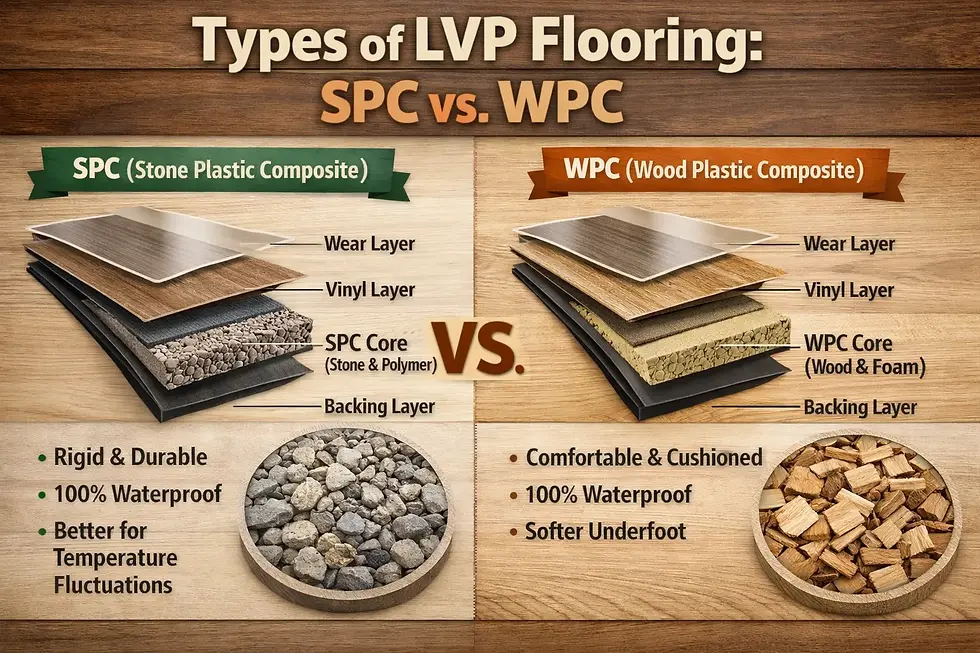
This is the most critical technical decision you will make. LVP is generally split into two main core types.
1. SPC Flooring (Stone Plastic Composite)
Think of this as the "tank" of vinyl flooring. The core is made of limestone powder, polyvinyl chloride, and stabilizers.
Best Use Case: Commercial spaces, heavy furniture areas, sunrooms, and uneven subfloors.
Pros: Virtually indestructible, dent-proof, 100% waterproof, handles temperature fluctuations well.
Cons: Harder underfoot, feels colder, less sound insulation.
Cost: $3.00 – $7.00 per sq. ft.
2. WPC Flooring (Wood Plastic Composite)
The "luxury" in luxury vinyl. The core contains wood pulp and plastic foaming agents.
Best Use Case: Living rooms, bedrooms, second-story rooms (for sound).
Pros: Softer underfoot, warmer, quieter, deeply realistic embossing.
Cons: Can dent if you drop a heavy pot, slightly less durable than SPC.
Cost: $4.00 – $8.00 per sq. ft.
3. Flexible Vinyl Planks (Glue Down)
This is the older technology often referred to as dryback vs rigid core LVP. It lacks a rigid core.
Verdict: Generally avoid for residential use unless you are on an extreme budget or dealing with very specific commercial applications. It telegraphs every imperfection in your subfloor.
Crucial Specs Explained
Thickness: Don't obsess over total thickness (e.g., 5mm vs 8mm). A thicker plank is nicer to walk on, but the Wear Layer matters more for longevity.
Attached Underlayment: Look for planks with pre-attached cork or IXPE foam. It saves you a step during installation and drastically reduces hollow clicking sounds.
IV. Best LVP Designs & Where to Use Them

Gone are the days of fake-looking, shiny plastic floors.
Wide Plank Wood Looks: 7 to 9-inch wide planks are the standard. They make rooms look larger and more modern. Check out luxury vinyl that looks like real wood for inspiration.
Herringbone & Chevron: Installing planks in patterns adds massive visual interest, though it increases material waste and installation cost.
Stone & Marble Visuals: Large format vinyl tiles (LVT) that mimic slate or Carrara marble are trending for bathrooms, offering the look of stone without the coldness.
Matte Finishes: High gloss is out. Low-sheen, oil-rubbed visuals are in.
Room-by-Room Recommendations
Kitchens: Go with SPC. Dropped skillets and heavy fridges require the dent resistance of a stone core. Explore different kitchen design styles to match your floor.
Bathrooms: SPC or WPC. Both are waterproof, but ensure you caulk the perimeter so water doesn't seep under the floor. See our bathroom design guide for more ideas.
Basements: SPC is King. It resists the temperature shifts and potential moisture from concrete slabs better than WPC. Get more finished basement ideas here.
Bedrooms: WPC. The added warmth and softness make that first step out of bed much more pleasant.
Sunrooms: Be careful. Intense direct sunlight can fade vinyl and warp WPC. Use high-quality SPC with UV-resistant coating.
Best LVP Products by Category
Best Overall: SPC Core, 20mil wear layer, attached cork backing.
Best Budget: SPC Core, 12mil wear layer (good for low traffic).
Best Premium: WPC Core, 30mil wear layer, EIR texture, bevelled edges.
Best DIY: Rigid core with a "drop-lock" mechanism (easier than angle-angle locking systems).
V. LVP Flooring Cost Guide

How much does LVP flooring cost? Here is the breakdown.
Material Costs by Tier
Tier | Price Range (per sq. ft.) | What You Get |
Budget | $1.50 - $2.50 | 6-12mil wear layer, thin core, simple visuals. |
Mid-Range | $2.50 - $4.50 | 12-20mil wear layer, decent texture, SPC core. |
Premium | $4.50 - $6.00 | 20mil+ wear layer, EIR texture, painted bevels. |
Luxury | $6.00+ | 30mil+ wear layer, designer brands, specialized formatting. |
Labor Costs
National Average: $1.50 to $3.50 per sq. ft.
Pattern Charges: Expect to pay $1-$2 extra per sq. ft. for herringbone installation.
Removal: Ripping out old carpet or tile usually costs $0.50 - $1.50 per sq. ft.
Hidden & Additional Costs
Never budget just for the box price.
Subfloor Prep: If your floor isn't flat, LVP will break. Leveling compound can cost $300-$800 per room.
Transitions/Trim: T-moldings and stair noses are expensive—often $30-$50 per piece.
Waste: Buy 10% extra for standard rooms, 15-20% extra for diagonal/pattern layouts.
10-Year Value Comparison
LVP: Low upfront, zero maintenance cost.
Hardwood: High upfront, requires refinishing ($3-$5/sq ft) every 7-10 years.
Tile: High upfront, grout cleaning and sealing costs over time.
VI. LVP Cleaning & Maintenance Guide
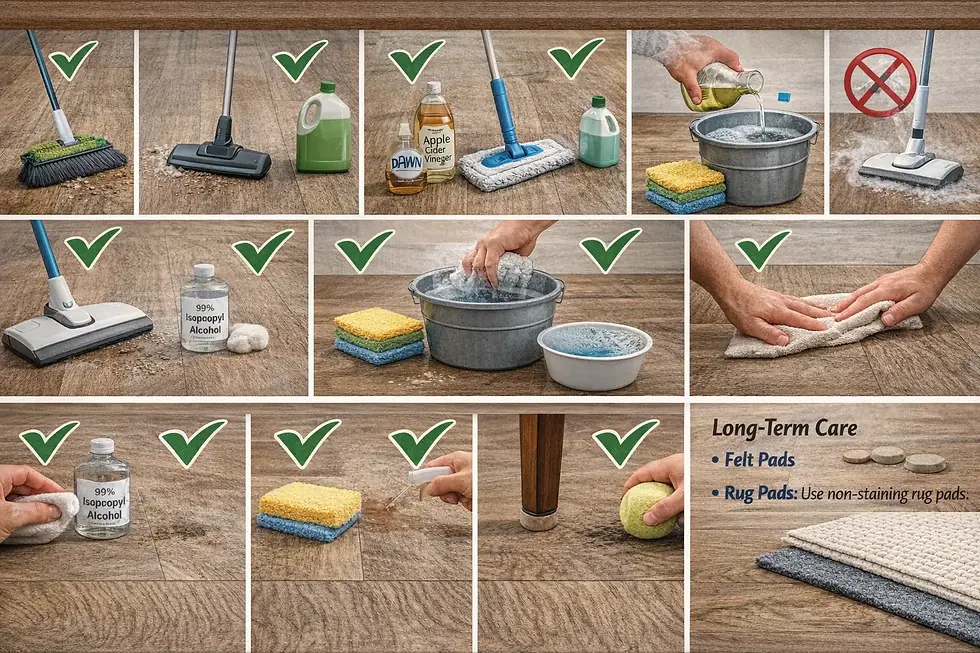
One of the main reasons people buy LVP is the "lazy factor." It is incredibly easy to clean.
Daily and Weekly Care
DO: Sweep or vacuum (without a beater bar) daily to remove grit that can scratch the wear layer.
DO: Damp mop with a pH-neutral cleaner.
DON'T: Use steam mops. The intense heat can drive moisture into the joints and warp the planks.
DON'T: Use Mop & Glo or wax. It creates a haze that is impossible to remove.
Deep Cleaning Guide
Sweep thoroughly.
DIY Cleaner: Mix 1 cup of apple cider vinegar into a gallon of warm water. Add a single drop of Dawn dish soap.
Mop with a microfiber mop, rinsing the pad frequently.
Dry stubborn wet spots with a towel.
Stain Removal Chart
Stain Type | Solution |
Grease / Heel Marks | Isopropyl Alcohol (Rubbing Alcohol) |
Wine / Juice | Warm water + Mild Detergent |
Pet Accidents | Enzyme cleaner (soak for 5 mins, then wipe) |
Ink / Marker | Hairspray or Alcohol (rinse immediately) |
Scuffs | Rub with a tennis ball or melamine sponge (lightly) |
Long-Term Care
Furniture Pads: Put felt pads on every chair leg. LVP is durable, but sharp drags will gouge it.
Rug Pads: Use non-staining rug pads. Rubber-backed mats can cause a chemical reaction that yellows the vinyl.
VII. LVP Installation Guide

DIY vs. Professional
DIY: If you have a square room and click-lock flooring, this is a 4/10 difficulty project. Perfect for DIY renovators looking to save money.
Pro: If you have uneven subfloors, curved walls, or are doing a complex pattern, hire a pro.
Tools Needed (The Essentials)
Utility knife (with hooked blades)
Tapping block and rubber mallet
Pull bar (for the last row)
Spacers (1/4 inch)
Jigsaw (for cutting around vents/door jambs)
Carpenter’s square
Step-by-Step Overview
Acclimation: Let the boxes sit in the room for 48 hours.
Prep: The subfloor must be flat (within 3/16” over 10 feet). Sand down high spots, fill low spots.
Layout: Measure the room width. Ensure your first and last rows won't be slivers (less than 2 inches).
Install: Work from left to right. Click the short ends, then lock the long side.
Stagger: Keep end joints at least 6 inches apart for structural integrity.
Common Mistake: Forgetting the expansion gap. Leave 1/4 inch of space around all walls. If you butt it tight, the floor will buckle when the house heats up. Read about 10 common vinyl plank flooring mistakes to avoid other pitfalls.
VIII. Pros and Cons of LVP Flooring
Let's look at the balance sheet.
Advantages
Waterproof: The biggest selling point. Great for wet zones.
Durability: Resists scratches and dents better than wood.
Visuals: High-end options are indistinguishable from wood to the naked eye.
Comfort: Warmer and softer than tile.
Disadvantages
No Refinishing: Once it is scratched deep or worn out, you have to replace the plank. You cannot sand it down.
Resale Value: While better than laminate, it does not add equity to a home the way solid hardwood does.
Environmental: It is made of plastic. While recyclable options exist, they are rare. Look for Floor Score Certified products to ensure low VOCs (indoor air quality).
Pattern Repeats: Cheap LVP has few unique planks (4-5). You might see the same "knot" every 5 feet.
IX. Conclusion & Next Steps

LVP flooring isn't just a trend; it is the practical response to modern living. It offers the beauty of hardwood without the anxiety of maintenance. If you have a busy household, pets, or a budget that doesn't stretch to solid oak, LVP is likely your best option.
Ready to transform your home? Start by browsing samples and planning your layout today.
Building your dreamden.ai starts from the ground up.
X. Frequently Asked Questions
1. Is LVP safe for kids and pets?
Yes. High-quality LVP is phthalate-free and has low VOC emissions. For pets, it provides better traction than laminate and is immune to "accidents."
2. Is LVP flooring truly waterproof?
The plank itself is waterproof. However, if you have a flood, water can get between or under the planks, causing mold on the subfloor. For bathrooms, a perimeter seal is recommended.
3. Can LVP be installed over tile or concrete?
Yes. You can float LVP over existing tile if the grout lines are small. If they are deep/wide, fill them first. For more details, read our guide on whether you can you put vinyl flooring over tile. Concrete is also a perfect subfloor, provided a vapor barrier is used.
4. Does LVP increase home value?
It increases appeal, but not necessarily appraised value. A buyer will prefer LVP over old carpet or laminate, but hardwood is still the gold standard for equity.
5. What is the difference between LVP and LVT?
Technically nothing. LVP stands for "Plank" (wood look), LVT stands for "Tile" (stone/concrete look). The internal construction is usually identical.
6. What is the best thickness for LVP?
Aim for at least 5mm total thickness for rigid core, with a minimum 20mil wear layer for main living areas.
7. Is LVP slippery?
It can be. Look for products with an R10 slip rating or textured surfaces if you are installing it on stairs or in a home with elderly residents.


Comments