
Replacing a Garage Floor


Replacing a complete garage floor requires structural understanding, precision demolition, correct reinforcement integration, and proper concrete finishing.
1. Understanding the Existing Garage Structure
1.1 Stone Foundation Walls
Older garages often sit on stone or rubble foundations. These walls do not behave like modern poured walls and are vulnerable to undermining. Disturbing soil beneath them can trigger structural instability or collapse.
1.2 Existing Footing Lines
There are visible lines in the old concrete where footing sections were poured separately from the central slab. These act as structural bearing points for walls and support posts.When replacing a slab, these areas must be preserved to maintain structural integrity.
1.3 Slab Condition
The inner slab had:
Large cracks
Sections deteriorated or crumbled
Uneven thickness
The deterioration justified a full slab replacement.
2. Planning the Demolition and Replacement
The process must maintain structural support while removing only the deteriorated slab.
2.1 Key Project Decisions Based on Transcript
Footings are left in place
A clean saw-cut line is established to separate the slab from footing areas
Demolition is done without undermining supporting walls
Rebar dowels will tie the new slab into the existing footing concrete
2.2 Site Preparation Steps
Clear all obstacles from the garage
Map out footing edges
Mark straight snap lines for saw-cutting
Ensure ventilation for saw and jackhammer fumes
3. Cutting the Concrete
Saw-cutting is required to precisely separate structural footing sections from the slab.
3.1 Tools Used
Walk-behind concrete saw with diamond blade
Chalk or snap line for marking
PPE (eye, ear, dust protection)
3.2 Purpose of Saw Cutting
Prevents accidental tearing of footing edges
Creates a clean joint for rebar dowel installation
Allows controlled demolition
3.3 Cut Depth
The cut must exceed slab thickness (commonly 4–6 inches) to avoid partial separation.
4. Demolition: Removing the Old Slab
The transcript indicates full jackhammering of the central floor section.
4.1 Equipment
Electric/jackhammer
Shovels and pry bars
Wheelbarrows or skid steer for debris removal
4.2 Debris Handling
Material must be removed to:
Expose the sub-base
Inspect the condition beneath
Confirm support around footing edges remains intact
4.3 Unexpected Sub-Base Conditions
A previous concrete driveway existed beneath the garage slab.This is an unusual finding but beneficial:
Provides a strong base
Eliminates need for new stone compaction
5. Evaluating the Sub-Base
A structurally sound sub-base is critical for slab performance.
5.1 Desired Sub-Base Qualities
Stable, compacted base
No voids
Adequate load-bearing capacity
Free from organic material or loose soils
5.2 Concrete Sub-Base Advantage
Because the old driveway was:
Intact
Thick (about 6 inches)
Non-crumbling
It functioned as an ideal base, reducing labor and cost.
6. Installing Rebar Dowels
The transcript demonstrates drilling holes around the perimeter, inserting rebar, and securing with anchoring epoxy.
6.1 Purpose of Rebar Dowels
Tie the new slab to the old concrete footing
Prevent differential settlement
Reduce future slab movement or separation
6.2 Doweling Process
Step 1: Drill Holes
Use hammer drill with ½–⅝” bit
Embed depth: approx. 6 inches as shown
Clean dust using air blower (compressed air)
Step 2: Inject Anchoring Epoxy
A two-part epoxy that mixes inside the nozzle:
Requires high-pressure caulking gun
Fill bottom of hole first
Insert rebar while epoxy is still workable
Step 3: Grid Layout
Install rebar at ~24 inches on center both directions
Tie bars using steel wire
Maintain elevation using chairs or stones if needed
6.3 Engineering Purpose of a Rebar Grid
Reduces cracking
Increases flexural strength
Distributes loads evenly
7. Preparing for Concrete Pour
7.1 Slab Thickness
Based on transcript, old concrete was around 6 inches thick.Typical garage floors range from 4–6 inches, but older garages often exceed this.
7.2 Formwork
Where necessary:
Create form at front apron
Ensure correct pitch toward garage door
7.3 Apron Lip
A slight raised lip (≈⅜ inch) was formed at the entry to prevent water intrusion.
8. Concrete Pouring Process
8.1 Concrete PSI
Typical garage slabs use:
3,500 PSI for standard residential use
4,000–4,500 PSI for heavy loads or colder climates
8.2 Concrete Slump
The transcript suggests a drier mix, meaning:
Lower slump (3–4 inch)
Higher strength
Better control while finishing
8.3 Placement Steps
Pour concrete starting from the furthest corner
Spread evenly using rakes
Vibrate edges and around rebar
Strike off (screed) level
8.4 Vibration Importance
Eliminates air pockets
Ensures concrete fills voids
Essential for thick slabs or around dowels
9. Finishing the Concrete
The transcript shows:
Magging (magnesium float)
Steel troweling
Edge finishing
9.1 Finishing Stages
Bull float
Mag float to open surface
Steel trowel for smooth finish
Edge tool for clean perimeter
9.2 Curing Requirements
Maintain moisture for ≥ 48 hours
Prevent rapid drying
Avoid heavy loads for at least 7 days
Full cure in 28 days
10. Optional Recommendations Based on Structural Conditions
10.1 Drainage Improvement
The front lip is correct, but a slope of at least 1–2% toward the door is recommended.
10.2 Sealers
Water-based acrylic (low cost)
Epoxy (mid cost)
Polyurea/polyaspartic (high-performance)
10.3 Joint Saw Cutting
To control cracking, saw-cut contraction joints within 6–18 hours of pour.
11. U.S. INDUSTRY-LEVEL COST BREAKDOWN
For a 20×20 ft (400 sq ft) Garage Floor Replacement
Includes regional factors, materials, labor, and advanced line-item breakdown
11.1 National Average Cost Range (All-In)
Level | Total Cost (400 sq ft) | Cost per sq ft |
Low-End | $4,800 – $7,200 | $12 – $18 |
Mid-Range | $8,000 – $12,000 | $20 – $30 |
High-End / Structural | $13,000 – $20,000+ | $32 – $50+ |
11.2 Detailed Line-Item Cost Breakdown (U.S.)
A. Demolition & Disposal
Task | Typical Price |
Saw cutting | $300 – $600 |
Slab demolition (4–6” thick) | $2 – $4 per sq ft ($800 – $1,600) |
Debris removal & dumping fees | $400 – $900 |
Total Demo Cost | $1,500 – $3,100 |
If unexpected sub-base concrete is found (as in transcript), disposal may reduce by 10–20%.
B. Sub-Base Preparation
Item | Cost |
No new stone needed (concrete base found) | $0 |
If stone is needed: 4" compacted gravel | $600 – $1,200 |
In this scenario (old driveway base), no gravel cost applies.
C. Rebar and Reinforcement
Reinforcement Item | Cost |
Rebar dowels | $150 – $350 |
Drilling holes | $200 – $400 |
Anchoring epoxy (2–3 tubes) | $90 – $150 |
Full grid (No. 3 or No. 4 rebar) | $350 – $700 |
Tying and placing rebar | $200 – $400 labor |
Total | $990 – $2,000 |
D. Concrete Material Costs
For a 6-inch slab at 400 sq ft:
Required concrete ≈ 7.4 cubic yards
Material | Cost |
3,500 PSI concrete | $150 – $190 per yd ($1,100 – $1,400) |
4,000–4,500 PSI upgrade | +$100 – $180 |
Delivery fees | $100 – $200 |
Accelerator additive (if needed) | $60 – $150 |
Pump truck (if required) | $350 – $600 |
Total Concrete Material:$1,600 – $2,350
E. Labor Costs (USA)
Labor Category | Cost |
Crew (2–3 workers, 8–12 hrs) | $1,200 – $2,800 |
Finisher (trowel, edges) | $700 – $1,200 |
Total Labor | $1,900 – $4,000 |
F. Equipment Rental (If homeowner DIYs portions)
Equipment | Cost Range |
Concrete saw | $80 – $150/day |
Jackhammer | $70 – $120/day |
Wheelbarrow / compactor | $40 – $80 |
Screeds, floats, trowels | $50 – $120 |
Total | $200 – $450/day |
G. Optional Add-Ons
Item | Cost |
Polyurea coating | $1,600 – $3,500 |
Epoxy coating | $1,200 – $2,400 |
Drainage channel | $300 – $1,000 |
Apron replacement | $500 – $1,200 |
11.3 Regional Pricing Adjustments
Midwest (WI, MN, MI, OH)
−10% to −20% cheaper
Lower labor and delivery fees
South (TX, FL, GA, NC)
−5% to −10% cheaper
High concrete availability
Northeast (NY, MA, NJ)
+10% to +25% higher
Labor costs significantly higher
West Coast (CA, WA, OR)
+20% to +35% higher
Strict building codes
12. Summary of Technical Process
Step | Purpose |
Saw-cutting | Separates slab from load-bearing footings |
Jackhammering | Removes deteriorated concrete |
Sub-base inspection | Ensures stable foundation |
Rebar doweling | Ties slab to footing structurally |
Rebar grid installation | Prevents cracking and movement |
Concrete pour | Creates new structural surface |
finishing | Ensures smooth, durable floor |
Cure process | Achieves full concrete strength |
13. Final Engineering Notes
Maintaining support under stone walls prevents structural failure.
Rebar dowels are essential when old concrete interfaces with new.
A dry concrete mix increases compressive strength but requires skilled finishing.
A front entry lip reduces water intrusion risk.
Concrete must be protected for 2–3 days from rain and rapid drying.


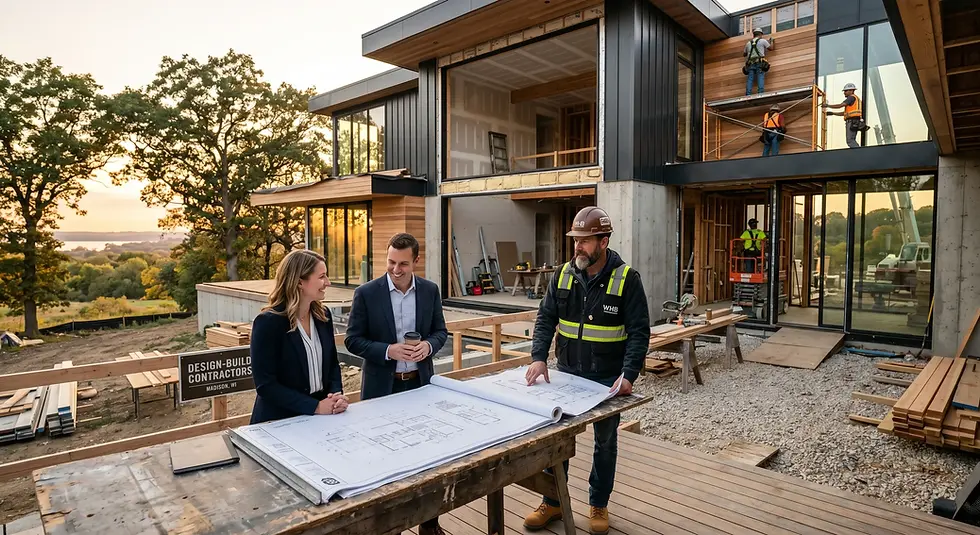
Replacing a garage floor is one of those projects that looks simple until you realize how much depends on the prep work. It is not just pouring new concrete. The old slab has to come out properly, the base needs to be stable, drainage should be considered, and reinforcement has to be done right so cracks do not show up too quickly. I’d definitely want an experienced contractor for a full replacement, not just a quick patch. Before choosing materials or finishes, I’d also compare practical flooring feedback on sites like https://www.flooringandcarpetreviews.com/ . A strong garage floor should handle weight, weather, and daily use.