
The Rug Size Mistakes Found in 80% of Homes


One small miscalculation on the floor can throw off an entire room and most of us are making it without even realising.
There's a moment most people experience when decorating their home. You've bought a rug a genuinely beautiful one. You roll it out. You stand back. And something just doesn't sit right. The room feels a little awkward, a little unresolved. The furniture looks like it doesn't quite belong together. You can't put your finger on why.
The good news is that once you understand the rules the real ones, not the vague suggestions that come printed on retailer websites they're surprisingly simple. And they genuinely change the way a room looks.
Why Getting the Size Right Changes Everything
Before the room-by-room breakdown, it's worth understanding what a rug is actually doing in a space because this is what most people miss when they're trying to decide between two sizes in a shop.
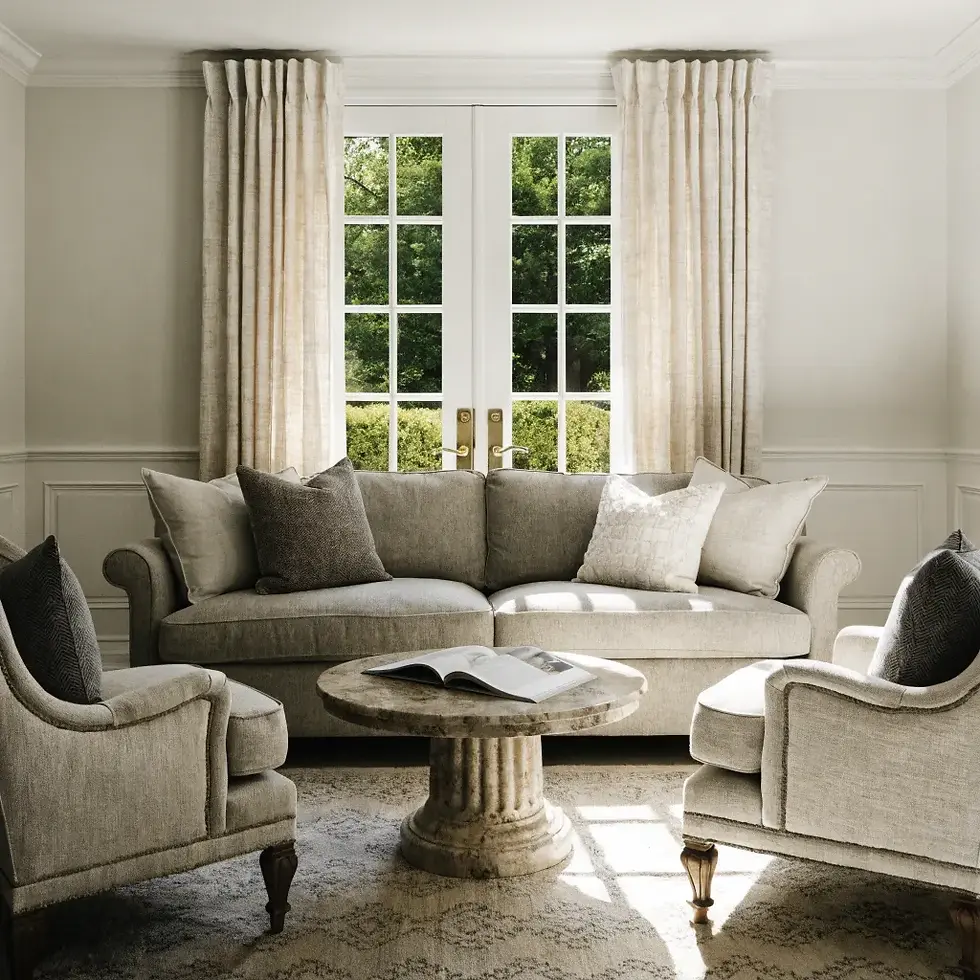
When a rug is the right size, you stop noticing it. Everything in the room just feels settled and intentional. When it's too small, nothing else in the room looks right either even if nothing else has changed.
The Living Room: Where It Matters Most
The living room is where rug sizing has the greatest impact, and where the most common mistake lives.
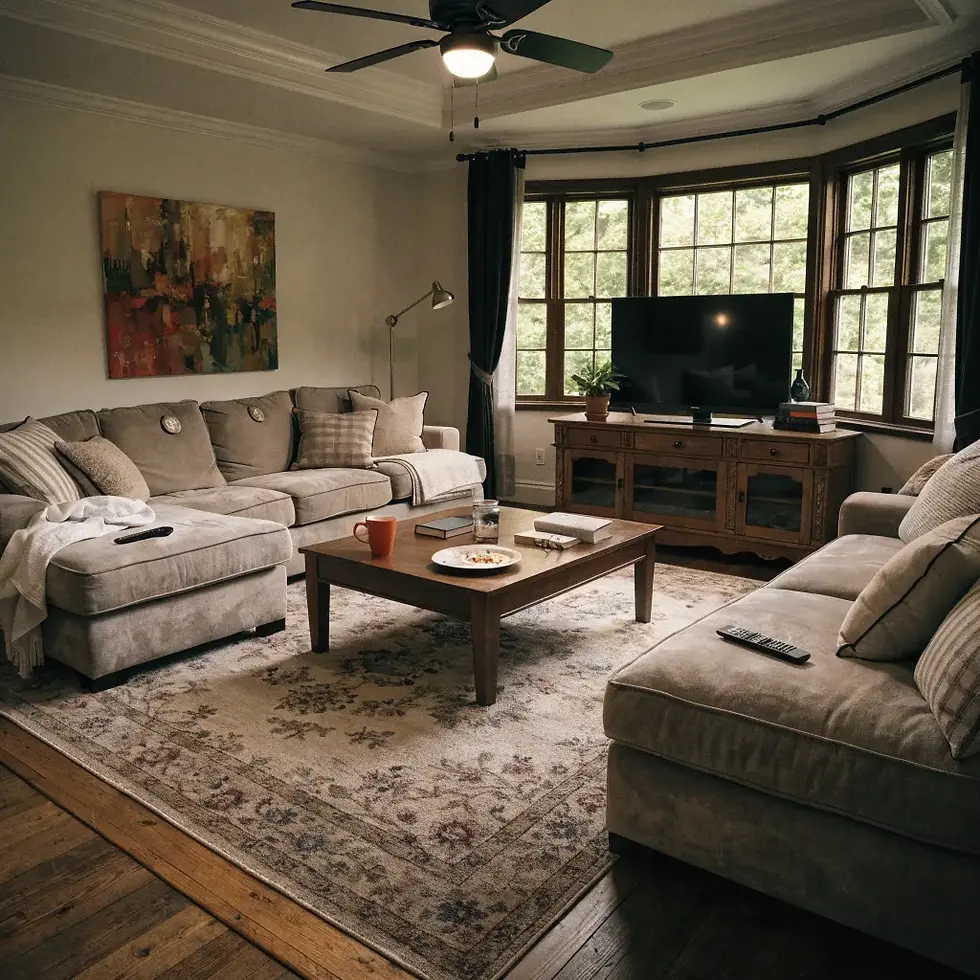
In terms of size, an 8x10 foot rug works well for a medium-sized living room with a standard sofa-and-two-chairs arrangement. For a larger room, or one with a sectional sofa, a 9x12 is usually the better starting point. The temptation is always to go smaller than you need partly for cost, partly because a large rug looks enormous on the shop floor without furniture around it. Resist that temptation. When in doubt, size up.
One last living room rule worth knowing your rug should never touch the walls. Leave at least 12 to 18 inches of bare floor between the edge of the rug and the skirting board. That visible strip of floor is what makes the rug feel intentional and framed, rather than like an attempt at wall-to-wall carpet that didn't quite reach.
The Dining Room: The Rule That Cannot Be Broken
Dining rooms have the least forgiving rug rule of any room in the house, and it's also the most commonly broken.
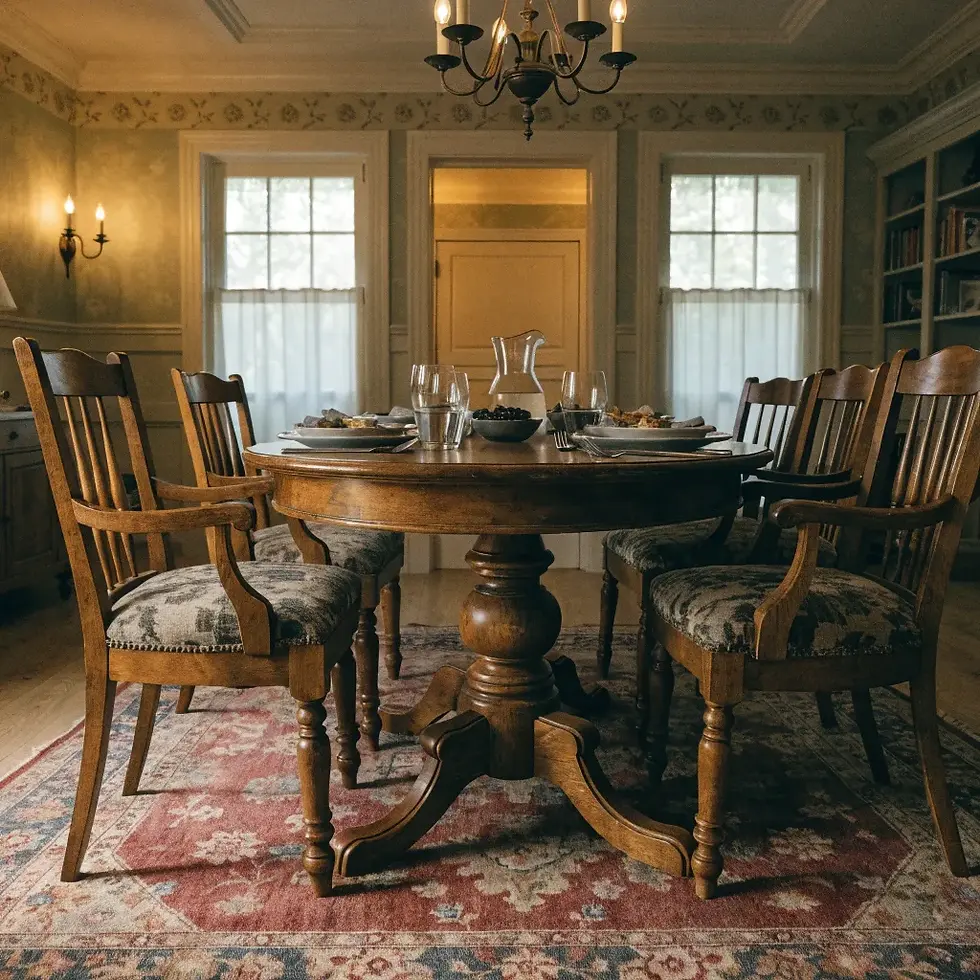
The rule is this: every chair must remain on the rug even when it's pulled out from the table. Not just when it's neatly tucked in when it's actually in use, with someone sitting in it, with the chair pulled back by a foot or so. If the back legs slip off the rug edge when a guest gets up from dinner, the rug is too small.
The general guidance is to add at least 24 inches to every side of your dining table when choosing rug size. For a four-seater table, this typically means a minimum of 6x9 feet. For a six-seater, 8x10 is a better starting point. For larger tables, or any table with leaves that extend it, always size for the extended configuration rather than the compact one.
Round dining tables work beautifully with round rugs that echo their shape. Square tables are equally well-suited to square rugs. In both cases, the same rule applies: the chairs stay on the rug.
The Bedroom: The Underfoot Test
The most common bedroom rug mistake is placing a small rug only at the foot of the bed.
Specifically, the rug should extend from roughly one third of the way up the bed all the way to beyond the foot, and it should reach at least 18 to 24 inches out from each side. That generous side coverage is what gives you the soft landing, and what creates the "hotel bedroom" quality that makes a well-designed room feel so different from one that's nearly there.
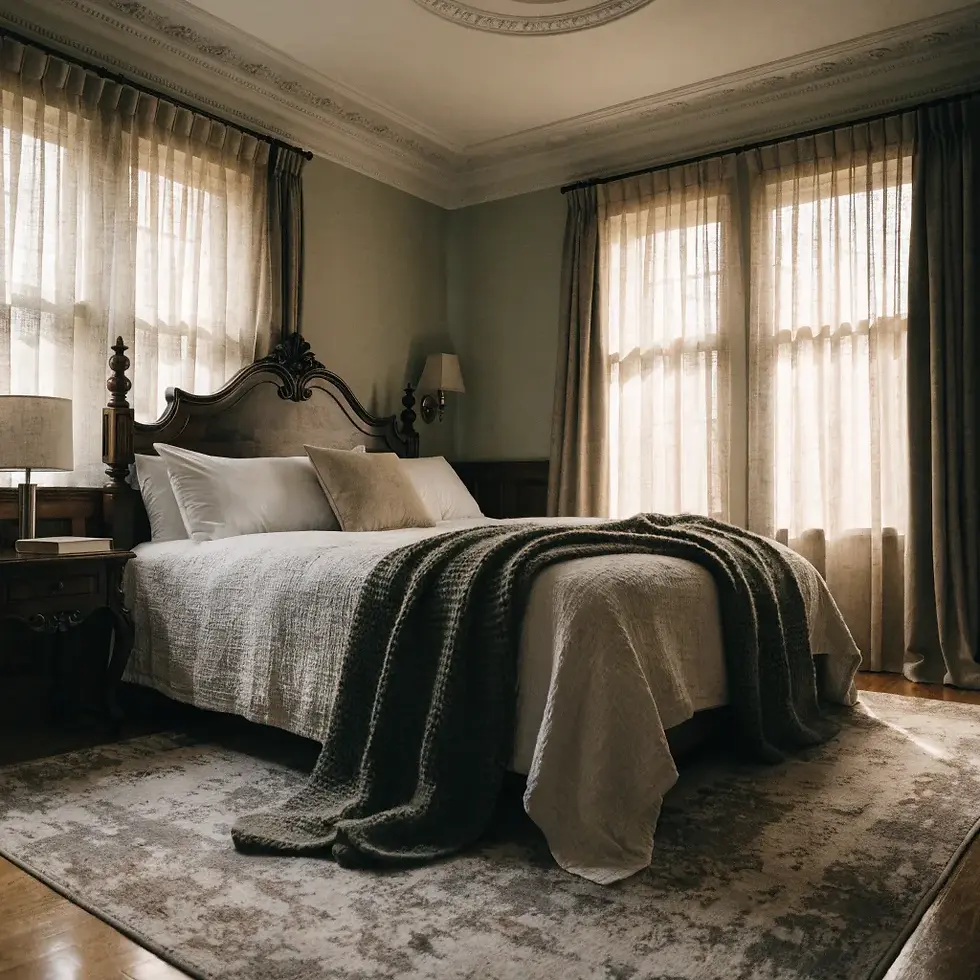
For a double bed, a 160 x 230 cm rug placed under the lower two thirds of the bed works well. For a king, 200 x 290 cm gives better coverage. For a super king, consider going to 250 x 350 cm or choosing a custom size.
If the bedroom is small and a large centred rug doesn't feel right, two runners placed on either side of the bed is a considered alternative but the key is still the soft landing when you wake up.
The Hallway: Length Over Everything
The main rule here is proportion a hallway runner should be long enough to fill the visual length of the corridor, not just cover a small section of it. A short runner in a long hallway looks hesitant as if the rug isn't quite sure it belongs there.

Leave a few inches on either side of the runner so the floor frames it, and ensure doors can clear the rug without catching on it. If you have radiators in the hall, keep the rug at least 10 centimetres clear so heat can circulate.
Before You Buy: The Step Most People Skip
The most practical step you can take before purchasing is to use painter's tape or newspaper to map out the rug's footprint on your actual floor. Live with that outline for a day. Walk around it. Sit in your furniture and look at it. See whether the dining chairs pull out comfortably within its boundaries. This simple exercise costs nothing and prevents the very expensive mistake of buying a rug that doesn't work.

But tape only tells you about size. It doesn't tell you how a particular style, colour, or pattern is going to read in your space and that's equally important. A rug that's perfectly sized but visually wrong for the room doesn't solve the problem.
This is where DreamDen AI genuinely changes the process. Upload a photo of your room and visualise properly sized rugs in your actual space with your furniture, your flooring, your light before you commit to anything. See how a larger rug shifts the whole register of a room. Understand whether the size and style you're considering actually works in context. Make the decision with confidence, not crossed fingers.


Comments