
The Best Layout for a Chef’s Kitchen


Designing a kitchen for serious cooking means thinking beyond looks and focusing on how the space actually works. Professional chefs spend long hours in the kitchen, so the way they organize, position, and use their workstations is rooted in practicality. The good news is you don’t need a restaurant-sized kitchen to benefit from these principles. A well-planned home kitchen can function with the same efficiency and comfort that chefs rely on every day.
Among all layout options, one stands out as the strongest foundation for a high-performance kitchen: the galley layout. While other arrangements have their own advantages, the galley consistently delivers the most efficient workflow, especially for cooks who value speed, precision, and minimal wasted motion.
This blog explores what makes a chef’s kitchen truly functional, why the galley layout is so effective, how chefs adapt it for home use, and how you can integrate professional strategies into any kitchen size. You’ll also find a detailed breakdown of must-have features that bring chef-level performance into your cooking environment.
What Is a Chef’s Kitchen?
A chef’s kitchen is any home kitchen designed to support the demands of serious cooking. Instead of prioritizing decorative elements, every decision centers around usability, durability, and efficiency.
A chef’s kitchen typically includes:
Practical, easy-to-clean surfaces
High-quality appliances capable of handling intensive cooking
Strategic storage that keeps tools visible and accessible
A layout that supports quick movement between tasks
Durable fixtures that hold up to heavy, repeated use
Despite the focus on function, a chef’s kitchen can still look beautiful. Well-designed professional features often end up enhancing the visual appeal. The goal is not to recreate a commercial kitchen but to adopt the principles that make those spaces so effective.
Why the Galley Layout Is the Top Choice for Chefs

The galley layout originates from ship kitchens, where limited space required an extremely efficient configuration. Its defining feature is its linear, corridor-style design with one or two parallel runs of cabinets and work surfaces.
Chefs tend to prefer this layout for a simple reason: it maximizes efficiency. In a galley kitchen, everything is placed within easy reach, and you can move between tasks with small, controlled motions. Whether you’re prepping, cooking, or cleaning, you spend far less time walking around and more time doing the task at hand.
How the Galley Layout Boosts Efficiency
Compact workflow - A galley layout reduces unnecessary movement by keeping the main stations close together. The cook can pivot, slide, or take one or two steps rather than traverse the entire room.
Clear zones for specific tasks - Prep, cooking, and cleaning areas naturally align along the two runs. This improves order and reduces clutter.
Consistent countertop space - The uninterrupted lines of a galley provide ample workspace for prepping ingredients, laying out tools, or plating meals.
Easy access to storage - Drawers, cabinets, and shelves are positioned so tools are reached quickly and intuitively.
Smooth, logical flow- Ingredients move from storage to prep, then to cooking, and finally to cleanup—without bottlenecks.
The galley layout isn’t limited to professional kitchens. It translates beautifully into homes of all sizes and accommodates everything from compact apartments to spacious open-plan rooms.
Does the Galley Layout Work for Any Size Kitchen?
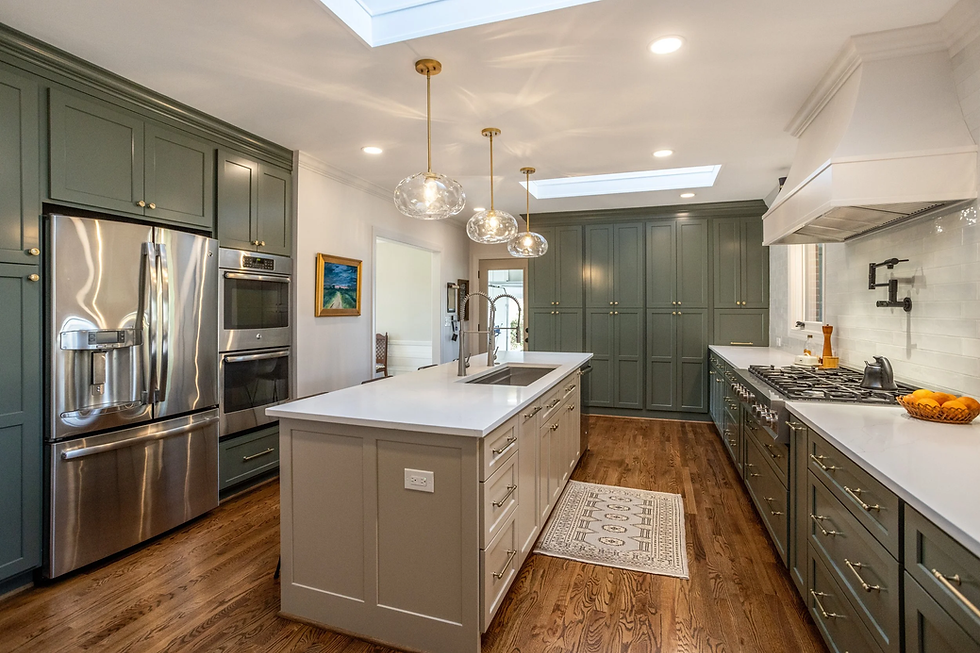
Yes. The galley layout is one of the most adaptable kitchen designs. It works in small spaces because of its efficiency, and it works in large spaces because it creates order within an otherwise open room.
Ideal Length
A functional galley kitchen typically needs a length of 3 to 4.5 meters. This range allows room for appliances, storage, and prep surfaces without overcrowding or spreading stations too far apart.
Under 3 meters: Prep space becomes tight, and stations may have to overlap.
Over 4.5 meters: You lose the tight efficiency that makes galleys so effective.
Ideal Width
Walkway width is critical to comfort and safety.
Single-run galley: Aim for at least 1.2 meters between the cabinets and the opposite wall.
Double galley: Aim for at least 1.8 meters between the two runs.
These measurements allow appliance doors to open fully, people to pass each other, and traffic to flow without interrupting the cook.
How Chefs Adapt the Galley Layout for Home Kitchens

The classic galley is compact and efficient, but chefs often modify it to suit the social atmosphere of a home environment. Cooking for friends or family involves interaction, conversation, and shared tasks. Because of this, chefs often introduce design adjustments that maintain galley efficiency while enhancing openness.
1. Open-Plan Galleys with Islands
Instead of two parallel walls, chefs often use a long island opposite a run of cabinets. This creates a galley effect while inviting people into the space.
Benefits include:
A natural gathering point for guests
Extra prep surface
Room for stools and casual dining
A way to cook while facing the room instead of the wall
2. Additional Prep Stations
Chefs frequently add:
A small prep sink on the island
Extra chopping areas
Dedicated spaces for baking, grilling, or plating
These additions allow multiple people to work without crowding.
3. Family-Friendly Modifications
To make home kitchens more adaptable, chefs incorporate:
Safe, easy-reach storage for kids who want to help
Zones for snacks or non-cooking tasks
Extra lighting to keep workstations bright and comfortable
How to Organize Your Kitchen Like a Chef
Whatever layout you choose, you can improve your kitchen’s efficiency with several core organizational principles drawn from professional cooking environments.
1. Use the Working Triangle
The working triangle links the sink, cooktop, and refrigerator. When these points form a comfortable triangle, you minimize unnecessary steps during meal prep.
Ideal distances:
Each leg of the triangle should be 1.2 to 2.7 meters
The total of all three legs should be 4 to 8 meters
This keeps your main stations easy to reach without crowding each other.
2. Make Storage Visible and Intuitive
Chefs don’t dig for ingredients. They see everything at a glance.
Helpful strategies include:
Clear, labeled containers
Open shelving for everyday items
Categories grouped logically
Consistent spacing
This approach reduces time spent searching for tools or foods.
3. Use a Walk-In or Cabinet Pantry
A pantry with clear, open shelves replicates commercial kitchen storage:
Ingredients are sorted by type
Items are visible
Restocking becomes straightforward
Even a tall cabinet can function as a mini pantry if organized well.
4. Keep Countertops Uncluttered
Chefs need uninterrupted workspace. You can achieve this by:
Using a boiling-water tap to eliminate the kettle
Installing magnetic knife strips
Adding customized drawer inserts
Relocating small appliances to a cabinet
Clean counters lead to faster, easier cooking.
Five Must-Have Features in a Chef’s Kitchen
While layout and organization form the foundation, certain features elevate a kitchen to professional standards. These elements improve workflow, enhance comfort, and make the cooking process more enjoyable and efficient.
1. A Spacious Kitchen Island
A large island becomes the command center of a chef-inspired kitchen. Its function goes beyond extra prep space. It shapes workflow, seating, storage, and even traffic around the kitchen.
A well-designed island may include:
Seating along one long side
A full-size sink
A dishwasher within arm’s reach
Deep drawers for large tools
Durable, easy-clean countertop materials
Placing the sink in the island often improves workflow significantly. It keeps cleaning and prepping central and close to the dishwasher and cooktop.
2. A Double-Faucet Sink
A generous sink with two faucets allows two people to work simultaneously without crowding. It supports multitasking, which is central to professional cooking.
Advantages include:
Rinsing produce while soaking cookware
Washing hands without interrupting someone cleaning dishes
Prepping large volumes of ingredients
Faster cleanup during busy cooking sessions
For households where multiple people cook together, a double-faucet sink becomes invaluable.
3. Deep, Accessible Drawers
Lower cabinets with fixed shelves limit access and force you to unload items to reach what’s in the back. Large, deep drawers solve this problem and offer a clearer view of their contents.
Deep drawers help you:
Organize cookware by size or type
Store bulky pots and pans without stacking
Quickly scan what’s available
Maintain a designated place for every item
Vertical slots near the cooktop are also beneficial. They keep baking sheets, cutting boards, and trays upright and ready to grab.
4. A Pot Filler Above the Cooktop
A pot filler is more than a stylish detail. It adds real convenience by allowing you to fill large pots directly at the stove.
Key benefits:
No carrying heavy, water-filled pots
Reduced risk of spills
Easier handling for cooks of all ages
A smoother workflow for dishes that require frequent refilling
This feature is especially appreciated in kitchens where large batches, soups, pasta, or stocks are common.
5. Thoughtful Storage That Mirrors Professional Kitchens
Storage defines how smoothly a kitchen operates. Chefs use intentional storage strategies that prioritize visibility and accessibility.
Essential storage ideas include:
Pull-out organizers for spices, oils, and utensils
Divided drawers for knives, tools, and prep items
Open storage for frequently used ingredients
Vertical storage for trays, lids, and boards
Pantry zones dedicated to specific categories
When everything has a purposeful place, cooking becomes faster and far less stressful.
Bringing It All Together: Designing a High-Performance Chef’s Kitchen
A truly effective chef’s kitchen is a combination of layout, organization, and thoughtful features. The galley layout provides the framework. Efficient storage and strategic stations support the cooking process. High-functioning fixtures like deep drawers, pot fillers, and double-faucet sinks make daily tasks easier.
Here’s how each piece contributes to the overall experience:
1. The layout defines movement
The galley layout ensures minimal motion, a hallmark of professional cooking.
2. The features enhance capability
Tools like spacious islands and double faucets expand what you can do at once.
3. The organization supports clarity
When everything is visible and accessible, the kitchen becomes intuitive.
4. The workflow becomes seamless
Stations align logically from storage to prep to cooking to cleanup.
The result is a space that feels natural and enjoyable to cook in, even during complex meals.
Practical Tips for Planning Your Own Chef-Inspired Kitchen
Before finalizing your design, consider the following practical guidelines:
Assess your cooking habits
Think about what you actually cook and how you move through the kitchen. Your layout should reflect your patterns.
Maintain good lighting
Task lighting and well-lit work zones reduce fatigue and improve precision.
Choose durable surfaces
Heat-resistant, stain-resistant, and scratch-resistant materials are worth the investment.
Plan for ventilation
A powerful, quiet ventilation system improves air quality while cooking.
Use zones to control clutter
A dedicated spot for prep, one for cleanup, and one for serving keeps the kitchen organized.
Final Thoughts
A chef’s kitchen is defined by efficiency, comfort, and smart design. While many layouts can work, the galley layout remains the most effective for serious cooking. Its emphasis on minimal movement, clear work zones, and optimized workflow makes it a favorite among professionals and home cooks alike.
By combining a strong layout with chef-approved features like spacious islands, deep drawers, pot fillers, and double-faucet sinks, you can create a kitchen that supports everything from everyday meals to ambitious culinary projects. When storage is intuitive, surfaces are durable, and stations flow naturally, cooking becomes more enjoyable and far easier.
Whether you're planning a renovation or refining the space you already have, applying these chef-inspired principles can elevate your kitchen into a high-performance workspace that’s both functional and inviting.


Comments