
Large Window Installation in Open Floor Plans: Light, Space & Design Benefits
- DreamDen AI Editorial Team
- Jul 31, 2025
- 11 min read

Updated: Apr 4
For decades, homes were compartmentalized. Rooms were boxes designed to hold specific functions, often closing them off from one another and, crucially, from the outside world. Today, the open floor plan reigns supreme. We have knocked down walls to create communal living spaces that encourage connection. However, an open floor plan without adequate light can feel like a cavernous warehouse rather than a home.
This is where the strategic integration of glass becomes critical. It is not merely about having a view; it is about how the architecture breathes. Large windows in modern interior design are becoming the gold standard for luxury and living because they solve the unique challenges of expansive square footage while elevating the aesthetic to new heights.
What Is Large Window Installation in Open Floor Plans?

To understand the impact, we first need to define what we are talking about. Large window installation in open floor plans refers to the deliberate architectural choice of utilizing oversized glazing units—often floor-to-ceiling or wall-to-wall—specifically designed to complement layouts that lack interior partition walls.
In a traditional cellular layout, a standard 3x5 window suffices because it only needs to light a 12x12 bedroom. In an open concept, where the living, dining, and kitchen areas merge into a single "great room" often exceeding 600 or 800 square feet, standard windows fail. They create pools of light near the perimeter while leaving the center of the home in shadow.
Large window installation addresses this volumetric challenge. It involves structural considerations, such as steel headers to support roof loads over wide spans of glass, and aesthetic choices regarding frame profiles and glass tints.
Types of Windows Suited for Open Plans
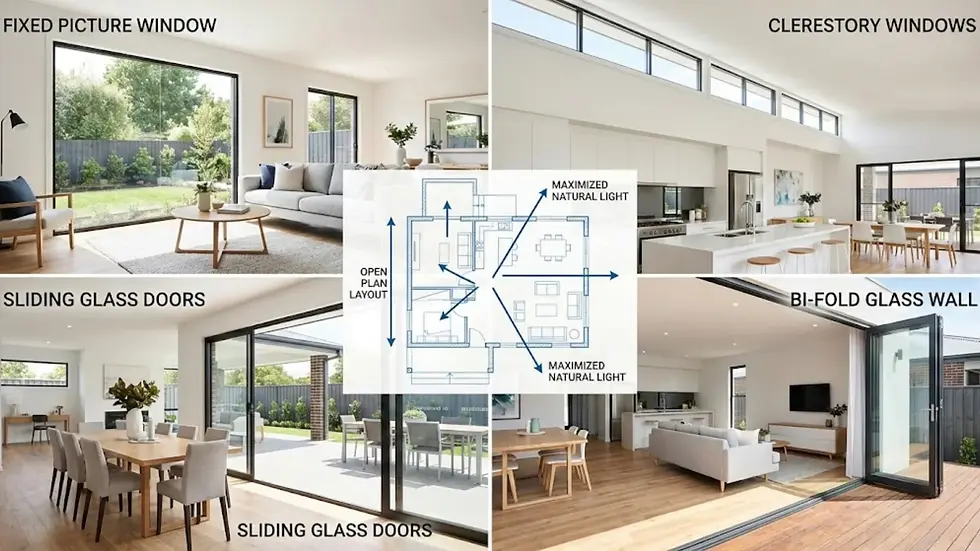
When we discuss large window installation in open floor plans, we are typically looking at a few specific architectural styles:
Fixed Picture Windows: These are non-operable sheets of glass designed solely to frame views and admit light. They are often the largest options available because they don't require mechanisms for opening.
Multi-Slide or Pocket Doors: These massive glass panels slide over one another or disappear entirely into a wall pocket. They literally remove the physical barrier between indoors and out, effectively doubling your entertaining space.
Bi-Fold Walls: Similar to sliders, these fold up like an accordion. They are excellent for open floor plans that connect to a patio or deck, creating a seamless transition.
Clerestory and Transom Windows: These are installed high up on the wall, often above standard sightlines or above other doors. They are crucial in open plans for bringing light deep into the center of the building without sacrificing privacy.
The success of large window installation in open floor plans relies on choosing the right mix of these types to suit the flow of traffic and the specific needs of the household.
Why Large Window Installation in Open Floor Plans Enhances Natural Light

The primary currency of interior design is natural light. It changes how colors read, how textures feel, and how humans function. The correlation between how your window contributes to your overall well-being and ample daylight is well-documented, affecting everything from our circadian rhythms to our productivity levels.
In a compartmentalized house, light is stopped by walls. In an open concept home, light is free to travel. However, it can only travel if it can enter in sufficient volume. This is why large window installation in open floor plans is a necessity, not just a luxury.
Deep Light Penetration

Architects use a metric called the "Daylight Factor" (DF). In deep open-plan rooms, achieving a good DF in the center of the space is difficult with standard windows. Light intensity drops off rapidly the further you get from the source (the Inverse Square Law).
By utilizing large window installation in open floor plans, specifically floor-to-ceiling glass, you increase the angle of incidence. The sky is visible from further back in the room. This facilitates bringing natural light into your home much deeper, reaching the kitchen island that might be twenty feet away from the exterior wall. Without these large apertures, the center of your open plan becomes a "grey zone" requiring artificial lighting even at noon.
The Psychology of Sunlight

There is a profound psychological shift that happens when a home is flooded with natural light. Spaces feel cleaner and more energetic. When you commit to large window installation in open floor plans, you are essentially ensuring that the primary living area—the heart of the home—is a place of positivity. It prevents the "cave effect" that can sometimes happen when you remove interior walls but fail to upgrade the exterior openings.
How Large Window Installation in Open Floor Plans Makes Spaces Feel Bigger

One of the main reasons homeowners desire open floor plans is the perception of space. We want our homes to feel grand and unconfined. However, physical square footage is expensive. Visual perception, on the other hand, can be manipulated through design.
Large window installation in open floor plans creates an optical illusion of infinity. When the eye is not stopped by an opaque wall but is instead allowed to travel through the glass to the horizon, the garden, or the cityscape, the brain registers the outdoor space as part of the indoor volume.
Blurring the Boundaries
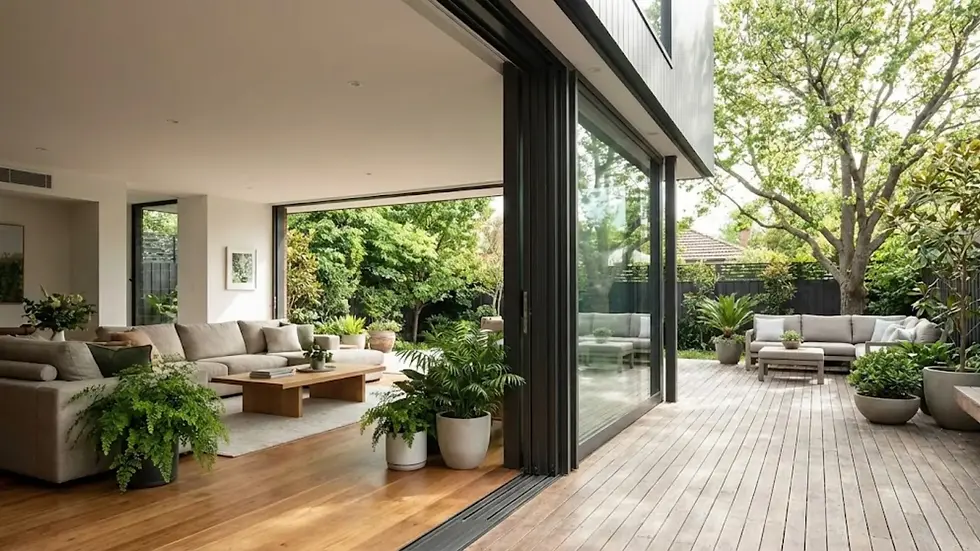
This is often referred to as "indoor-outdoor living," but technically, it is about dissolving the building envelope. When you execute a large window installation in open floor plans using minimal frames (like slim-profile aluminum or steel), the glass becomes invisible. The patio becomes an extension of the living room.
If you have an open plan living area of 500 square feet, and it opens visually onto a 300 square foot deck via a glass wall, your brain perceives the living space as 800 square feet. This effectively increases the "value" of your square footage without pouring a single inch of new concrete foundation.
Reducing Visual Weight

Solid walls have "visual weight." They feel heavy and enclosing. By replacing solid masonry or drywall with transparency, you reduce the visual mass of the room. Large window installation in open floor plans keeps the architecture feeling light and airy, which is particularly important if your ceilings are standard height. Floor-to-ceiling glass draws the eye upward and outward, distracting from lower ceiling heights and making the volume feel expansive.
Design Benefits of Large Window Installation in Open Floor Plans

Beyond the practicalities of light and space, there is the undeniable factor of aesthetics. Modern interior design favors clean lines, minimalism, and a focus on materials. Glass is the ultimate modern material.
The View as Art

One of the most compelling arguments for large window installation in open floor plans is the ability to turn the outdoors into your decor. In a traditional room, you hang paintings on the wall. In a modern open plan with expansive glass, nature is the painting.
Whether it is a manicured suburban garden, a rugged mountain range, or a dynamic urban skyline, the view becomes the focal point of the room. This changes how you decorate. You don't need busy wallpaper or excessive knick-knacks because the changing seasons provide a rotating backdrop of color and texture. This supports a minimalist lifestyle, reducing clutter and focusing on the essential quality of the space.
Structural Rhythm and Symmetry
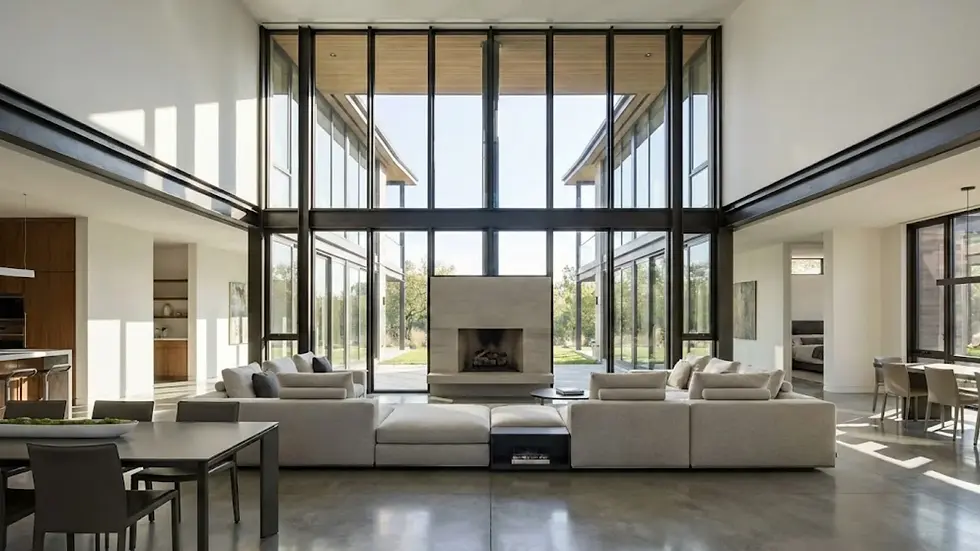
Architecturally, large window installation in open floor plans establishes a rhythm. A series of large vertical panes can provide a sense of order and structure to a wide-open room. Without walls to define zones (living, dining, kitchen), the mullions of your windows can act as subtle grid lines, helping to visually organize the space without closing it off.
Furthermore, large windows lend a high-end, custom look to a property. Small, punched-opening windows are associated with standard builder-grade construction. Expansive glazing is associated with custom architecture, instantly elevating the perceived quality and value of the interior design.
Energy Efficiency Benefits of Large Window Installation in Open Floor Plans

A common myth is that large windows equal energy loss. While this was true thirty years ago with single-pane glass and aluminum frames that acted as thermal bridges, technology has changed the narrative entirely. Today, energy-efficient windows can actually contribute to the performance of a home if executed correctly.
Passive Solar Heating

In cooler climates, properly oriented large windows (facing south in the Northern Hemisphere) act as passive solar collectors. During the winter, the low angle of the sun allows rays to penetrate deep into the open floor plan. Ideally, these rays hit a thermal mass, such as a concrete or tile floor, which absorbs the heat and releases it slowly throughout the evening. This is a free heating source that is only possible with large window installation in open floor plans.
Ventilation and Airflow

Open floor plans are excellent for cross-ventilation, but only if the windows are large enough to facilitate air movement. Installing operable large windows—like sliders or casements—on opposite sides of an open living space creates a wind tunnel effect. This flushes out stale, hot air and pulls in fresh, cool air, significantly reducing the reliance on air conditioning during transitional seasons.
Advanced Glazing Technology

Modern large window installation in open floor plans utilizes advanced glass technologies:
Low-E Coatings: Microscopic metallic layers that reflect infrared heat. They keep heat inside during winter and outside during summer.
Double and Triple Glazing: Using argon or krypton gas between panes to provide insulation values that rival some solid walls.
Thermally Broken Frames: Modern aluminum and steel frames feature thermal breaks (barriers) that prevent cold or heat from transferring through the metal frame itself.
Best Placement Tips for Large Window Installation in Open Floor Plans

You cannot simply put a glass wall anywhere and expect it to work. The success of large window installation in open floor plans depends heavily on orientation and layout.
Orientation and Solar Gain
North Facing: Provides consistent, cool, indirect light. Great for art studios or reading nooks within the open plan. It rarely causes glare.
South Facing: The powerhouse for light. It offers the best opportunity for passive heating but requires overhangs (eaves) to block the high summer sun while admitting the low winter sun.
East Facing: wonderful for morning light in the kitchen area (breakfast sun), but can cause glare early in the day.
West Facing: The most difficult orientation. The low afternoon sun is hot and prone to intense glare. If your large window installation in open floor plans faces west, you will likely need high-performance glass or automated shading solutions.
Aligning with Sightlines
When planning the layout, stand at the key positions in your open plan: the kitchen sink, the sofa, and the dining table. Ensure your large window installation aligns with these sightlines. You want to be able to see the view while chopping vegetables or relaxing. Avoid placing large windows where they will be blocked by bulky furniture or where they stare directly into a neighbor’s wall.
Balancing Privacy
Open plans are social, but they can feel exposed. If your home faces a street, floor-to-ceiling glass might feel like living in a fishbowl. In these instances, consider clerestory windows (high up) or using landscaping (hedges, trees) to create a privacy buffer that allows you to keep the curtains open.
Common Mistakes to Avoid During Large Window Installation in Open Floor Plans
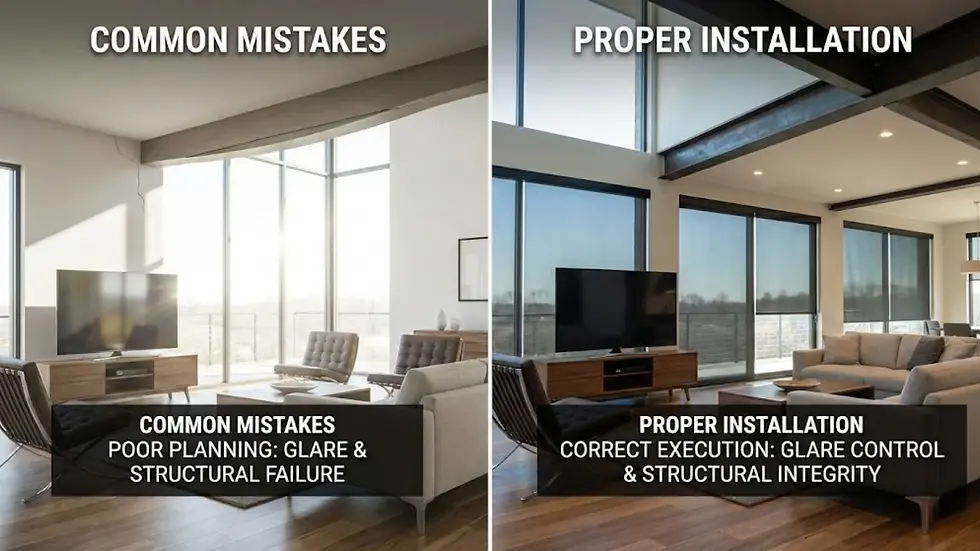
Investing in expansive glazing is significant, and errors can be costly. Aware of common window problems early on can save you significant time and money.
Ignoring Structural Requirements
Open floor plans already lack load-bearing interior walls. When you remove exterior wall mass to accommodate large window installation, you are removing even more support. This often requires substantial steel headers or moment frames to prevent the roof from sagging. Never attempt this without a structural engineer. The "header" space must be calculated early, or you may lose window height.
Overlooking Glare Control
Light is good; glare is bad. In an open plan, glare on the television or computer screens can be a nightmare because there are no walls to block the light angles. When planning large window installation in open floor plans, consider where your TV will go. You may need motorized shades or specific anti-glare coatings on the glass.
Forgetting About Window Treatments
Large windows look beautiful bare, but you will likely want privacy or darkness at some point. Exploring trending designs of window curtains early in the design phase is crucial. A common mistake is jamming window frames right up to the ceiling or adjacent walls without leaving a "pocket" or space for curtain tracks or roller blinds. If you don't plan for this, you might end up with exposed, unsightly hardware that ruins the clean aesthetic.
Poor Frame Selection
Cheap vinyl frames often cannot support the weight of large glass spans. They can warp, leading to seal failure and drafts. For large window installation in open floor plans, materials like aluminum, steel, or fiberglass are superior due to their rigidity and ability to hold heavy double or triple-paned units with slim profiles.
Cost vs Value of Large Window Installation in Open Floor Plans
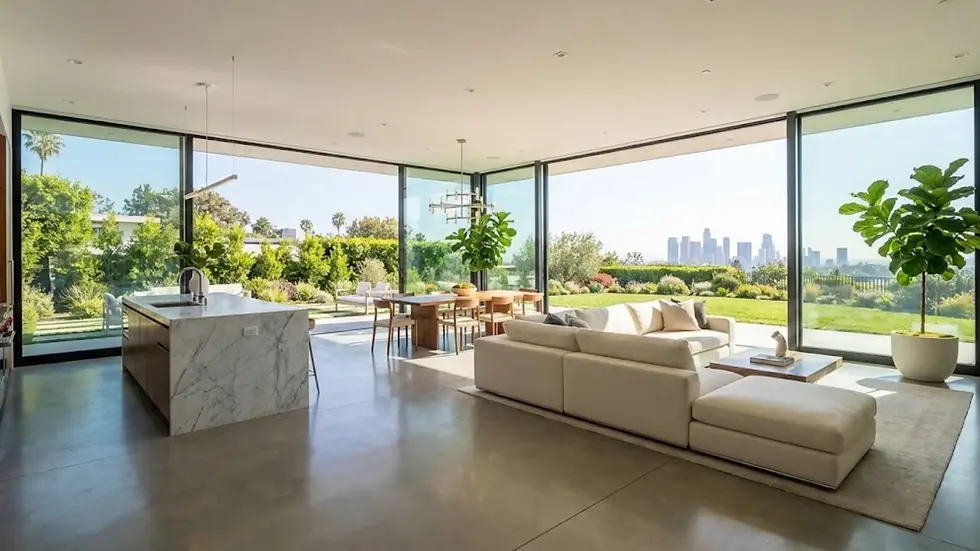
There is no getting around the fact that large format glazing is an investment. Standard windows are mass-produced; large architectural windows are often custom-made.
The Initial Investment
When calculating the budget, understanding the costs of window installation is vital because it includes more than just the glass. You are paying for:
Structural Engineering: Beams and headers.
Installation Labor: Large units often require cranes and specialized glazing teams, not just a general handyman.
High-Performance Glass: Low-E and gas fills add to the price but save on utility bills.
The Return on Investment (ROI)
However, the value proposition is incredibly high. Real estate data consistently shows that "natural light" and "open concept" are top keywords for homebuyers. Homes with blurred indoor-outdoor boundaries sell at a premium.
Furthermore, large window installation in open floor plans creates a "wow factor" that photographs well. In the digital age of real estate (Zillow, Redfin), the visual appeal of a sun-drenched open living area drives clicks and showings. You are not just buying windows; you are buying architectural character that distinguishes your property from the competition.
Long-term value also comes from the lifestyle upgrade. The reduction in artificial lighting costs and the potential for passive heating (if designed well) contributes to the home's operational efficiency.
Conclusion

The evolution of the modern home is centered on freedom—freedom of movement, freedom of sight, and freedom from the dark, enclosed spaces of the past. The open floor plan provided the canvas, but it is the glazing that provides the art.
Large window installation in open floor plans is the critical link that makes expansive architecture work. It prevents the space from feeling heavy or dim, it connects the inhabitants to the natural world, and it creates a home that feels significantly larger than its footprint.
While the technical considerations regarding structure, energy efficiency, and cost are real, the payoff is a living environment that elevates your daily mood and health.
If you are looking to create a Dream Den that feels luxurious, airy, and timeless, prioritizing the glass is the most impactful step you can take. Don't just open up the floor plan; open up the view.
FAQs About Large Window Installation in Open Floor Plans
Q: Is it difficult to clean large windows in a house with high ceilings?
A: It can be. For exterior cleaning, many homeowners hire professionals once or twice a year. For interiors, long-handled squeegees work well. There are specific guides on how to clean windows that can make this process easier. Interestingly, some high-end glass comes with "self-cleaning" coatings that use UV light to break down dirt and rain to wash it away, though this is an extra cost.
Q: Will my furniture fade with so much sunlight?
A: This is a valid concern. UV rays cause fading. However, modern Low-E (Low Emissivity) glass blocks up to 99% of UV rays without blocking visible light. When planning large window installation in open floor plans, ensure your glazier specifies glass with high UV protection to save your hardwood floors and fabrics.
Q: Can I install large windows in an existing renovation, or is it only for new builds?
A: You can absolutely retrofit an existing home. It is a more complex process involving shoring up the existing roof, cutting out masonry or framing, and inserting new headers. It transforms older, dark ranch-style or bungalow homes completely, modernizing them instantly.
Q: How do I handle privacy at night?
A: At night, when lights are on inside, large windows turn into mirrors to the inside. Layered lighting solutions are key. Use landscape lighting outside to balance the light levels, which reduces the "fishbowl" feeling. For physical privacy, motorized roller shades that hide in ceiling pockets are the preferred solution for modern design enthusiasts.


Comments