
Why Younger Homeowners Are Already Building Age-Friendly Features Into New Homes
- DreamDen AI Editorial Team
- Apr 15
- 3 min read


No-step entryways and integrated grab bars may make you think of homes designed for retirees. However, younger homeowners have begun incorporating these thoughtful features into their homes from the start. This practical strategy is based on financial foresight and the growing popularity of multigenerational living. Here is a guide to the new era of age-friendly homes.
Redefining Home for the Younger Generation
The psychology and financial strategy of young homebuyers has shifted. In the past, you climbed the property ladder from a starter home to a larger, permanent residence. Newer generations are rejecting this model for practical and financial reasons.

Rising costs are a significant factor for buyers. Housing prices have increased by 54.9% nationwide since the first quarter of 2020. As a prospective homeowner, the barrier to entry has become much higher. It may be easier to secure a mortgage and move just once instead of repeating the process a decade later.
The Math of Renovations
Your parents or grandparents may have invested a lot of money into retrofitting a home for aging. A major renovation costs up to $150 per square foot, depending on the project’s scope and size. Young homeowners can spend extra on accessibility features during the initial build and avoid the trouble and expense of costly remodels.
The Friction of Transactions
Selling your home and buying another can be costly. While you’ve built equity, the money spent on realtor commissions, taxes and fees could eat into the profit. If you stay in one place, you can preserve your wealth and reinvest it in your long-term property.
The Desire for Stability
Beyond financials, young homeowners have emotional and psychological drivers. The idea of a home is shifting toward stability and permanence. Instead of constantly climbing the professional or property ladder, you can invest emotionally and build a community. Installing age-friendly features now can suit your needs for decades.
Top Ways to Incorporate Age-Friendly Features
Incorporating age-friendly elements in a new home can be daunting. However, these design features can be incorporated for safety and comfort. Here are three ways to incorporate a universal approach to benefit people of all ages and abilities.
1. Smart Home Technology

Smart technology is a powerful and adaptable way to adapt your home for aging and convenience. Safety is a key feature of these devices, as they can proactively prevent accidents and provide immediate alerts. For example, smart security systems enable remote access even when away from home.
Other features enhance independence and comfort around the home. For example, motion activation can control lights in hallways and stairwells, which is especially useful at night. Voice control lets you activate smart speakers, displays and other critical devices.
2. Lever Door Handles
When designing homes for the long run, it’s essential to focus on overlooked areas of universal design. For instance, choosing the right door handles significantly affects daily accessibility and usability for everyone, whether children or grandparents. Round doorknobs require a tight grip, which can be difficult for older adults or people with injuries.
Young homeowners are opting for ADA-compliant levers, as they’re easier than traditional knobs for most people. Lever-style handles require a simple downward push with a hand, elbow or hip. Removing a common barrier supports people across ages and abilities.
3. Curbless Showers

Walk-in showers make the bathroom flooring uninterrupted, extending into the shower stall. This change improves accessibility and aesthetics by maximizing space. Safety is the priority, as it eliminates a trip hazard. Someone with mobility challenges can readily enter while using their wheelchair or walker.
The benefits extend beyond standard baths. A curbless shower feels more spacious and open, which fits a clean and minimalist look. The bathroom also becomes easier to clean because there are fewer nooks and crannies. Removing the curb means you can squeegee water from the shower toward the drain.
The Long-Term Benefits of Age-Friendly Design
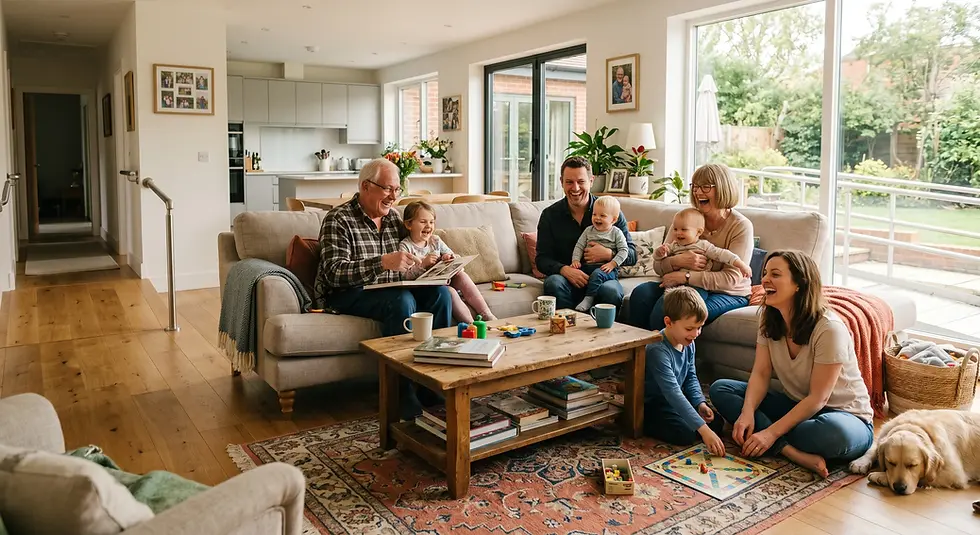
Besides planning for the future, integrating these elements is wise for comfort and safety. The result is a more functional and flexible space for everyone, whether your children or visiting parents. Here are a few more benefits of age-friendly design.
Supporting multigenerational families: Age-friendly homes let grandparents, children and grandchildren live together under one roof.
Creating a welcome space: Accessibility is essential to invite friends and family with mobility issues.
Accommodating temporary injuries: Young homeowners benefit from age-friendly features when enduring temporary injuries.
Reducing physical strain: Raised dishwashers and countertops minimize bending and reaching.
Embracing the Shift to Age-Friendly Features
Young homeowners are fundamentally re-evaluating what a home should be. By choosing age-friendly features, they’re saving on costly future renovations and the frictions of moving. More importantly, they’re creating a permanent sanctuary for a lifetime of changes. This forward-thinking approach is about building a smart and inclusive home designed to welcome everyone.


Comments