
Wooden Interior Design Trends for 2026: The Ultimate Guide to Warmth, Wellness, and Modern Heritage

Updated: Jan 2
If the last decade of interior design was defined by the cool detachment of industrial grays and the stark precision of minimalism, 2026 is the year we finally come home. There is a palpable shift occurring in the world of home decor—a collective exhale that is moving us away from the showroom-perfect aesthetic and toward spaces that feel deeply, authentically human. At the center of this revolution? Wood.
But this isn't the wood of the past. We aren’t returning to the heavy, ornate oak of the 90s or the shiny, orange-tinted pine of the early 2000s. Wooden interior design trends for 2026 are redefining the material as a medium for emotional grounding and sensory wellness. As we step into late 2025 and 2026, wood is becoming the protagonist of our living spaces, celebrated not just for its durability, but for its imperfections, its grain, and its ability to tell a story.
In this comprehensive guide, we will explore the wooden interior design trends for 2026 that are set to dominate the industry. From the resurgence of deep, moody walnut tones to the rise of "smart" sustainable furniture, we’ll uncover how you can transform your home into a space that is as timeless as it is trendy. Whether you are renovating a sprawling villa or updating a compact city apartment, these insights will help you build a home that breathes.
Wooden Interior Design Trends for 2026: Why Wood Is Making a Strong Comeback

The resurgence of wood in 2026 goes beyond simple aesthetics; it is a psychological response to the times we live in. As AI and virtual realities become more integrated into our daily lives, there is a counter-movement seeking out the tangible and the organic. This is where wood steps in as the ultimate grounding element.
The Emotional Value of Timber
Psychologists and interior designers are increasingly collaborating on "neuro-architecture"—the study of how our physical environment affects our brain chemistry. Wood is at the forefront of this research. Studies have shown that being surrounded by natural wood grain lowers cortisol levels (the stress hormone) and lowers blood pressure. In 2026, designers are leveraging this "biophilic" effect intentionally. A room filled with wooden textures doesn't just look warmer; it actually makes us feel calmer.
Redefining Modern Warmth
For years, "modern" meant glossy white surfaces, glass, and chrome. While sleek, these spaces often felt cold and sterile. The wooden interior design trends for 2026 challenge this notion, proving that modern design can be cozy. We are seeing a shift toward "Soft Modernism," where clean lines are preserved but executed in warm oaks, ashes, and walnuts rather than cold synthetics. It’s about creating spaces that are impressive to look at but, more importantly, delightful to live in.
Wooden Interior Design Trends for 2026: Sustainable and Eco-Friendly Wood Choices

In 2026, luxury is no longer defined by excess; it is defined by ethics. The conscious consumer has driven a massive shift in how wood is sourced and used. Sustainable design is no longer a "nice-to-have" bonus—it is the baseline requirement for high-end interior design.
The Rise of "Slow Furniture"
We are witnessing the death of "fast furniture"—cheap, mass-produced pieces destined for a landfill within five years. The trend for 2026 is "Slow Furniture": pieces designed to last a lifetime, or even generations. Homeowners are investing in solid wood tables and heirloom-quality chairs that can be refinished and repaired rather than replaced. This shift prioritizes quality over quantity, with a focus on local craftsmanship that reduces carbon footprints. For guidance on selecting the best materials, read our guide on how to choose the right wood for your furniture project.
Reclaimed and Regenerative Wood
Reclaimed wood is shedding its "rustic farmhouse" stereotype and entering the realm of high design. In 2026, you will see reclaimed timber used in sleek, contemporary applications—smooth-sanded flooring with history, or floating shelves made from century-old beams. Beyond reclaimed, there is a surge in FSC-certified woods (Forest Stewardship Council) and fast-growing regenerative species like bamboo and cork, which are being engineered into durable, hardwood-like surfaces. Check out our 7 best eco-friendly home decor ideas for more inspiration.
The "Perfectly Imperfect" Ethos
Sustainability in 2026 also means embracing the whole tree. In the past, "prime" grade lumber meant wood with no knots or color variations. Today, wooden interior design trends for 2026 celebrate "character grade" wood. This means keeping the knots, the mineral streaks, and the sapwood. It’s a more sustainable practice because it utilizes more of the log, and aesthetically, it adds the texture and uniqueness that modern homeowners crave.
Wooden Interior Design Trends for 2026: Natural Wood Finishes and Textures

If you take one thing away from this forecast, let it be this: High-gloss is out. The obsession with shiny, mirror-like wood finishes has completely faded. 2026 is the year of the matte, the raw, and the tactile.
The Invisible Finish
The goal for wood finishes in 2026 is to look as if there is no finish at all. Homeowners want the protection of a sealant without the plastic look of polyurethane. We are seeing a massive spike in the popularity of hardwax oils and water-based matte sealers. These penetrate the wood fibers rather than sitting on top, allowing you to feel the actual grain of the wood when you touch it. This "haptic" experience—the sense of touch—is a key pillar of 2026 design.
Texture is the New Color
With color palettes trending toward soothing neutrals and earthy tones, texture has become the primary way to add interest to a room. Designers are using techniques like:
Wire-brushing: Removing the soft fibers of the wood to accentuate the hard grain, creating a ridged, tactile surface.
Hand-scraping: A subtle, artisanal technique that adds undulation and history to flooring and furniture.
Band-sawn marks: Leaving the saw marks visible for a rugged, industrial-chic aesthetic that contrasts beautifully with soft velvet sofas or linen curtains.
Imperfection as Luxury
Following the Japanese concept of Wabi-Sabi, the wooden interior design trends for 2026 embrace flaws. A crack in a coffee table isn't a defect; it's a feature, perhaps highlighted with a butterfly joint. This acceptance of imperfection allows for a more relaxed living environment where a scratch or a dent becomes part of the home's story rather than a tragedy.
Wooden Interior Design Trends for 2026: Wooden Wall Panels and Accent Walls

Forget paint and wallpaper—wood is the ultimate wall treatment for 2026. However, the application has evolved significantly from the shiplap craze of the 2010s.
The Evolution of Slatted Panels
Vertical slatted wood panels (often called acoustic panels) have moved from recording studios to living rooms. In 2026, they are narrower, more refined, and often backed with felt to provide significant sound-dampening qualities. This is a crucial functional trend for open-plan homes where noise travels easily. These panels add rhythm and height to a room, drawing the eye upward and making low ceilings feel higher. For more inspiration, explore our interior wood wall design ideas for living rooms.
Geometric and 3D Artistry
Beyond simple slats, we are seeing intricate geometric wood cladding. Think hexagonal tiles made of end-grain wood, or chevron patterns that cover an entire feature wall behind a bed. These aren't just walls; they are large-scale art installations. In luxury villas, marquetry—the art of applying pieces of veneer to a structure to form decorative patterns—is making a comeback in modern, abstract designs.
"Quiet" Feature Walls
Unlike the loud, high-contrast accent walls of the past, the wooden interior design trends for 2026 favor "quiet" features. A wall paneled in pale ash or white oak doesn't scream for attention; instead, it wraps the room in a warm, cozy blanket. It adds depth and insulation without overwhelming the senses, providing the perfect backdrop for art and furniture.
Wooden Interior Design Trends for 2026: Minimalist and Modern Wooden Furniture

Furniture in 2026 is taking up space—literally. The "Fat Furniture" trend is intersecting with wooden design, resulting in pieces that are robust, grounded, and curvaceous.
Softened Silhouettes
Sharp corners are disappearing. 2026 is dominated by organic, fluid shapes. You’ll see solid wood dining tables with oval tops and thick, cylindrical legs. Wooden armchairs are being designed with curved backs that hug the sitter. This softening of edges makes wooden furniture feel friendlier and safer, contributing to the overall sense of wellness and comfort in the home.
Low-Profile Living
Influenced by Japanese and mid-century modern aesthetics, wooden furniture is getting lower. Low-slung platform beds in walnut, coffee tables that hover just inches off the ground, and dining chairs with lower backs are trending. This lowers the center of gravity in a room, making ceilings feel higher and creating a more relaxed, lounge-like atmosphere. Check out our guide on rustic bedroom furniture sets to achieve this grounded look.
Functional Sculpture
Furniture pieces are increasingly viewed as functional sculptures. A wooden side table isn't just a place to put a drink; it's a carved block of solid cedar that serves as an art piece. Designers are playing with asymmetry and balance, creating wooden consoles and bookshelves that look defyingly simple yet structurally complex. Custom furniture is the new standard for those seeking unique, sculptural pieces.
Wooden Interior Design Trends for 2026: Mixing Wood with Metal, Glass, and Stone

The "total wood" look (cabin style) is not the goal for 2026. The magic lies in the mix. The most sophisticated interiors are achieving balance by juxtaposing the warmth of wood against cool, hard materials.
Wood and Stone: The Ultimate Biophilic Duo
The combination of warm wood and cool stone is the defining material palette of 2026. We are seeing:
Kitchens: Walnut cabinetry paired with dramatic, veined marble islands. To find the right wood for your cabinets, read about what wood is best for kitchen cabinets.
Bathrooms: Teak vanity units topped with raw concrete or slate sinks.
Flooring: Entryways that transition seamlessly from limestone tiles to wide-plank oak flooring. This contrast highlights the best qualities of both materials—the stone feels more solid, and the wood feels softer and warmer by comparison.
Industrial Softness: Wood and Metal
The industrial look is evolving. Instead of raw steel and distressed wood, wooden interior design trends for 2026 pair refined metals with smooth timber. Think brushed brass inlays in a dark oak table, or matte black steel legs supporting a live-edge slab. The metal adds a touch of sleek precision that prevents the wood from looking too rustic.
Light and Transparency: Wood and Glass
To keep wooden interiors from feeling heavy or dark, designers are incorporating fluted and reed glass. A wooden cabinet with fluted glass doors allows light to pass through while obscuring the clutter inside. This combination of opaque wood and translucent glass creates a sense of mystery and airiness, crucial for smaller urban apartments.
Wooden Interior Design Trends for 2026: Dark Wood vs Light Wood Interiors

The debate between dark and light wood is settled in 2026: Both are winning, but for different purposes.
The Return of the Dark: Walnut, Espresso, and Charcoal
After a decade of "Scandi-blonde" dominance, dark woods are back with a vengeance. Rich Walnut, scorched Ash (Shou Sugi Ban), and deep Espresso stains are trending for 2026.
Where to use it: Dark wood is being used to create intimacy and luxury. It’s perfect for libraries, home offices, bedrooms, and "moody" kitchens.
Why it’s trending: Dark wood grounds a space. It provides a visual anchor and contrasts beautifully with the trending jewel-tone fabrics (emerald green, sapphire blue) and warm metals (brass, copper).
The Staying Power of Light: White Oak and Ash
Light wood hasn't disappeared; it has just matured. The yellowish pines are gone, replaced by neutral, desaturated White Oaks and bleached Ashes. For a deeper dive, check out the homeowner's guide to white oak flooring.
Where to use it: Light wood is essential for small spaces, apartments with limited natural light, and minimalist interiors.
Why it’s trending: It reflects light, making rooms feel larger and airier. It evokes a sense of cleanliness and calm, essential for the "Japandi" (Japanese + Scandinavian) aesthetic that remains popular.
The "Mid-Tone" Sweet Spot
A new contender has emerged for 2026: the Mid-Tone. Think honey-colored teak, cherry (without the red varnish), and natural hickory. These woods offer the warmth of dark wood with the airiness of light wood, bridging the gap and offering a timeless, "Modern Heritage" appeal.
Wooden Interior Design Trends for 2026: Wooden Ceilings and Beams
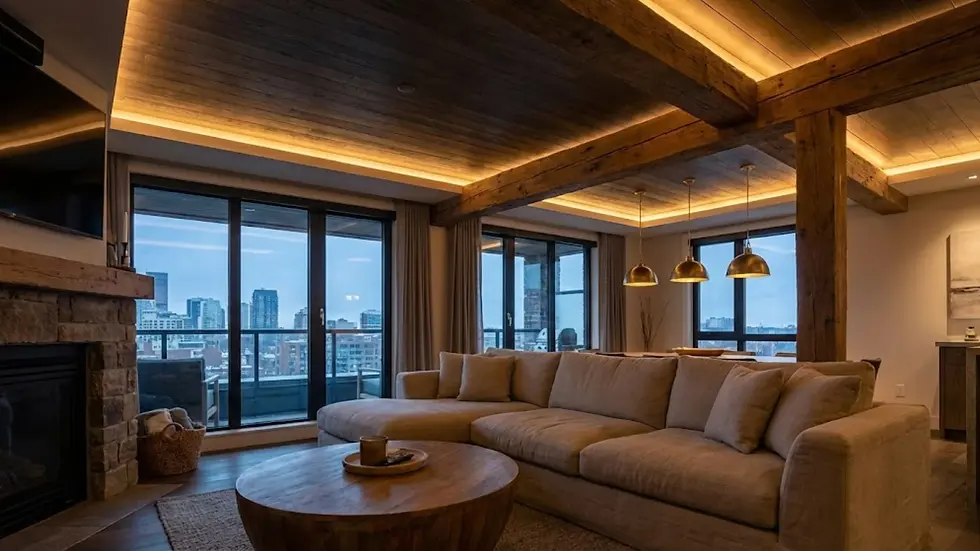
In 2026, we are looking up. The "fifth wall"—the ceiling—is receiving the wood treatment, transforming generic white boxes into architectural statements.
The False Ceiling Reinvented
Wooden false ceilings are huge for 2026, particularly in modern apartments where adding architectural character is difficult. A drop ceiling panel of warm wood over a dining area can instantly zone the space without walls. Integrated cove lighting within these wooden panels creates a soft, ambient glow that feels much more luxurious than standard downlights.
Exposed Beams: Faux and Real
You don't need a barn to have beams. "Faux" box beams, indistinguishable from solid timber, are being installed in modern condos to add rhythm and history. In 2026, these beams are often laid out in grid patterns (coffered ceilings) for a more formal, structured look, or simply run parallel to elongate a room.
Cladding for Coziness
For bedrooms and reading nooks, fully clad wooden ceilings (tongue and groove) are trending. This creates a "cocooning" effect, making the room feel protected and intimate—perfect for rest and relaxation.
Wooden Interior Design Trends for 2026: Smart Wooden Storage Solutions

As homes get smaller and tech gets bigger, storage needs to work harder. Wooden interior design trends for 2026 fuse traditional carpentry with high-tech needs.
Tech-Integrated Furniture
The nightstand of 2026 looks like a simple wooden block, but it has a wireless charging pad embedded beneath the veneer. The home office desk has hidden channels for cable management and built-in USB-C ports. This "Soft Tech" approach hides the ugly plastic of technology inside the beauty of natural wood, keeping our sanctuaries visual noise-free.
Modular Systems
Adaptability is key. We are seeing modular wooden shelving systems that can be reconfigured as life changes. A wall unit might start as a toy storage area for a toddler and evolve into a bookshelf and study desk for a teenager. These systems, often made of high-quality plywood or solid wood, are an investment in longevity.
The Hidden Home Office
With hybrid work becoming permanent, the "cloffice" (closet office) is a staple. Beautiful wooden pocket doors or folding screens allow a fully functional workspace to disappear entirely at 5 PM, marking a psychological separation between work and rest.
Wooden Interior Design Trends for 2026: Wooden Interiors for Apartments vs Villas

While the trends are universal, the application differs by scale.
For Apartments: Light, Vertical, and Multi-functional
In compact city apartments, wooden interior design trends for 2026 focus on maximizing space and light.
Wood Choice: Stick to lighter oaks and maples to keep the space open.
Application: Use vertical slatting to raise the visual height of ceilings.
Furniture: Choose pieces with "legs" rather than boxy bases to show more floor, which tricks the eye into seeing more space. Multi-functional wooden furniture (e.g., a coffee table that lifts to become a dining table) is essential.
For Villas: Dark, Horizontal, and Grand
In spacious villas, you have the luxury of drama.
Wood Choice: Embrace the deep walnuts and dark-stained oaks.
Application: Wide-plank flooring is a must. Large-scale wooden wall cladding can bring vast rooms down to a human scale.
Furniture: You can afford the "Fat Furniture" trend—large, solid wood statement pieces that anchor the room and don't get lost in the square footage.
Wooden Interior Design Trends for 2026: Maintenance Tips for Long-Lasting Wooden Interiors

With the shift toward matte, oiled, and raw finishes in 2026, maintenance rules have changed. You can no longer just spray generic polish on these surfaces. For a comprehensive guide, see how to clean hardwood floors like a pro.
1. The Ban on Silicone Polishes
Avoid commercial spray polishes that contain silicone. They create a slippery, artificial shine and can build up over time, ruining the matte aesthetic. They also make refinishing impossible later on.
2. Caring for Oiled Finishes
If you embrace the oiled wood trend, know that "feeding" the wood is necessary.
Routine: Dust regularly with a microfiber cloth.
Refresh: Every 6–12 months, apply a maintenance oil. It’s a simple wipe-on, wipe-off process that nourishes the wood and keeps it water-resistant without forming a plastic film.
3. Humidity Control
Wood is hygroscopic—it breathes. In 2026, with climate change causing more extreme weather fluctuations, maintaining indoor humidity is vital. Keep your home between 40-60% humidity. Invest in a humidifier for dry winters and a dehumidifier for humid summers to prevent your beautiful solid wood floors from warping or cracking.
4. Immediate Spills
Matte and raw-look finishes are more porous than high-gloss lacquers. Wipe up spills immediately, especially red wine, coffee, or turmeric, to prevent deep staining.
Bringing Your Vision to Life with DreamDen AI

Reading about "Modern Heritage" and "Soft Tech" is inspiring, but visualizing these changes in your own home can be challenging. Will that dark walnut paneling make your living room look cozy or cramped? How would a "Fat Furniture" coffee table actually fit in your space?
This is where DreamDen.ai becomes an essential tool for the 2026 homeowner. As an advanced AI interior design platform, DreamDen allows you to bridge the gap between inspiration and reality.
Visualize Before You Buy: Simply upload a photo of your current room, and use DreamDen's AI to instantly apply different wooden textures and styles. See exactly how a slatted oak wall or a reclaimed timber ceiling would look in your specific lighting conditions. Explore our free AI home design app to get started.
Experiment with Trends: Not sure if you're ready to commit to the "Dark Wood" resurgence? Use DreamDen to swap between light ash and deep espresso tones in seconds, helping you make confident design decisions without the guesswork.
Personalized Design iterations: Whether you are planning a complete renovation or just looking to update a few key pieces, DreamDen.ai helps you iterate through different layouts and material combinations, ensuring your final choice aligns perfectly with the 2026 aesthetic you crave.
By leveraging the power of AI, you can experiment with these wooden interior trends risk-free, ensuring that your investment in sustainable, high-quality wood results in the sanctuary you’ve always dreamed of.
Conclusion

As we look toward 2026, it is clear that wood is more than just a building material—it is the soul of the modern home. The wooden interior design trends for 2026 invite us to slow down, touch more, and appreciate the imperfect beauty of the natural world.
Whether you are drawn to the moody elegance of dark walnut, the airy calm of white oak, or the rhythmic texture of slatted walls, there is a place for wood in every home. By choosing sustainable options, embracing natural finishes, and mixing materials with confidence, you can create a space that is not only trendy for the coming year but timeless for decades to come.
So, go ahead. Install those beams. Invest in that solid wood dining table. Let the grain show. In 2026, your home is asking for warmth, and wood is the answer.
Ready to transform your home with the latest wooden design trends? Subscribe to our newsletter for more expert insights, DIY tips, and exclusive design guides.
FAQs About Wooden Interior Design Trends for 2026
1. Is gray wood flooring still in style for 2026?
No. The trend of cool, grey-washed floors has largely passed. In 2026, the focus is on warm tones. If you want a neutral floor, opt for "greige" (a mix of grey and beige) or natural, unstained white oak, which offers a neutral base without the coldness of pure grey.
2. Can I mix different wood tones in one room?
Absolutely. In fact, the "matched set" look is outdated. The key to mixing woods in 2026 is to keep the undertones consistent. Mix warm woods with other warm woods (e.g., walnut and cherry), or neutral woods with other neutrals (e.g., white oak and birch). Use a rug to break up the visual space between a wooden floor and a wooden table.
3. What is the "Modern Heritage" trend?
Modern Heritage is a dominant design theme for 2026. It involves blending traditional architectural elements—like wooden beams, paneling, and solid wood antiques—with modern, clean-lined furniture and contemporary art. It’s about creating a home that feels like it has a history, even if it’s a new build. Farmhouse interior design often incorporates elements of this style.
4. Is wood in the bathroom a good idea?
Yes, but choose wisely. Solid teak, hinoki, and cedar are naturally water-resistant and anti-bacterial, making them perfect for spa-like bathrooms. For vanity units, engineered wood with a high-quality veneer is often more stable in humid environments than solid wood blocks. Ensure you have excellent ventilation. Explore our 10 best wood bathroom vanities for ideas.
5. What is the most sustainable wood choice for 2026?
Reclaimed wood is the gold standard for sustainability as it requires no new trees to be cut. For new lumber, fast-growing bamboo (technically a grass but behaves like wood) and FSC-certified Ash or Maple are excellent, responsible choices.
6. How do I update my existing orange-oak cabinets to fit 2026 trends without replacing them?
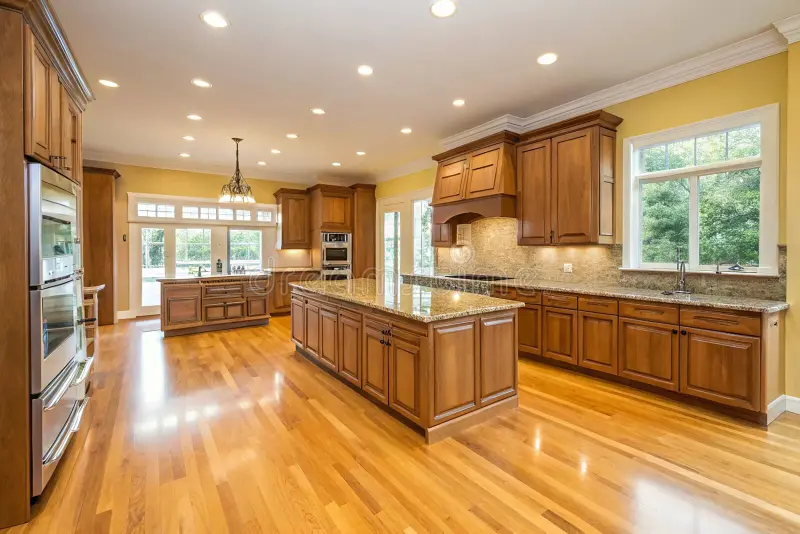
You don't always need to paint them! The 2026 trend for "warmth" means you can work with the wood. Update the hardware to matte black or brushed brass to modernize the look. Change the countertop to a crisp white stone and paint the walls a creamy off-white. This neutralizes the orange tones, making the cabinets look intentional and warm rather than dated.

Comments