
Your Dream Bathroom Awaits: The Definitive Guide to Bathroom Remodels in Waltham, MA
- Vanshika Thareja

- Aug 25, 2025
- 9 min read
Updated: Jan 2
Waltham, Massachusetts, is a city of unique character. From the historic estates near the Gore Place to the bustling neighborhoods around Moody Street and the quiet, family-oriented streets of Piety Corner, the housing stock here is diverse. However, diverse housing often means outdated plumbing, cramped layouts, and styles that were popular in the 1970s but don't work for modern life.
A bathroom remodel is more than just a facelift; it is an investment in your daily peace of mind and your property value. Whether you are dealing with a drafty bathroom in a Victorian home or a cramped master bath in a Cape Cod style house, this guide covers every single aspect of the renovation journey.
Phase 1: Understanding Your Project

Defining Your Vision: Style, Function & Budget
Before you dive into your Waltham, MA bathroom remodel, you must clearly define your vision. This involves three crucial elements: style, function, and budget. Ignoring any one of these can lead to costly overruns or a finished product that doesn’t meet your needs.
1. Finding Your Style

Start by browsing design magazines, websites like Houzz, and Pinterest for inspiration. However, keep your home's architecture in mind.
The "Watch City" Industrial: Exposed pipes, brick accents, and matte black fixtures work well in loft-style condos.
New England Traditional: Penny tile floors, subway tile walls, and pedestal sinks fit perfectly in Waltham’s older colonial homes.
Modern Minimalist: Clean lines, floating vanities, and neutral palettes suit newer developments or complete gut-renovations.
2. Analyzing Functionality
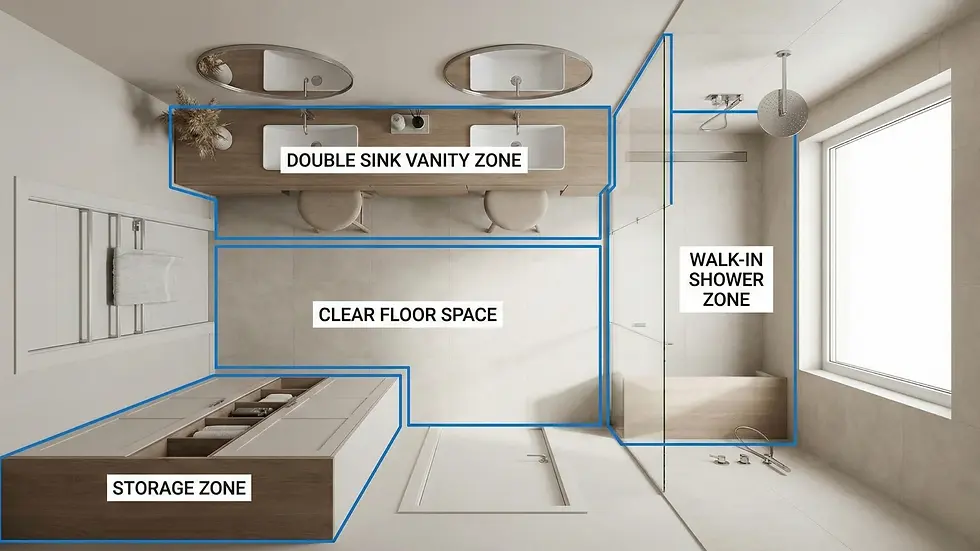
Next, consider the functionality of your new bathroom. Do you need more storage? A larger shower? A soaking tub? Think about your daily routine and how the new space can improve it.
The Family Hub: If this is the main bath for kids, prioritize a durable tub, easy-to-clean surfaces (large format tile), and double sinks to reduce morning traffic jams.
The Master Sanctuary: If this is your retreat, consider spa-features like steam showers, heated floors (essential for Massachusetts winters), and dimmable lighting.
The Accessibility Focus: An aging homeowner may focus on accessibility features such as walk-in showers (curbless), wider doorways, and lever-handle faucets.
3. The Financial Reality

Finally, and perhaps most importantly, establish a realistic budget. Waltham’s housing market influences remodeling costs. You are competing for labor in the Greater Boston area, which can drive prices up.
Research: Look at average prices for similar projects in Middlesex County.
Factor in Everything: Include materials, labor, permits, dumpster fees, and design fees.
The Golden Rule: “Working with a reputable contractor who provides detailed estimates upfront is essential for avoiding budget overruns.”
Phase 2: Assessment and Diagnostics

Assessing Your Current Bathroom: Strengths, Weaknesses & Potential
Before diving into designs, honestly assess your existing Waltham, MA bathroom. Do not just look at the tile; look behind it.
Identifying Strengths

What works well? Perhaps you love the existing layout because the plumbing is already in the right spot (saving you thousands). Maybe the natural light from a skylight is fantastic. Identify these strengths; they can inform your remodel choices, potentially saving money by repurposing existing elements.
Vintage Charm: Does the home have an original cast-iron tub? Refinishing it might be cheaper and more stylish than replacing it with fiberglass.
Windows: Is there a window providing ventilation? Keep it!
Pinpointing Weaknesses

Now, pinpoint the weaknesses. Accurate identification of these problems is crucial for budgeting.
The "Waltham Special": Many older homes here still have galvanized pipes or cast iron stacks that may be nearing the end of their life. If your water pressure is low, your pipes might be clogged with rust.
Space Issues: Is the vanity outdated and insufficient for storage? Is the toilet too close to the tub?
Hidden Dangers: A leaky faucet or outdated plumbing are major issues. If your home was built before 1978, you must also consider the potential for lead paint or asbestos in flooring and pipe insulation.
Unlocking Potential

Finally, consider the space’s capacity. Can you expand the shower or add a double vanity?
Steal Space: Can you borrow a foot from a linen closet in the hallway?
Relocation: Can you move the toilet to a corner to free up a wall for a larger vanity?
Consultation: Consider consulting with a local Waltham contractor for professional insights. They might see a solution you missed, such as utilizing a chimney bump-out for shelving.
Phase 3: The Bureaucracy
Navigating Local Codes and Permits in Waltham, MA

This is the step most homeowners dread, but it is the most critical for your safety and resale value. The City of Waltham’s Inspectional Services Department oversees all construction projects.
Why You Need Permits
Safety: Ensures electrical wiring won't cause a fire and plumbing won't leak sewage into your walls.
Insurance: If unpermitted work causes water damage, your homeowner's insurance may deny the claim.
Resale: When you sell your home, buyers (and their attorneys) will ask for permits for recent work. Lack of permits can kill a sale.
The Big Three Permits
You will likely need separate permits for:
Plumbing: Only a licensed MA plumber can pull this.
Electrical: Only a licensed MA electrician can pull this.
Building: For structural changes, moving walls, or window replacement.
Find a reputable contractor familiar with Waltham’s specific codes. Experienced remodelers understand the intricacies of local regulations and the permitting process. They handle the scheduling of "Rough" inspections (when walls are open) and "Finish" inspections.
Phase 4: Design & Inspiration
Small Bathroom Makeovers: Maximizing Space & Functionality

Many homes in Waltham, particularly Capes and Colonials, have notoriously small bathrooms (sometimes 5x8 feet). Transforming these into functional havens requires clever physics.
Color Theory: Consider light, bright colors to visually expand the space. Opt for light-colored tiles (white, cream, light grey) or paint to create an airy feel.
Optical Illusions: Mirrors strategically placed can dramatically increase the perceived size. A wall-to-wall mirror over the vanity doubles the visual space.
Float It: Replacing a bulky cabinet vanity with a floating vanity exposes more floor tile, tricking the eye into thinking the room is larger.
Storage Hacks

Verticality: Tall, slender cabinets can replace sprawling ones.
Niches: Utilize niche shelving within the shower (recessed into the wall studs) rather than hanging bulky caddies.
Over-the-Toilet: Use a "hotel shelf" or cabinetry above the toilet for towels.
Glass Doors: Swap the shower curtain for frameless glass. It removes the visual barrier, letting you see the back wall of the shower, making the room feel 3 feet wider.
Modern vs. Traditional: Choosing the Aesthetic

Modern Design:
Key Features: Floating vanities, wall-mounted toilets, large format tiles (less grout to clean), matte black or brushed gold fixtures.
Materials: Engineered quartz, concrete, glass.
Vibe: Spa-like, efficient, minimalist.
Traditional Design:
Key Features: Shaker style cabinets, pedestal sinks, clawfoot tubs, crown molding, wainscoting.
Materials: Carrara marble (or marble-look quartz), porcelain hexagon floor tiles, polished chrome or nickel fixtures.
Vibe: Timeless, cozy, historic.
Incorporating Accessibility Features (Universal Design)

Planning ahead for accessibility ensures your Waltham bathroom remodel serves you for years to come. This is often called "Aging in Place."
Curbless Showers: A walk-in shower with no threshold is sleek, modern, and wheelchair accessible.
Comfort Height Toilets: These are 2-3 inches taller than standard toilets, making standing up much easier for seniors or tall adults.
Blocking for Bars: Even if you don't want grab bars now, ask your contractor to install "blocking" (wood supports) behind the tile walls. This allows you to screw in grab bars years later without ripping out tile.
Slip Resistance: Choose floor tiles with a high coefficient of friction (COF). Small tiles with more grout lines naturally provide more grip.
Phase 5: The Build – Hiring and Materials
Finding the Right Contractor for Your Waltham Bathroom Remodel

The difference between a dream bathroom and a nightmare renovation is the team you hire.
Vetting Contractors: The Checklist
Experience: Do they specialize in bathrooms? A general handyman might not know how to waterproof a shower pan correctly.
Licensing: Verify their CSL (Construction Supervisor License) and HIC (Home Improvement Contractor) registration with the state of MA.
Insurance: Ensure they carry General Liability (protects your home) and Workers’ Compensation (protects you if a worker gets hurt on your property)
DreamDen Note: “Lack of proper insurance could leave you vulnerable to significant legal and financial liabilities.”
References: Call their last 3 clients. Ask: "Did they show up on time?" and "Did the price change?"
Requesting Quotes and Comparing Proposals
Obtain at least three detailed quotes. A quote that says "Remodel Bathroom: $20,000" is garbage. You need a line-item breakdown:
Demolition costs
Plumbing labor
Electrical labor
Tile allowance
Fixture allowance
Trash removal costs
Understanding Payment Schedules
Never pay 100% upfront. A standard schedule in Massachusetts might look like:
1/3 Deposit to book the slot and order materials.
1/3 Upon completion of rough plumbing/electrical and inspection.
1/3 Upon final completion and sign-off.
Material Selection: Quality & Style

Flooring: Tile vs. Vinyl vs. Stone
Porcelain Tile: The king of bathrooms. Impervious to water, incredibly durable, comes in every style.
Luxury Vinyl Plank (LVP): A rising star. It is 100% waterproof, softer underfoot, warmer than tile, and cheaper to install. Great for basements or budget remodels.
Natural Stone (Marble): Stunning but high maintenance. It is porous and stains easily (hair dye, makeup). Requires annual sealing.
Countertops
Quartz: The top choice. It is non-porous, antibacterial, and maintenance-free.
Granite: Durable but needs sealing. Busy patterns can hide toothpaste splatters.
Cultured Marble: Budget-friendly, integrated sink options, but can look dated.
Fixtures: The "Jewelry" of the Room
Toilets: Look for WaterSense labels. Skirted toilets (smooth sides) are much easier to clean.
Faucets: Solid brass construction lasts longest.
Shower Glass: Opt for treated glass (like ShowerGuard) that resists water spots and soap scum.
Phase 6: Money Matters

Budgeting & Financing Your Waltham Bathroom Remodel
Estimating Costs
Low Range ($15k - $25k): Keeping the layout the same. LVP flooring. Acrylic shower surround. Big box store vanity.
Mid Range ($25k - $45k): New tile floor and shower. Quartz vanity top. Mid-range fixtures (Kohler/Delta). potentially moving a light fixture.
High Range ($50k+): Gut renovation. Moving plumbing (toilet/shower location). Custom cabinetry. Natural stone. High-end fixtures (Rohl/Grohe). Heated floors.
Contingency Planning
Unexpected issues are practically guaranteed in renovation.
The Surprise: You pull up the toilet and find the subfloor is rotted.
The Surprise: You open the wall and find live knob-and-tube wiring that must be brought up to code.
The Solution: Set aside 15-20% of your budget strictly for these surprises. If you don't use it, buy nicer towels at the end!
Financing Options
HELOC (Home Equity Line of Credit): A popular choice in Waltham given the high home equity many residents have.
Construction Loans: Good for massive renovations.
Contractor Financing: Some large firms offer payment plans, but check the interest rates carefully.
Phase 7: The Solution
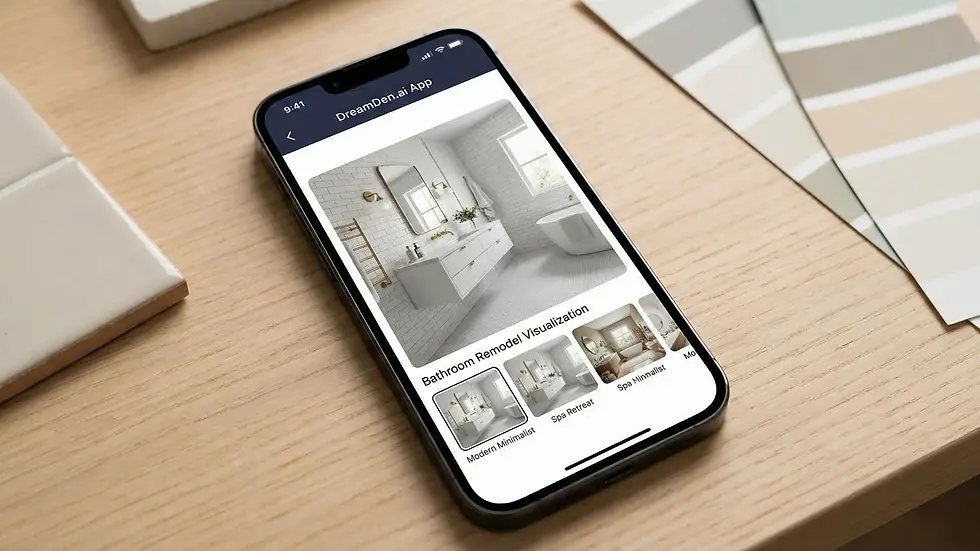
The DreamDen.ai App: Your Pocket Project Manager
If reading about permits, insurance, vetting, and technical specs feels overwhelming, that is where the DreamDen.ai app transforms the experience.
Visualize, Plan, and Execute
The DreamDen.ai app helps specifically in remodeling by leveraging advanced AI to bridge the gap between your imagination and reality.
AI Visualization: Simply upload a photo of your current bathroom into the app. Our AI tools allow you to "try on" different styles—swapping out old linoleum for sleek slate tile or visualizing a walk-in shower—instantly on your screen.
Smart Matching: We don't just give you a list of names. The app's algorithm matches your specific project scope and budget with pre-vetted Waltham contractors who have verified licenses and insurance.
Digital Command Center: Forget lost emails and paper receipts. The app centralizes your entire remodel. Track your budget in real-time, receive permit status updates from the Inspectional Services Department, and communicate directly with your team—all from your smartphone.
We act as the bridge, ensuring clear communication, fair contracts, and quality results.
Phase 8: Life After Renovation

Maintaining Your Newly Remodeled Waltham Bathroom
Once the dust settles and the contractor leaves, the maintenance begins.
Cleaning and Care
Grout: The enemy of clean bathrooms. Seal your grout annually. Use pH-neutral cleaners (avoid bleach on colored grout).
Glass: Squeegee your glass shower doors after every shower. It takes 30 seconds and saves hours of scrubbing later.
Stone: If you chose marble, never use vinegar or lemon-based cleaners; they will etch the stone.
Preventing Mold (The New England Battle)
Waltham gets humid in the summer.
Ventilation: Run your exhaust fan for at least 20 minutes after you shower. Consider a fan with a built-in timer or humidity sensor.
Leaks: Check under the sink and around the toilet base monthly. Catching a drip early saves your subfloor.
Hard Water
Waltham water is generally good, but mineral buildup can happen.
Solution: Clean showerheads with a plastic bag of vinegar tied around them overnight (if the finish allows) to dissolve deposits.
Conclusion: Start Your Journey Today

A bathroom remodel in Waltham, MA, is a journey of choices. From the initial vision of a spa-like retreat to the nitty-gritty of plumbing permits and tile selection, every step matters. By planning carefully, budgeting wisely, and utilizing the smart tools available on the DreamDen.ai app, you can create a space that offers relaxation and adds significant value to your home.
Your dream bathroom isn't just a Pinterest board anymore—it's a project waiting to happen.
Ready to start? Download the DreamDen.ai app today to visualize your new space and connect with the top-rated, fully vetted bathroom remodeling experts in Waltham.
Frequently Asked Questions (FAQ)
Q: How long does a bathroom remodel take in Waltham?
A: A cosmetic update can take 2-3 weeks. A full gut renovation usually takes 4-6 weeks, depending on inspections and material delivery.
Q: Do I need a permit to just replace a vanity?
A: If you are just swapping a cabinet, usually no. If you are disconnecting and reconnecting plumbing lines, technically, a plumber should pull a permit.
Q: What is the best ROI for a bathroom remodel?
A: In the Greater Boston area, midrange bathroom remodels typically see an ROI of 60-70% upon resale.
Q: Can I live in my house during the remodel?
A: Yes, as long as you have a second full bathroom. If you only have one bathroom, you will need to make alternative living arrangements for at least the duration of the plumbing and tile work.


Comments