
Architectural Plant Placement in Boho-Inspired Interiors
- DreamDen AI Editorial Team
- Feb 9
- 5 min read

Boho-inspired interiors have become one of the most loved home styles because they feel relaxed, creative, and deeply connected to nature. Unlike rigid, formal décor styles, boho interior design celebrates individuality, texture, color, and organic elements. And among all décor elements, plants play the most powerful role in shaping an authentic boho space.
However, simply placing a few pots around a room does not create impact. What truly transforms a space is architectural plant placement — the intentional positioning of greenery so plants become part of the interior structure rather than just decoration.
Understanding Boho Interior Design

Origins and Characteristics
Boho, or bohemian style, draws inspiration from artists, travelers, and cultures around the world. It embraces freedom, layering, and personality. Common features include natural materials like wood, rattan, and jute, layered textiles, and earthy color palettes.
Common features include:
Natural materials like wood, rattan, jute, and linen
Layered textiles and rugs
Handmade décor pieces
Earthy or warm color palettes
Vintage or collected furniture
Global or artistic influences
Boho-inspired interiors feel relaxed and lived-in rather than staged.
Materials, Textures, and Colors
Boho homes rely heavily on tactile experiences:
Woven baskets
Macramé décor
Wooden furniture
Clay or terracotta pottery
Organic fabrics
Colors often include warm neutrals, terracotta, muted greens, deep browns, and occasional vibrant accents.
Why Plants Are Essential
Plants naturally align with boho values:
They bring organic texture.
They soften hard surfaces.
They introduce movement and color.
They improve mood and well-being.
Without greenery, boho interiors can feel incomplete.
What Is Architectural Plant Placement?
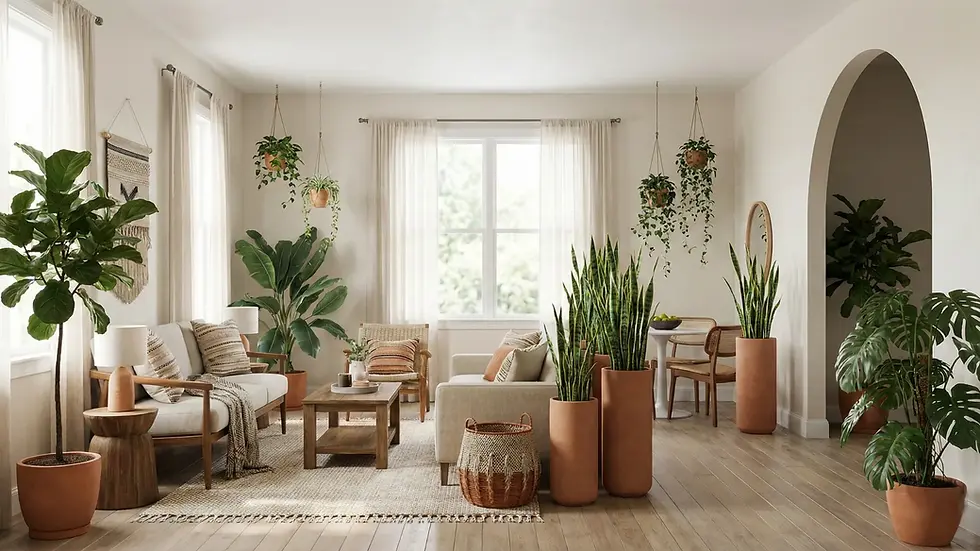
Many people decorate with plants randomly. Architectural plant placement, however, treats plants as structural design elements.
Random Placement vs Strategic Placement
Random placement:
Pots scattered without intention
No visual balance
Plants feel decorative only
Strategic placement:
Plants guide movement through space
They balance furniture and architecture
They create focal points
Plants as Architectural Elements
When properly placed, plants can:
Frame windows and entrances
Fill empty corners
Divide spaces naturally
Soften harsh lines
Add vertical interest
When properly placed, plants can frame windows, fill empty corners, and divide spaces naturally, becoming part of the room’s actual architecture.
Why Plants Elevate Boho Spaces

Mood and Wellness Benefits
Indoor greenery decor has proven psychological benefits:
Reduces stress
Creates calming environments
Enhances focus
Improves perceived air freshness
Boho spaces aim to create relaxed living environments, making plants essential.
Texture and Visual Softness
Plants add contrast to furniture:
Soft leaves balance hard wood
Organic shapes offset geometric décor
Green tones complement earthy palettes
Natural Flow in Interiors
Plants help rooms feel connected rather than isolated, guiding the eye smoothly through spaces.
Best Plants for Boho Interiors

Large Statement Plants
Perfect for large indoor plants décor:
Monstera Deliciosa
Fiddle Leaf Fig
Bird of Paradise
Rubber Plant
Areca Palm
These plants create dramatic focal points.
Hanging Plants
Great for hanging plants décor:
Pothos
String of Pearls
Boston Fern
Spider Plant
Ideal for ceiling hooks or shelves.
Shelf and Table Plants
Suitable for smaller styling areas:
Snake Plant
ZZ Plant
Succulents
Aloe Vera
Peace Lily
Low-Maintenance Options
Best for beginners:
Snake Plant
ZZ Plant
Pothos
Rubber Plant
These tolerate neglect and low light.
Architectural Placement Strategies
Corner Fillers
Empty corners make rooms feel unfinished. Tall plants fill vertical space and soften edges.
Entryway Impact Plants
Place greenery near entrances to create welcoming energy.
Shelf Layering
Combine books, pottery, and trailing plants to create layered plant styling ideas.
Window Framing Plants
Plants around windows enhance natural light and connect the indoors with the outdoors. This is especially effective when you want to bring more natural light into your home.
Staircase Greenery
Line stairs with plants or place tall specimens at landings.
Hanging Installations
Suspended plants add height and save floor space.
Divider Plants
Large plants can separate living and dining areas without walls.
Room-Wise Plant Placement Guide
Living Room
Boho living room plants work best when layered:
Large plant beside sofa
Hanging plants near windows
Shelf greenery behind seating
Corner statement plant
Bedroom
Use calming plants:
Snake plant near bed
Small plants on nightstands
Hanging planters by windows
Avoid overcrowding sleeping spaces.
Kitchen
Ideal placements:
Herb planters near windows
Hanging plants above counters
Small shelf greenery
Bathroom
Bathrooms suit moisture-loving plants:
Ferns
Bamboo
Pothos
Use vertical or hanging placements.
Balcony
Balconies can become mini jungles with:
Vertical planters
Rail planters
Layered plant stands
Home Office
Plants reduce work stress:
Desk plants
Shelf greenery
Corner floor plant
Styling Tips for Boho Plant Decor
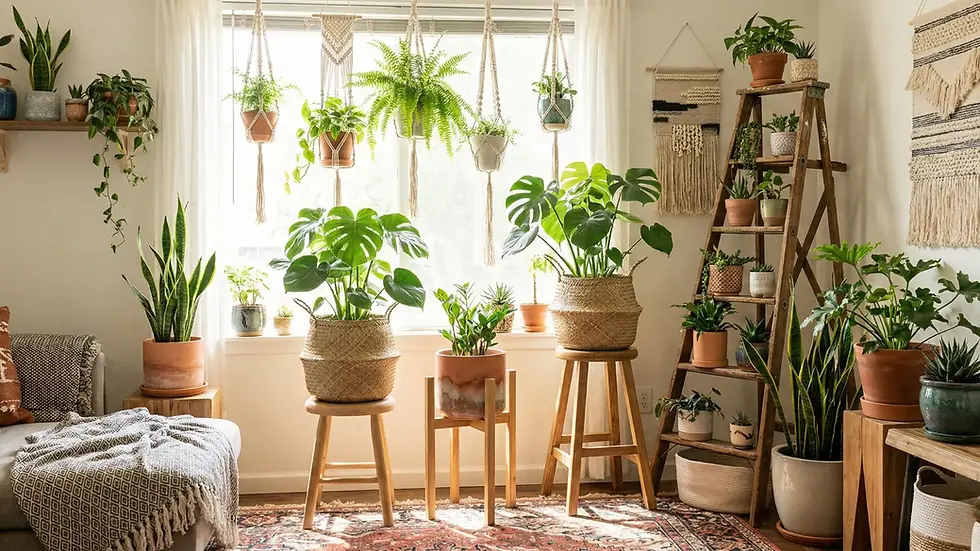
To enhance organic interior styling:
Basket Planters
Woven baskets add texture and warmth.
Macramé Hangers
Classic boho element that adds height variation.
Wooden Plant Stands
Perfect for layering plant heights.
Layered Heights
Combine floor, mid-level, and hanging plants.
Handmade Pots
Clay or ceramic pots enhance natural appeal.
Common Plant Placement Mistakes

Avoid these errors:
Overcrowding
Too many plants create clutter.
Ignoring Lighting
Plants suffer without proper light.
Wrong Plant Sizes
Tiny plants get lost; oversized plants overwhelm.
Poor Container Choice
Plastic pots ruin aesthetic balance.
Small Space Boho Plant Ideas
Apartment plant décor can still thrive.
Vertical Gardens
Use wall-mounted systems.
Wall Planters
Add greenery without using floor space.
Window Ledges
Perfect for small plants.
Multi-Level Stands
Stack plants vertically.
Plant Maintenance Tips

Watering
Avoid overwatering; check soil moisture.
Sunlight
Match plants with available light.
Soil Care
Use proper drainage soil mixes.
Rotation
Rotate plants so growth stays balanced.
Future Trends in Boho Interiors

Sustainable Design
Eco-friendly materials and plants will dominate.
Biophilic Interiors
Stronger connection between nature and living spaces.
Indoor Jungle Aesthetic
Homes filled with greenery layers.
How DreamDen Helps Design Perfect Spaces
Designing plant layouts can be challenging. Platforms like DreamDen simplify the process by helping homeowners visualize interior arrangements using AI-powered design suggestions.
Users can experiment with plant placement, furniture layouts, and décor ideas before making real changes, making interior plant design easier and more efficient.
Conclusion
Boho interiors thrive on freedom, creativity, and connection to nature. By using architectural plant placement, you transform plants from simple decoration into structural design elements.
Start experimenting with:
Layered plant heights
Strategic corner placements
Hanging greenery
Room-wise plant balance
Every home can become a calming green retreat. Begin small, observe what works, and let your space evolve naturally.
FAQs
1. Which plants suit boho interiors best?
Large leafy plants like monstera, palms, and pothos fit boho aesthetics well.
2. How many plants are too many?
If movement becomes difficult or light gets blocked, you likely have too many.
3. Best plants for low-light boho homes?
Snake plant, ZZ plant, and pothos tolerate low light.
4. Are hanging plants better than floor plants?
Both are useful; hanging plants save space while floor plants create structure.
5. How do I style plants in small apartments?
Use vertical space, shelves, and multi-level stands.


Comments