
Can You Renovate a Bathroom for $10,000?
- DreamDen AI Editorial Team
- Oct 30, 2025
- 7 min read


Renovating a bathroom is one of the most common home improvement projects—and also one of the most variable in cost. If you’ve set a budget of $10,000, you might wonder: Is that realistic? What can you get for that amount? What compromises must you make? And how can you avoid going over budget? The answer is yes with DreamDen. We have many interior designers you can help you get your bathroom renovated even within $10000.
In this article we’ll walk through:
What a $10,000 budget can realistically cover
Key cost drivers (labor, materials, layout changes, permits)
How to plan and budget to stay near $10,000
Possible upgrades and when you should spend more
Risks, hidden costs, and common pitfalls
ROI (return on investment) and value considerations
A sample budget breakdown showing how far $10,000 can go
A step-by-step roadmap for a $10,000 bathroom reno
What Can You Realistically Get for $10,000?
With a $10,000 budget, here’s what you can reasonably expect (and what you should consider giving up) based on typical cost breakdowns:
✔ What you can include:
Moodboard design, multiple revisions
Keep the existing layout (to avoid plumbing/structural expense).
Replace key fixtures: vanity, sink, faucet, toilet, shower/tub (but likely modest choices).
New tile/ flooring (depending on size), fresh paint, updated lighting and ventilation.
New hardware: mirror, towel bars, etc.
Possibly minor plumbing/electrical updates if the layout stays the same.

Key Cost Drivers: What Raises & Lowers the Price
Understanding what drives the cost helps you make decisions that keep your budget in check. Here are the major cost components:
a) Labor
Labour often accounts for a large portion of the total cost. According to one source, labour can be 40–65% of the total project cost. If you hire licensed plumbers, electricians, general contractors, expect labour to add up quickly.
b) Materials & finishes
High quality tile, custom vanities, designer fixtures – these all add significant cost. For example, one breakdown shows: showers $1,500–$7,500+, countertops $400–$2,500+, plumbing work $1,000–$2,500+ If you choose basic or mid-range materials, you can save a lot.
c) Layout and plumbing changes
If you move the location of plumbing fixtures (toilets/shower/tubs), you’ll see big increases. According to NerdWallet, changing the floor plan can add around $5,000. Avoiding major shifts in plumbing is one of the best cost-savers.
d) Size of the bathroom
Smaller bathrooms cost less. One table shows a 5×8 (40 sq ft) bathroom mid-range may cost $5,700–$8,500, while an 8×10 (80 sq ft) may cost $9,500–$14,500. So if you’re trying to stay under $10k, a smaller to moderate size is easier.
e) Hidden or unavoidable costs
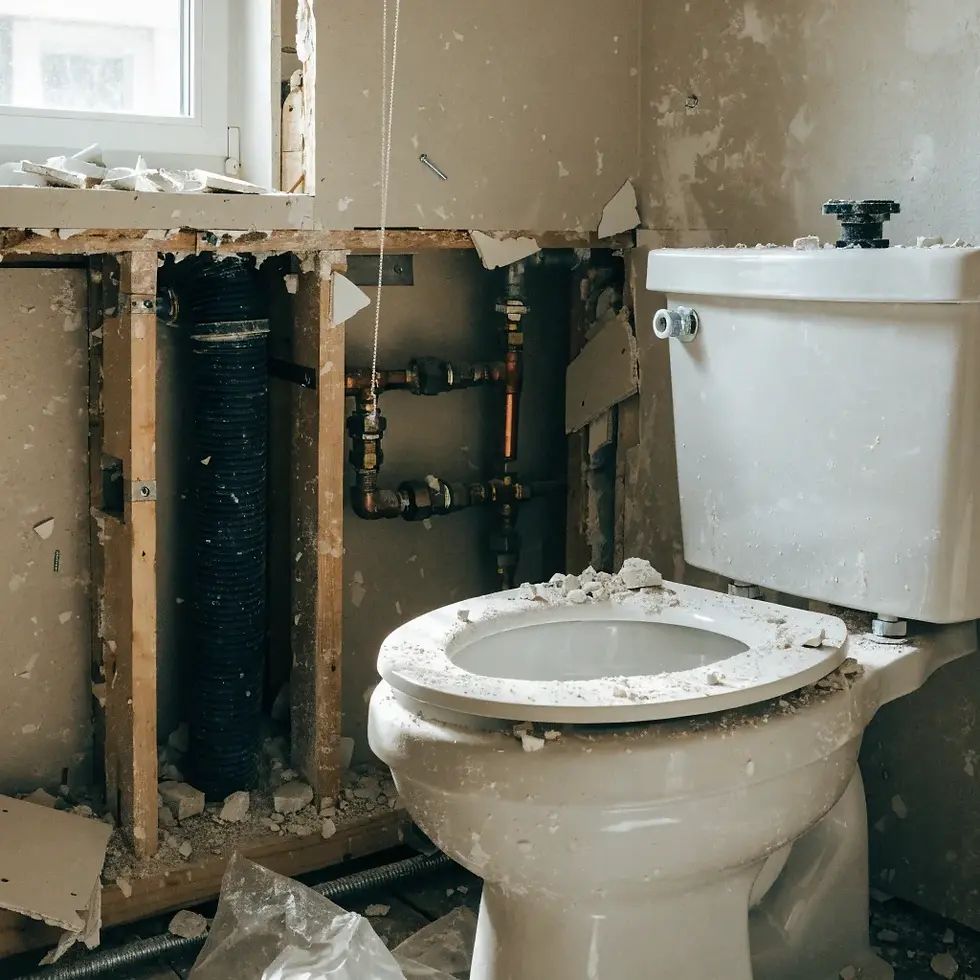
Permits, demolition, water damage, mold remediation can add thousands. For example, demolition alone may cost $1,000–$2,300. Always build in contingency.
f) Geographic/market factors
Labour and material costs vary widely by region (city vs rural), availability of trades, local permitting/inspection rates. What costs $10k in one region might cost $14k in another.
How to Plan & Budget to Stay Near $10,000
If you want your bathroom reno to hit or stay under $10,000, you’ll need a strategic plan. Here are key steps and tips:
Step 1: Define scope & priorities
Decide: Is this a cosmetic refresh or a near‐full remodel?
Identify must-haves vs nice-to-haves (e.g., new vanity vs luxury tub).
Fix layout (existing plumbing) to avoid extra cost.
Choose materials early: mid-range rather than designer.
Step 2: Get several quotes
At DreamDen we help you get 2–3 contractors or tradespeople, get line-item breakdowns.
Ask for labour vs material cost split.
Check timeline, change order policy, contingency for hidden issues.
Step 3: Set a detailed budget
Allocate budget lines: demolition, disposal; plumbing/electrical; tile/flooring; shower/tub; vanity/fixtures; lighting; painting; permits; contingency (10–15%).
Use the cost ranges seen above to benchmark.
Step 4: Choose cost-effective materials
Use good but not luxury finishes.
Keep plumbing layout the same.
Consider prefabricated vanities rather than custom cabinetry.
Choose standard tile sizes rather than oversized/premium.
Use a mid-range tub/shower instead of custom spa.
Step 5: Manage labour wisely
Use licensed professionals for plumbing/electrical (safety, code), but you might DIY non-critical tasks if you’re comfortable (e.g., painting).
Keep subcontractors scheduled efficiently (avoid delays).
Make decisions early (changes during work cost more).
Step 6: Contingency & timeframe
Reserve ~10% of the budget for unexpected issues (water damage, permit delays).
Plan timeline realistically (many bathroom remodels take several weeks).
Keep living arrangements in mind (if master bath out of service, do you have another bath?).
Step 7: Monitor progress and costs
Track invoices and payments.
Approve changes in writing.
Compare actual vs budget as you go; stop and reassess if you’re going over.
By following these steps and being disciplined about your decisions, staying near $10k is very achievable.
When You Should (or Shouldn’t) Spend More
It’s worth asking: if you’re already investing $10k, is it worthwhile to spend more and go for a higher tier remodel? Here are some considerations:
When you should consider spending more:
If you’re doing a master bath and need luxury features (double vanity, freestanding tub, walk-in shower, high-end tile) — many sources show these cost $20k+.
If you’re moving plumbing/layouts and doing a full gut renovation.
If your home’s value and region justify a luxury remodel (you want premium return).
If the existing plumbing/electrical is in bad shape and must be replaced anyway.
When you’re fine staying at $10k:
If this is a secondary bath, guest bath, or small to medium size.
If you simply want a fresh, modern look without luxury bells & whistles.
If you’re budget-conscious and want the best value rather than prestige.
If you plan to move/resell and want cost efficiency.
ROI (Return on Investment) considerations
According to Investopedia, bathroom renovations typically recoup about 50% of their cost in increased home value (though this can vary). Investopedia That means if you spend $10,000, you might expect ~$5,000 added value (depending on market). So staying near $10k is often more prudent than spending $20k+ unless other factors justify it.

Risks, Hidden Costs and Common Pitfalls
Even with a smart budget, many bathroom renovations go over budget. Here are common pitfalls to watch:
Hidden damage — Water leaks, structural issues, mold or rot uncovered after demolition. These add cost and delay.
Changing scope mid-project — Upgrading tile after work begins, changing fixtures, adding layout moves. These cost extra.
Poor contractor vetting — Unlicensed trades, unclear payment schedules, vague scope lead to cost overruns.
Material lead‐times/delays — Specialty items may be delayed, requiring temporary fixes or change orders.
Underestimating labour — Labour rates vary; assuming low and hiring inferior labour can backfire.
Permit/inspection surprises — If you need new plumbing/electrical permits, costs & time increase.
Living disruption costs — If bathroom is unusable for weeks, you may incur alternative living costs (e.g., using another bath).
Finishing tasks — Small tasks like paint, mirror, hardware can be overlooked and add up.
No contingency fund — Without buffer, you’ll be forced to overspend or cut quality.
By anticipating and budgeting for these risks, you improve the likelihood of staying under $10k.
Sample Budget Breakdown: How Far Does $10,000 Go?
Let’s walk through a hypothetical example of a bathroom renovation aiming for a ~$10k budget. Assume a moderate-sized bathroom (~50 sq ft) with existing layout retained.
Item | Estimated Cost |
Demolition/disposal | $1,000 |
Plumbing (existing layout) | $1,500 |
Electrical/lighting/ventilation | $800 |
Flooring & tile (floor + shower surround, mid-range tile) | $2,000 |
Tub/shower replacement (mid-range) | $1,200 |
Vanity/sink/faucet | $1,100 |
Toilet replacement | $400 |
Painting/walls/ceiling new finish | $600 |
Mirrors/hardware/towel bars/accessories | $300 |
Permit/inspection | $200 |
Contingency (~10%) | $900 |
Total ≈ | $9,000 |
This leaves ~$1,000 spare for unexpected costs or small upgrades (e.g., glass shower door, upgraded fixtures). With this plan, you’re under budget and still get a full refresh.
If you were to upgrade to premium tile, change plumbing layout, add heated floors, you would easily exceed $15k or more—so this budget forces discipline.
Step-by-Step Roadmap For Your $10k Bathroom Renovation
Here’s a recommended sequence of steps to execute your project efficiently:
Step 1: Planning & design
Gather inspiration (photos of DreamDen vision).
Decide scope: fixtures, tile, lighting, layout.
Set budget and priorities.
Draft design and select materials (tile, vanity, fixtures).
Step 2: Obtain quotes & hire contractors
Contact licensed plumbers, electricians, tilers, general contractor.
Get detailed bids with line-item costs.
Check references, insurance, timelines.
Sign contract with payment schedule and change-order policy.
Step 3: Order materials
Order tile, vanity, fixtures early to avoid delays.
Confirm lead times.
Choose standard sizes to reduce cost.
Step 4: Demolition & prep
Remove existing fixtures, tile, flooring (by contractor or combine DIY for small tasks).
Assess subfloor/structure for damage.
Address any issues (rot, mold, plumbing leaks) immediately.
Step 5: Rough-in plumbing/electrical
With layout unchanged, only update fixtures.
Install new plumbing/tub/shower pan as needed.
Electricians install lighting, ventilation.
Inspections/permits as required.
Step 6: Flooring & tile work
Install new tile flooring, wall tile/shower surround.
Pay attention to waterproofing (critical!).
Grouting, sealing, etc.
Step 7: Install fixtures & vanity
Install tub/shower, toilet, vanity, sink, faucet, hardware.
Connect plumbing and test for leaks.
Step 8: Finish work
Paint walls/ceiling, install trim, mirrors, lighting fixtures.
Install accessories (towel bars, etc.).
Final electric/plumbing checks.
Step 9: Final inspection & cleanup
Ensure all systems work (drainage, faucets, ventilation).
Clean up job site.
Address punch list items (touch-ups, caulking).
Step 10: Enjoy your new DreamDen bathroom!
Consider adding small personal touches (luxury shower curtain, décor) that don’t break budget.
How to Make It Feel Higher End Without Spending More
Even on a $10k budget, you can implement design tricks that make the bathroom look more high-end:
Use larger format tile (e.g., 12″x24″) with simpler grout lines (reduces visual clutter).
Choose a stylish but mid-priced vanity and handle hardware.
Choose one luxury or upgrade item (e.g., a frameless glass shower door) and keep other items modest.
Use good lighting (warm white LED, statement light fixture) — lighting goes a long way.
Use paint and tile colors that give a clean, timeless look (e.g., white/grey/hardwood accent).
Keep trim and moulding minimal and crisp for clean lines.
Ensure excellent workmanship (good tiling, neat finish) — craftsmanship shows more than high cost.
Keep the plumbing layout the same to avoid expensive surprises; often luxury feel is about finish rather than structural change.
Conclusion
So, can you renovate a bathroom for $10,000? Yes—with the right approach. While many full-scale remodels easily exceed this budget, a well-planned project that keeps the layout intact, uses mid-range finishes, and focuses on value can hit this target and deliver significant improvement.
For the DreamDen reader, this budget means smart choices, prioritisation, and good project management. You won’t get the ultra-luxury spa bathroom with every upgrade, but you can get a beautiful, functional, modern bathroom that feels like an upgrade—without breaking the bank.


Comments