
Commercial AC Installation in Macon, GA: Your Ultimate Guide to Efficient, Affordable Cooling

Updated: Dec 26, 2025
In the "Heart of Georgia," business success is often measured by the quality of the environment you provide for your employees, patrons, and associates. However, maintaining that environment is no small feat when faced with a Macon summer.
With daytime temperatures in June, July, and August frequently climbing into the low-100s, a reliable commercial air conditioning system is not just a luxury—it is a critical business utility.
Navigating Commercial AC Installation in Macon, GA requires more than just picking a unit off a shelf. It involves understanding local climate demands, building regulations, and the technical nuances of large-scale cooling. This guide is designed to help Macon business owners and facility managers make informed decisions that protect their bottom line and their comfort.
The Reality of Commercial Cooling in Macon’s Climate

Macon’s climate is characterized by very warm, humid summers and mild winters. For a commercial facility, this means your HVAC equipment is put to the test daily.
Humidity Challenges: High humidity levels are a persistent challenge. If a system isn't properly calibrated, businesses often suffer from "sticky" indoor air, which can lead to discomfort and even structural issues over time.
Planning for Success: When planning a renovation or new build, tools like DreamDen.ai can be invaluable. This AI-powered platform helps commercial users visualize their spaces and plan layouts effectively, ensuring that your high-performance AC system complements a smart, energy-efficient floor plan.
The Commercial AC Installation Process: A Step-by-Step Breakdown

A professional commercial installation is a complex undertaking that requires precision to ensure long-term value. Unlike residential setups, commercial systems often involve intricate ductwork, specialized power requirements, and larger footprints.
Comprehensive Assessment and Load Calculation: The first step is a detailed evaluation of the facility. Professionals perform a load calculation considering square footage, occupants, windows, insulation quality, and sun orientation.
System Selection: Based on the assessment, the ideal system is selected for efficacy and budget, paying close attention to efficiency ratings like SEER.
Preparation and Removal: For replacements, the old unit is safely disconnected. For new constructions, the site (rooftop or mechanical room) is prepped.
Component Placement and Integration: Technicians install indoor/outdoor components, refrigerant lines, wiring, and necessary ductwork (often including custom sheet metal fabrication).
Rigorous Testing: The system undergoes a testing phase to check refrigerant levels, airflow, and thermostat calibration.
Client Education: A final walkthrough covers system operation and the required maintenance schedule.
Types of Commercial AC Systems and Best Use Cases

Choosing the right type of system is essential for achieving efficient, affordable cooling.
Rooftop Units (RTUs): Common in commercial settings; they save indoor space and allow for service without disrupting operations.
Split Systems: Ideal for smaller spaces or individual offices; these consist of an indoor air handler and an outdoor condenser.
VRF (Variable Refrigerant Flow) Systems: Sophisticated systems allowing for simultaneous heating and cooling in different zones for peak efficiency.
Ductless Mini-Splits: Excellent for retrofitting older buildings without ductwork or cooling specific "hot spots."
Heat Pumps: A versatile choice for Macon, providing cooling in summer and efficient heating during mild winters.
Cost Factors, Efficiency Ratings, and Long-Term Savings

Investing in a commercial AC system involves balancing upfront costs with operational expenses.
Efficiency Ratings (SEER and ENERGY STAR)
Modern systems with high SEER ratings and ENERGY STAR® certifications may cost more initially but offer significant savings. Upgrading to an energy-efficient system lowers energy consumption while providing enhanced performance.
The Power of Smart Technology
Integrating smart thermostats can further optimize energy use. Independent studies show that smart thermostats can save an average of 15% on cooling bills by learning business hours and adjusting temperatures automatically when the building is unoccupied.
Sizing and Tonnage
Sizing is the most critical factor in AC performance.
The Metric: Cooling capacity is measured in Tons (one ton = 12,000 BTUs/hr).
Rule of Thumb: Approximately 20 BTUs per square foot for standard spaces.
The Risk: Improperly sized units lead to "short cycling," high humidity, and increased wear and tear.
Local Considerations Specific to Macon, GA
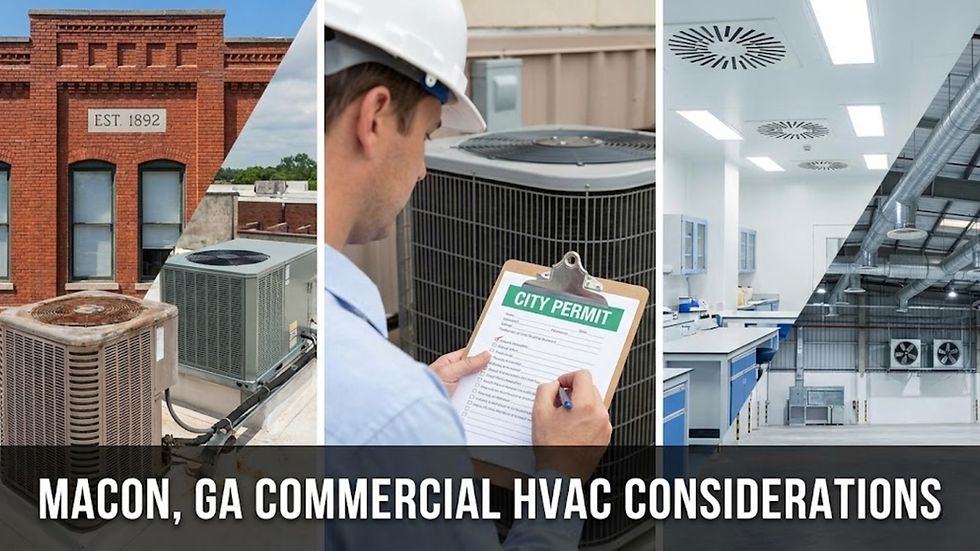
Commercial properties in Macon face unique challenges based on the city's history and geography.
Historical Architecture: Many downtown businesses operate in historic buildings. Retrofitting requires specialized knowledge to preserve architecture while installing modern cooling.
Building Regulations: Installers must adhere to all Georgia building codes and safety standards.
Industrial Diversity: From aeronautics to medical facilities, every industry has unique HVAC needs. DreamDen.ai can help stakeholders visualize how different HVAC configurations might impact interior aesthetics and functional flow in these diverse spaces.
Common Mistakes (And How to Avoid Them)
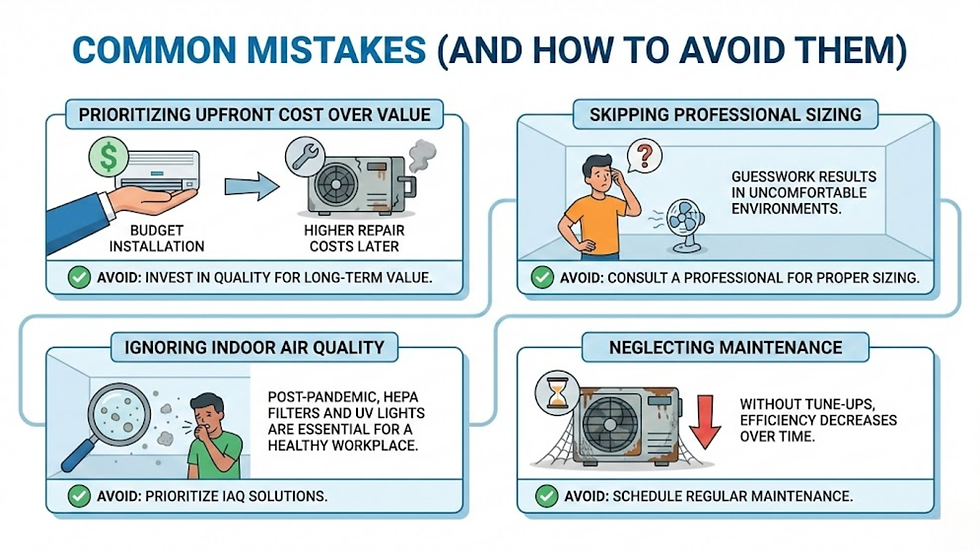
Prioritizing Upfront Cost Over Value: "Budget" installations often lead to higher repair costs later.
Skipping Professional Sizing: Guesswork results in uncomfortable environments.
Ignoring Indoor Air Quality: Post-pandemic, HEPA filters and UV lights are essential for a healthy workplace.
Neglecting Maintenance: Without tune-ups, efficiency decreases over time.
Maintenance, Lifespan, and Energy-Efficiency Tips

Most commercial air conditioners last between 10 to 15 years. To reach the upper end of that range, implement a preventive maintenance plan.
Regular Tune-Ups: Can reduce system breakdowns by up to 95% and lower energy bills by up to 30%.
Filter Changes: The simplest way to maintain airflow and air quality.
System Calibrations: Tightening connections and calibrating thermostats prevents minor issues from becoming major failures.
Final Thoughts for Macon Decision-Makers
Ensuring your facility remains a cool sanctuary during a Georgia heatwave is a vital part of your operational strategy. By focusing on professional installation, proper sizing, and high-efficiency equipment, you can achieve affordable cooling that lasts for a decade or more.
As you plan your next upgrade, remember that modern tools like DreamDen.ai can help you visualize the most efficient way to utilize your space, while a certified HVAC professional ensures that the mechanical heart of your building—the AC system—is installed to the highest local standards.
Commercial AC Installation FAQs
How long does a commercial AC installation take? Most standard installations can be completed within a day, though complex overhauls may take longer depending on ductwork requirements.
Is it necessary to upgrade my ductwork? If your ductwork is too small, the new system will work harder and lose efficiency. A professional assessment will determine if your current ducts can handle the new airflow.
What are the signs that my business needs a new AC? Look for rising energy bills, uneven cooling, strange noises, or persistent humidity. If your unit is over 15 years old and needs frequent repairs, replacement is usually more cost-effective.
Can a new AC improve my business’s air quality? Yes. Modern systems can be equipped with advanced filtration and air purification systems to remove dust, pollen, and pollutants.


Comments