
The Complete Guide to Ductless AC & Mini-Splits for Chester, NY Homeowners (2025 Edition)

Updated: Dec 26, 2025
If you live in Chester, NY, you know the struggle of keeping your home comfortable year-round. Between our humid Hudson Valley summers and freezing winters, relying on outdated window units or inefficient baseboard heating can leave you with uneven temperatures and skyrocketing energy bills.
For many homeowners in our area—especially those with older historic homes, new additions, or spaces that just never seem to get cool enough—ductless air conditioning (often called mini-splits) has become a game-changer.
This guide is written specifically for Chester residents to help you understand how ductless systems work, what they cost in 2025, and how to find the right local experts to install them.
Why Chester Homeowners Are Choosing Ductless AC
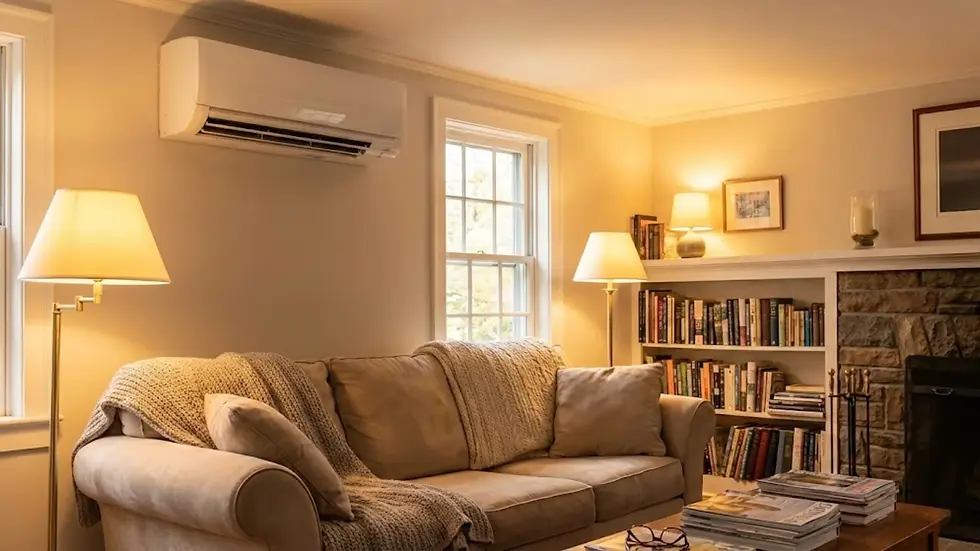
Drive around Chester and the surrounding Orange County towns, and you’ll notice more sleek outdoor compressor units popping up. Why the shift to ductless AC installation chester
Energy Efficiency: Ductless systems are incredibly efficient because they don't lose energy through leaky ductwork (which can account for 30% of energy loss in central systems). This is key if you want to keep your energy bills low.
Zoning Control: Stop cooling the whole house when you’re only using the living room. Ductless lets you set different temperatures for different rooms.
Perfect for Older Homes: Many beautiful homes in Chester were built before central air existed. Installing ductwork in them requires messy renovation and boxy bulkheads. Ductless requires only a small 3-inch hole in the wall.
Quiet Operation: Unlike the roar of a window unit, modern mini-splits are whisper-quiet often quieter than a library.
What Is a Ductless AC System?

A ductless mini-split system is a heating and cooling solution that doesn't require air ducts to route air throughout your home.
It consists of two main parts:
The Outdoor Unit (Compressor/Condenser): Sits outside your home and does the heavy lifting of pumping refrigerant.
The Indoor Unit (Air Handler): Mounts on your wall, floor, or ceiling and blows the conditioned air directly into the room.
The two units are connected by a small conduit containing power cables and copper tubing. Because they move heat rather than generating it, they are highly efficient for both cooling in July and heating in January.
Top 10 Reasons to Choose Ductless AC
No Ductwork Needed: Save money and mess by avoiding major renovations.
Zoned Comfort: Everyone gets their preferred temperature in their own room.
Whisper-Quiet Performance: Indoor units typically run as quietly as 19 decibels.
Dual Heating & Cooling: Most modern systems are heat pumps, providing AC in summer and efficient heating in winter.
Lower Energy Bills: High SEER2 ratings mean you use less electricity to get the same comfort.
Fast Installation: A professional can often install a single zone in less than a day.
Clean, Modern Design: Compact indoor units blend into most decors; floor and ceiling options are also available.
Better Indoor Air Quality: Each unit has its own filter, reducing dust, pollen, and allergens circulating between rooms.
Smart Controls: Control your AC from your smartphone, even when you aren't home.
Rebates & Incentives: 2025 offers significant financial incentives for switching to heat pumps (more on this below).
Cost of Ductless AC Installation in Chester, NY (2025 Estimates)

Pricing can vary based on the complexity of your home and the equipment you choose. For a deep dive into pricing factors, check our guide on mini-split installation costs.
Single-Zone System: $3,500 – $6,000
Ideal for: A garage, master bedroom, or sunroom.
Multi-Zone System (3-4 zones): $10,000 – $18,000+
Ideal for: An entire floor or whole-home solution.
Factors Affecting Cost:
Brand: Premium brands like Mitsubishi Electric, Fujitsu, and LG tend to cost more but offer better warranties and cold-climate performance.
Electrical Work: If your home needs a new circuit breaker or panel upgrade, this will add to the cost. See our electrical category for more on upgrading your home's power.
Mounting Style: Standard wall units are most affordable; recessed ceiling cassettes or floor units cost more to install.
Pro Tip: Always get at least three quotes from local contractors to compare.
Ductless vs. Central Air Comparison
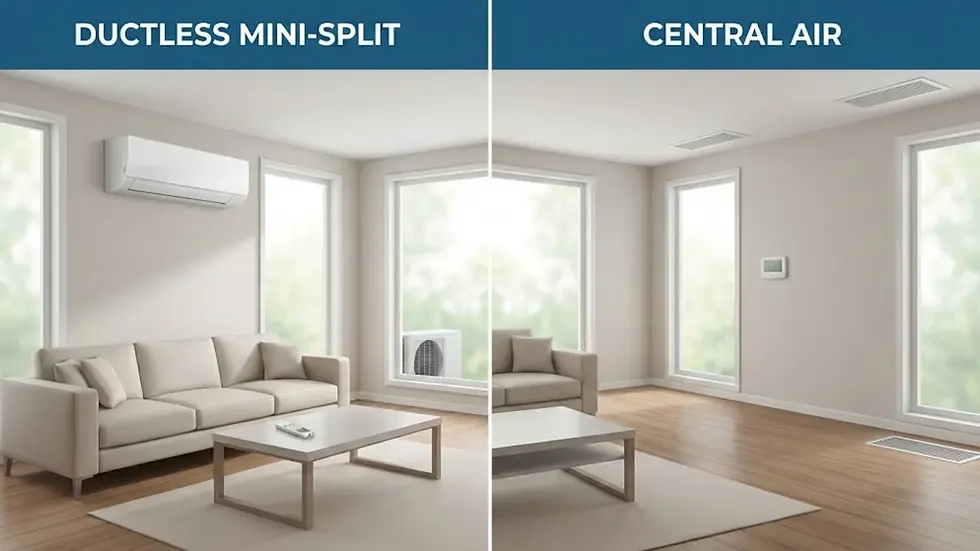
Still deciding between the two? Read our full comparison on Central AC vs Ductless Mini-Splits.
Feature | Ductless Mini-Split | Central Air Conditioning |
Ductwork | None required | Required (complex & invasive) |
Installation Time | 1–2 Days | 3–7 Days (if ducts needed) |
Efficiency (SEER2) | High (20–30+ SEER2) | Moderate (13–21 SEER2) |
Zoning | Built-in (Control per room) | Difficult/Expensive to add |
Cost | Lower for add-ons/renovations | Lower for new construction |
Ideal For | Older homes, additions, zoning | New builds with open plans |
Best Places to Install Ductless AC in Your Home
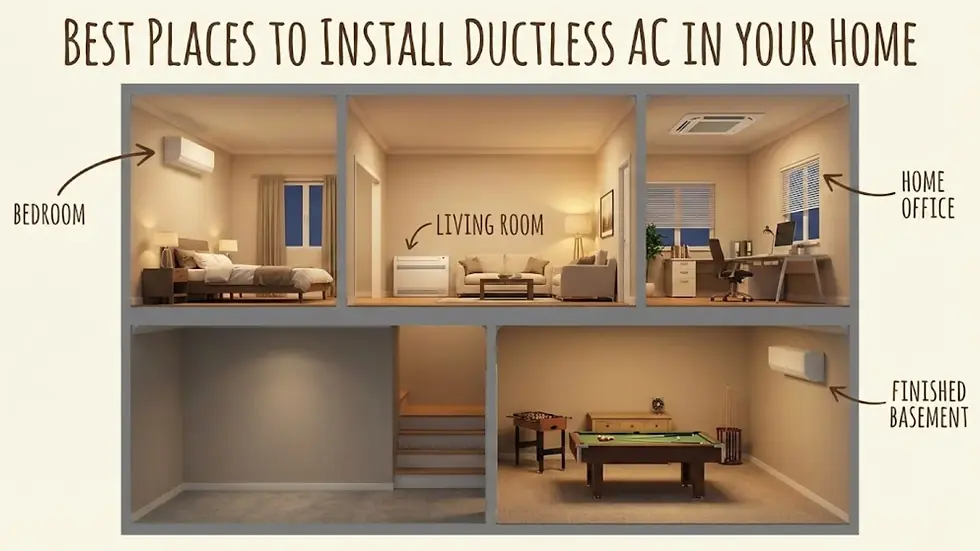
Ductless is incredibly versatile. Here are the most popular spots for Chester residents:
Attic Bedrooms: Heat rises, making attics unbearable in summer. A mini-split handles the load perfectly.
Basements: Damp and chilly basements benefit from the dehumidification and heating modes.
Home Offices: Keep your workspace comfortable without cooling the entire empty house during the day.
Additions / Sunrooms: Extending ductwork to a new room is often expensive and ineffective. Ductless is the standard solution here.
Garages or Workshops: Perfect for hobbyists who want to work comfortably year-round.
Historic Homes: Preserve original crown molding and plaster walls by avoiding bulky ductwork.
Installation Timeline: What to Expect

Pre-Install Inspection: The contractor visits your home to perform a "Manual J" load calculation. This ensures you get the right size unit (BTUs) for your space.
Installation Day:
Technicians arrive and protect your floors.
A small 3-inch hole is drilled through the exterior wall.
The indoor unit is mounted, and the outdoor unit is set on a pad or bracket.
Lines are connected, vacuum tested, and charged.
Typical Time: A single zone usually takes 4 to 8 hours. Multi-zone systems may take 1 to 2 days.
How to Choose the Right HVAC Contractor

Don't just hire the first name you see. Protect your investment by checking:
Licensing & Insurance: Ensure they are licensed in Orange County/NY and carry liability insurance.
Certifications: Look for NATE-certified technicians.
Manufacturer Status: Brands often have elite tiers (e.g., Mitsubishi Diamond Contractor or Fujitsu Elite). These contractors often can offer extended 12-year warranties.
Transparent Pricing: The quote should include labor, equipment, electrical, and permits.
Reviews: Check Google Maps and local community groups for recent feedback.
Rebates, Tax Credits & Financing (2025)
2025 is a great year to install due to available incentives.
Federal Tax Credit (25C): You can claim 30% of the project cost, up to $2,000 per year, as a tax credit for qualified heat pumps.
NYS Clean Heat / Utility Rebates: Orange & Rockland (O&R) and NYSERDA often provide instant rebates paid directly to the contractor, which lowers your upfront invoice. Rebates can range from hundreds to thousands of dollars depending on the system size and efficiency.
Manufacturer Rebates: Companies like Mitsubishi often run seasonal rebates in the spring and fall.
Financing: Many contractors offer 0% interest financing for 12-24 months.
Maintenance Tips

Ductless systems are low maintenance, but not no maintenance.
Monthly: Clean the air filters. Pop open the front panel of the indoor unit, remove the mesh filters, rinse them in the sink, dry, and replace. This keeps airflow strong and air clean.
Seasonal: Clear leaves, snow, and debris away from the outdoor unit to ensure it can breathe.
Annual: Schedule a professional service. They will deep clean the coils (preventing mold), check refrigerant levels, and flush the drain line. Be aware of strange noises or poor airflow as signs you might need a check-up.
Common Myths vs. Truths

Myth: "They are only for small rooms."
Truth: Modern multi-zone systems can cool and heat entire 3,000+ sq ft homes effectively.
Myth: "They look ugly on the wall."
Truth: Designs have improved greatly. If you truly hate the wall unit, ask about recessed ceiling cassettes or floor-mounted units that look like radiators.
Myth: "They are too expensive."
Truth: While the upfront cost can be higher than a window unit, the energy savings (often 30-40%) pay for the system over time. Plus, they add resale value to your home.
FAQs
1. Do ductless systems work in Chester winters?
Yes! Modern "Hyper-Heat" or cold-climate models can provide 100% heating capacity even when it's 5°F outside, and continue working down to -13°F. They are a legitimate primary heat source.
2. How long do these systems last?
With proper maintenance, a ductless system typically lasts 15 to 20 years. If you are considering replacing an entire older system, check out our guide on HVAC replacement.
3. Do I need a permit?
Yes, in Chester, NY, HVAC installations generally require a building permit and an electrical inspection. Your contractor should handle this for you.
4. Can I heat and cool different rooms at the same time?
Generally, no. All indoor units connected to a single outdoor compressor must be in the same mode (all heating or all cooling) at once.
5. How much can I save on energy bills?
Homeowners switching from electric baseboard or old propane systems often see savings of 30% to 50% on their heating and cooling costs.


Comments