
How do HVAC Contractors Improve System Response Times?

When heating or cooling systems respond slowly, comfort levels drop and energy usage increases. A delayed system response often signals inefficiencies within equipment, controls, or airflow distribution. HVAC contractors play a key role in addressing these delays, ensuring that systems react quickly to thermostat adjustments and environmental changes. Improving response times requires more than repair—it involves fine-tuning performance, upgrading controls, and ensuring proper calibration between mechanical and digital components. Through precise adjustments and maintenance, contractors create smoother, faster transitions between heating and cooling cycles, helping homes and businesses maintain consistent comfort without energy waste or unnecessary strain.
Understanding the Causes of Delayed Responses
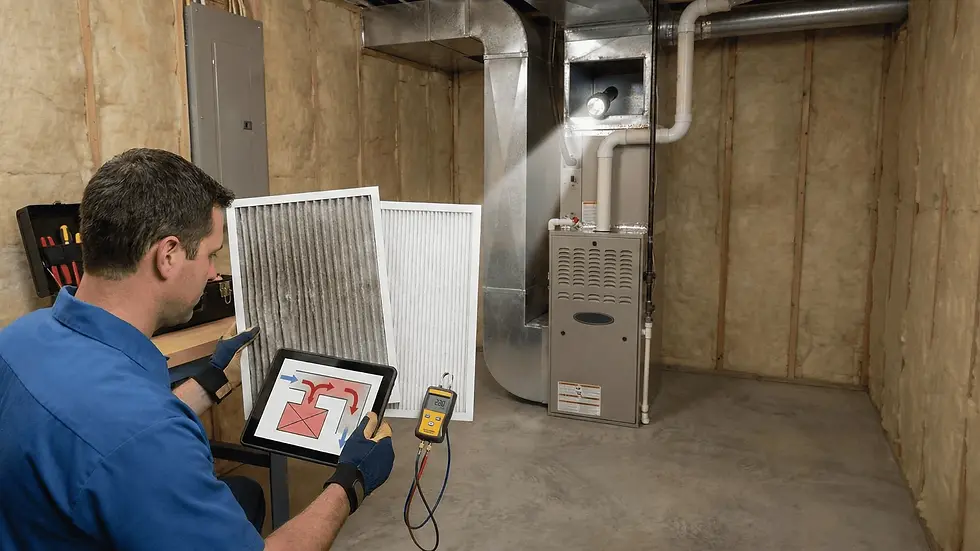
Before improving performance, contractors first identify the factors that contribute to slow system response times. Delayed responses can result from clogged filters, undersized ductwork, sluggish thermostats, or inadequate refrigerant charge. Each of these issues interferes with the efficiency with which air moves through the system or the accuracy with which temperatures are detected. Contractors perform detailed inspections to pinpoint inefficiencies, combining airflow testing with sensor calibration to detect timing imbalances. Many delayed responses are due to simple maintenance oversights, such as dust accumulation on sensors or obstructed vents that restrict airflow. By understanding these underlying causes, contractors can implement targeted solutions rather than temporary fixes. A fast, balanced HVAC system isn’t achieved through one change—it’s the result of multiple precise adjustments that bring airflow, temperature detection, and mechanical operation into perfect synchronization.
If you want to renovate your home, contact our experts.
Optimizing Controls and Communication Systems
Modern HVAC systems rely heavily on precise digital communication between thermostats, sensors, and control boards. Contractors improve response times by ensuring these components interact efficiently. They calibrate thermostats to ensure accurate temperature readings, update firmware, and eliminate signal delays caused by outdated wiring or incorrect setup. Smart thermostats further enhance responsiveness by learning temperature patterns and predicting adjustments before occupants even notice discomfort. Technicians also upgrade control systems to reduce lag between command input and system reaction. Many companies offering HVAC solutions in Las Vegas by Semper Fi Heating and Cooling, focus on optimizing both mechanical and electronic systems to improve real-time performance. Proper synchronization ensures heating or cooling begins immediately upon activation, reducing delay cycles and maximizing comfort while minimizing energy waste.
Enhancing Airflow Through Balanced Duct Design
Airflow is a crucial factor in determining how quickly conditioned air reaches different parts of a home or building. Contractors often inspect duct systems to identify leaks, blockages, or design flaws that slow distribution. Even a minor restriction in one section of ductwork can delay system response throughout the entire network. To improve flow efficiency, contractors seal leaks, resize ducts, and realign registers for optimal air distribution. They may also introduce variable-speed blowers that adjust output in response to demand, ensuring consistent airflow without sudden surges or lags. Balanced airflow shortens the time it takes a room to reach the desired temperature, enhancing comfort and reducing mechanical strain. Efficient ductwork makes every cycle seamless, enabling the HVAC system to respond almost instantly to changing environmental conditions.
The Role of Preventive Maintenance in Speed Optimization
Maintenance directly affects how quickly an HVAC system reacts to commands. Dust buildup, worn belts, and sluggish motors all slow down component performance, leading to delayed heating or cooling. During maintenance visits, contractors clean condenser and evaporator coils, lubricate moving parts, and test motor efficiency. This ensures mechanical parts start and stop as intended without hesitation. Additionally, they check refrigerant levels and pressure balances to ensure cooling cycles begin promptly and operate efficiently. Preventive maintenance eliminates small performance drags that accumulate over time, returning the system to its intended speed. It also prevents issues such as frozen coils or blocked sensors, which can significantly increase response times. Well-maintained systems operate predictably, reacting to changes in thermostat settings with minimal delay, improving comfort and efficiency simultaneously.
Upgrading Equipment for Faster Performance
Sometimes, improving response time requires upgrading outdated components. Older systems with single-speed compressors or fans often take longer to reach temperature setpoints because they lack modulation capability. Contractors may recommend variable-speed systems, which enable smoother, faster transitions between heating and cooling modes. Similarly, upgrading thermostats or zoning systems can dramatically improve responsiveness. These modern solutions communicate in real time, enabling the HVAC system to respond immediately to even subtle temperature fluctuations. In commercial buildings or larger homes, contractors sometimes install demand-controlled ventilation systems that adjust airflow dynamically, ensuring instant climate regulation based on occupancy. Upgrading components doesn’t just speed up system response—it also extends equipment lifespan by reducing excessive strain from abrupt start-stop cycles.
The Impact of Smart Technology and Automation
Smart technology has revolutionized how HVAC systems manage time and performance. With integrated sensors and machine learning, smart systems anticipate changes rather than merely react to them. Contractors help clients set up these systems to maximize responsiveness by programming predictive controls and integrating them with mobile applications. Automation allows homeowners to pre-set temperature changes based on schedules or occupancy, meaning the system adjusts before comfort levels drop. Contractors ensure these devices communicate efficiently through Wi-Fi networks or home automation hubs, reducing latency in command transmission. Smart zoning also allows different areas to receive attention simultaneously, improving the entire home’s response rate. The fusion of smart automation with traditional HVAC design represents a major leap forward in achieving near-instant temperature adjustments and energy-efficient climate control.
System Calibration and Performance Testing
After making modifications, contractors perform system calibration and response testing to ensure every adjustment delivers measurable improvement. Using diagnostic equipment, they record data such as the rate of temperature change, compressor cycle duration, and air velocity. These readings indicate how effectively the system transitions from idle to active states. Contractors compare performance data before and after service to verify improvements in response time. Calibration fine-tunes system behavior, aligning mechanical, electrical, and control elements for synchronized operation. This phase is critical for identifying overlooked issues, such as delayed relay signals or inconsistent airflow. Testing also gives homeowners tangible proof of improved system efficiency. By combining precision measurement with technical adjustments, contractors ensure that HVAC systems perform at peak responsiveness across all seasons.
Continuous Improvement and Long-Term Efficiency
Improving response time is not a one-time effort—it’s part of ongoing system management. Contractors often schedule follow-up inspections to evaluate performance under different seasonal conditions. These evaluations help fine-tune airflow, recalibrate thermostats, and adjust energy settings for sustained responsiveness. Continuous improvement ensures the system adapts as it ages or as usage patterns change. Over time, consistent monitoring prevents performance decline and keeps energy costs stable. A responsive HVAC system doesn’t just mean faster comfort; it reflects an optimized balance between technology, design, and maintenance. Contractors who focus on long-term efficiency transform ordinary systems into finely tuned mechanisms that maintain comfort seamlessly and economically throughout the year.
Faster Response Through Precision and Care

Improving HVAC response times requires a deep understanding of both mechanical performance and environmental control. Contractors achieve this by optimizing airflow, updating controls, performing maintenance, and integrating smart technology that anticipates user needs. Faster system responses enhance comfort while reducing energy waste, as systems no longer struggle to reach target temperatures. Through regular testing, calibration, and performance tracking, contractors ensure consistent improvement over time. The result is a home or business environment that adjusts quickly, efficiently, and reliably to every climate demand. In an era where comfort and energy savings go hand in hand, precise HVAC responsiveness remains a defining measure of true system performance and quality care.


Comments