
Mediterranean Kitchen Design
- DreamDen AI Editorial Team
- Dec 11, 2025
- 6 min read


Are you dreaming of a kitchen that instantly transports you to the sun-drenched coasts of Southern Europe or North Africa? Do you crave a space that feels warm, inviting, and effortlessly timeless? If so, the Mediterranean kitchen design style is your perfect escape. It’s more than just a decor trend; it’s a lifestyle, emphasizing natural light, earthy materials, and robust craftsmanship.
This blog will unpack every element of this beloved style, from its cultural origins in Spain, Italy, and Greece, to the practical tips needed to execute a stunning renovation. Ready to see your Mediterranean vision come to life? Learn how DreamDen.ai can take your inspiration, suggest perfect palettes and materials, and generate realistic visualizations of your new kitchen, making the design process simple and fun.
What is Mediterranean Kitchen Design?
Mediterranean kitchen design is an aesthetic inspired by the countries bordering the Mediterranean Sea—primarily Greece, Italy, Spain, Morocco, and parts of the Middle East.
Cultural Origins and Design Philosophy
The philosophy centers on simplicity, practicality, and a deep connection to nature. Homes in these regions were traditionally built to withstand hot, sunny climates, which translated into thick, often white-washed walls, cool stone floors, and small, deep-set windows to manage heat. The style values function over formality, prioritizing spaces for gathering, cooking, and sharing meals.
Key Traits that Differentiate it
While often mistaken for rustic or farmhouse, Mediterranean stands apart due to:
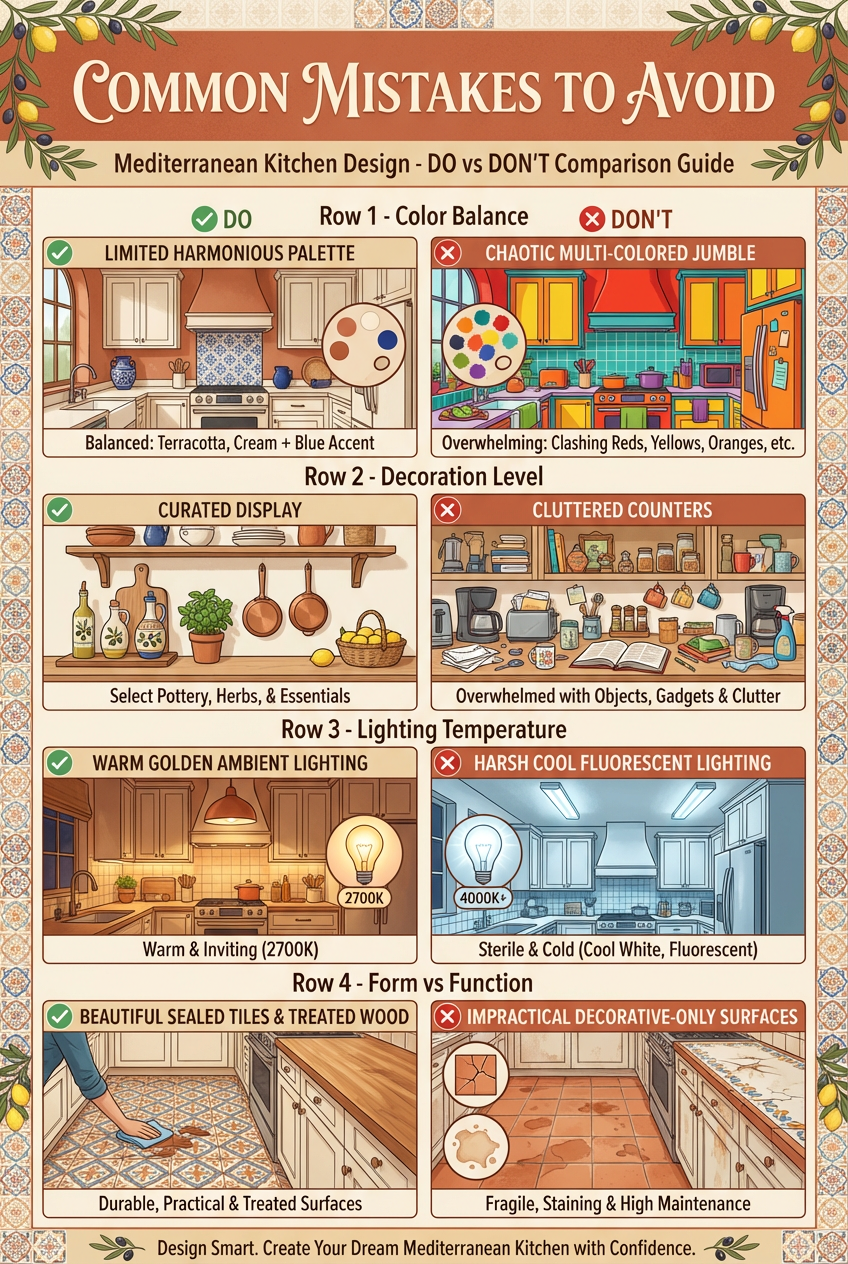
Earthy, Sun-Baked Colors: A foundation of neutrals like beige, cream, and white, accented by deep sea blues, olive greens, and vibrant terracotta.
Emphasis on Texture: Abundant use of textured plaster (stucco), rough-hewn wood, and unpolished natural stone.
Decorative Tiles: The liberal and strategic use of patterned ceramic tiles (like Spanish Talavera or Moroccan Zellige) on backsplashes, floors, and countertops.
Key Elements of Mediterranean Kitchen
Achieving an authentic Mediterranean feel requires careful consideration of several core elements.
Color Palette
The colors reflect the natural landscape: the sea, the sky, the sun, and the earth.
Foundation: Cream, ivory, and soft white for walls and major surfaces.
Accents: Azure blue, cobalt blue, olive green, and terracotta orange.
Materials
Durability and natural origin are paramount in Mediterranean kitchen materials.
Flooring: Terra cotta tiles, quarry stone, or dark, rustic wood planks.
Surfaces: Natural stone like marble, granite, or limestone for countertops.
Wood: Heavy, distressed wood for beams, islands, and cabinetry, often in dark walnut or deep oak tones.
Architectural Features
These features anchor the style and provide its signature charm.
Arches and Niches: Rounded doorways, windows, and decorative wall niches break up straight lines and add architectural softness.
Open Shelving: Instead of fully enclosed upper cabinets, open shelves display ceramics, glassware, and pottery, enhancing the accessible, casual feel.
Patterned Tiles: Used extensively on backsplashes and as decorative borders.
Textures & Finishes
The goal is a lived-in, tactile feel, avoiding anything sleek or highly polished.
Walls: Stucco or Venetian plaster provides a soft, hand-troweled texture.
Metals: Wrought iron (dark, matte finish) for hardware, lighting, and pot racks.
Lighting and Ambiance
The lighting should be warm, layered, and inviting.
Natural Light: Maximize natural light with sheer curtains or no window coverings at all.
Fixtures: Use rustic lanterns, bronze pendant lights, or wrought iron chandeliers.
Mediterranean Kitchen Styles
The "Mediterranean" style encompasses a diverse range of looks, each rooted in a specific region's traditions.
Style | Typical Features | Key Visuals & Materials |
Greek Style | Dominated by bright white and cobalt blue; clean, Cycladic architecture. | White-washed walls, blue cabinetry, pebble flooring, simple wood furniture. |
Southern Italian | Rustic, warm, and sun-kissed; focus on robust cooking and gathering. | Terracotta floors, exposed stone walls, olive green accents, hand-painted ceramic plates. |
Spanish Hacienda | Rich and dramatic; heavily relies on wood, iron, and vibrant color. | Dark, carved wood cabinets, Talavera-style patterned tiles, wrought iron light fixtures. |
Moroccan Infused | Exotic, intricate, and luxurious; heavy use of geometric patterns. | Zellige tiles (small, irregular ceramic tiles), jewel tones (emerald, sapphire), pierced metal lanterns. |
Coastal Mediterranean | Lighter, airy, and contemporary take on the style; less heavy wood. | Light natural wood, soft blues and sand tones, linen fabrics, white cabinetry. |
Layout & Space Planning Principles
The kitchen is the heart of the home, and the layout must reflect its communal purpose.
Efficient Kitchen Workflow
Mediterranean kitchens prioritize the social aspect.
Balance and Flow: Use the working triangle (sink, stove, refrigerator) efficiently, but keep the path open to an adjacent dining area or outdoor patio.
The Island: A large, sturdy island or wooden table often serves as a multi-functional hub for prep, cooking, and informal dining.
Working with Small vs Large Spaces
Small Spaces: Use white and light-colored stone to maximize light. Opt for fewer, large patterned tiles rather than overwhelming the space with too many small mosaics.
Large Spaces: Embrace exposed, heavy wooden ceiling beams to bring down the scale and add warmth. Consider a rustic stone hearth or range hood as a central focal point.
Integrating Indoor/Outdoor Transitions
A seamless flow between the kitchen and an outdoor dining area is a hallmark of the style. Use large French doors or sliding glass doors and ensure the indoor/outdoor flooring materials coordinate (e.g., repeating the same stone or color family).
Color Palettes + Material Pairings

Using the correct combination of Mediterranean kitchen color palette and materials is essential for an authentic look.
Palette | Colors | Materials | Finish |
Coastal Blue | Azure, white, sand | Natural wood, glossy ceramic | Matte/Aged |
Earth & Clay | Terracotta, olive, cream | Stone, wrought iron | Textured |
Spanish Sunset | Deep reds, burnt orange, black | Dark oak, painted cement tile | Distressed |
Moroccan Jewel | Sapphire blue, emerald, gold | Zellige tile, carved cedar | Polished/Metallic |
Decor, Accents & Accessories
The details add the final layer of personality and warmth.
Tile Mosaics: Use vibrant, patterned ceramic tiles for backsplashes, small accent walls, or even as a decorative centerpiece on the floor.
Rustic Hardware: Replace standard pulls with wrought iron, bronze, or hammered copper knobs and handles.
Art, Pottery, Textiles: Display hand-painted ceramic plates (especially Italian or Spanish), oversized terracotta planters, and woven textiles (like linen or rough cotton towels).
Plants & Herbs: Bring the outdoors in with small potted olive trees, rosemary, basil, and hanging grapevines or ivy.
Furniture & Fixture Ideas
Cabinets: Finishes, Styles
Styles: Look for flat-panel or simple raised-panel doors.
Finishes: Choose distressed, matte, or painted finishes (especially deep blue, olive green, or soft yellow). Heavy, dark wood cabinets are classic Spanish Mediterranean.
Countertops: Stone, Quartz, Wood
Stone: Unpolished, honed, or leathered natural stone (marble, granite, limestone) is ideal. Avoid highly reflective, glossy finishes.
Wood: Butcher block can be used for an island top to add contrast and warmth.
Flooring: Stone Tiles, Patterned Designs
The best Mediterranean kitchen tiles are large terra cotta squares or hexagon tiles, laid with wide grout lines. Patterned cement tiles or encaustic tiles can also be used as area rugs or accents.
Lighting Fixtures (Lanterns, Pendants)
Opt for fixtures that look handcrafted: heavy wrought iron chandeliers, bronze pendant lights over the island, and wall sconces with simple glass shades.
How DreamDen.ai Can Help You Design Your Mediterranean Kitchen
Designing a kitchen requires coordinating countless elements—from the perfect Mediterranean kitchen color palette to sourcing genuine terra cotta tiles. Speak to our interior designers and compare different Mediterranean kitchen styles and receive estimated costs based on your selected materials.
Tips for Implementation
Budgeting Tips
Prioritize: Spend money on quality flooring and countertops, as these define the aesthetic. Save money by choosing stock or semi-custom cabinets and painting them a Mediterranean hue.
DIY Accents: Instead of expensive tile installation throughout, limit patterned tiles to a small backsplash area or a kitchen island accent panel.
How to Choose Fixtures
Look for hand-forged or distressed finishes. The quality should feel heavy and substantial,
avoiding anything shiny or mass-produced chrome.
Lighting Installation Advice
Focus on warm light (2700K-3000K). Install under-cabinet lighting (task) and dimmable overhead ambient lighting for full control over the mood.
Working with Contractors
Show your contractor your DreamDen.ai generated mood board and layout. This eliminates guesswork and ensures they understand the specific textured finishes (stucco, distressed wood) required for the style.
FAQs
What defines a Mediterranean kitchen?
A Mediterranean kitchen is defined by its use of natural, earthy materials (stone, terra cotta, wood), a warm, bright color palette, and architectural elements like arches and open shelving. It prioritizes a social, communal atmosphere.
How do I choose tiles for a Mediterranean kitchen?
The best Mediterranean kitchen tiles are often terra cotta for flooring or patterned, hand-painted ceramics (Spanish, Portuguese, or Moroccan styles) for backsplashes. Choose matte, textured finishes over glossy ones.
Is Mediterranean style modern or rustic?
The traditional style is rustic, emphasizing aged materials and a lived-in look. However, the Coastal Mediterranean sub-style offers a modern interpretation, using lighter wood and cleaner lines while maintaining the core palette and natural materials.
How to create a Mediterranean feel on a budget?
Focus on paint and decor. Use a warm, earthy paint color, add a patterned tile decal backsplash, replace cabinet hardware with rustic black iron, and display hand-painted ceramics and herbs.
Conclusion
The Mediterranean kitchen design offers a unique blend of timeless elegance and functional comfort, rooted in the beauty of the European and North African coasts. By embracing natural materials, warm colors, and decorative tiles, you can create a kitchen that is truly the heart and soul of your home. It's time to stop dreaming and start designing. Take the next step toward your sun-drenched sanctuary today.


Comments