
The Hidden Costs of Keeping an Old Furnace Too Long
- DreamDen AI Editorial Team
- Feb 18
- 4 min read

For many homeowners, replacing a furnace feels like a major expense — one that’s easy to postpone as long as the system is still running. But what often goes overlooked are the hidden costs of keeping an aging furnace past its prime. In a city like Indianapolis, where winters regularly bring freezing temperatures and heavy system demand, delaying replacement can end up costing far more than you expect.
If you’ve been weighing the cost of furnace replacement in Indianapolis, it’s important to consider not just the upfront price, but the long-term financial impact of holding onto an outdated system.
Rising Energy Bills Add Up Quickly

One of the biggest hidden expenses of an old furnace is declining efficiency. Most furnaces have a lifespan of 15 to 20 years. As they age, internal components wear down, airflow becomes restricted, and combustion efficiency decreases.
Older furnaces often operate at 70–80% AFUE (Annual Fuel Utilization Efficiency). That means 20–30% of the fuel you’re paying for is wasted. Modern high-efficiency systems can reach 95% AFUE or higher, dramatically reducing energy waste.
In Indianapolis, where heating systems run heavily from late fall through early spring, that efficiency difference can translate into hundreds of dollars per year in additional utility costs. Over several seasons, those higher bills may exceed the cost of furnace replacement in Indianapolis altogether.
If you want to renovate home, Contact our experts.
Frequent Repairs Become a Financial Drain
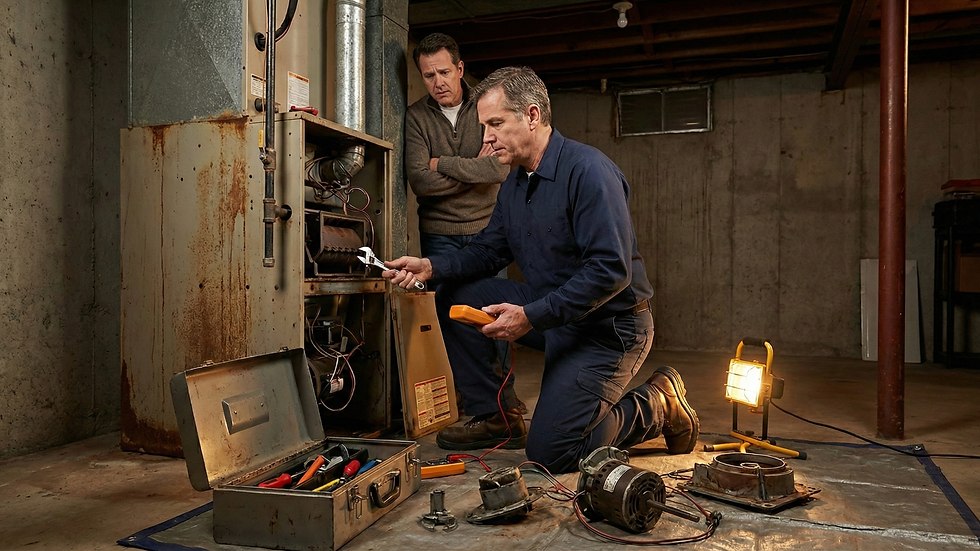
It’s normal for furnaces to need occasional maintenance, but if you’re scheduling multiple repair visits each winter, the expenses can snowball quickly.
Common aging furnace repairs include:
Blower motor replacements
Ignitor failures
Heat exchanger issues
Control board malfunctions
Gas valve problems
While each repair may seem manageable on its own, repeated service calls — especially emergency repairs during peak winter demand — can become costly. A commonly used guideline is the “50% rule”: if repair costs approach 50% of the price of a new system, replacement is typically the smarter investment.
Continuing to repair an aging furnace often delays the inevitable while draining your budget in the process.
Emergency Breakdowns at the Worst Time

Indiana winters are unpredictable. When temperatures drop below freezing, your furnace works its hardest — and that’s exactly when older systems are most likely to fail.
Emergency repairs typically come with higher service fees, and if parts are unavailable, you may be left without heat during extreme cold. Beyond discomfort, a total system failure can put your plumbing at risk of freezing and bursting, leading to expensive property damage.
When evaluating the cost of furnace replacement in Indianapolis, it’s important to factor in the financial and personal stress of an unexpected mid-winter breakdown.
Decreased Home Comfort
Older furnaces often struggle to maintain consistent indoor temperatures. You may notice:
Cold spots in certain rooms
Longer heating cycles
Excessively dry indoor air
Increased dust circulation
Declining blower performance and outdated technology can make your home less comfortable overall. New furnaces offer features like variable-speed motors and improved airflow control, delivering more even and efficient heating throughout the home.
While comfort may not have a direct dollar amount attached, it certainly affects your quality of life during long winter months.
Safety Concerns
As furnaces age, components such as the heat exchanger can crack or deteriorate. A damaged heat exchanger can potentially allow carbon monoxide to leak into your home — a serious safety hazard.
While annual inspections help reduce risk, older systems naturally face greater wear and tear. Replacing an outdated furnace can provide peace of mind along with improved performance and efficiency.
When weighing the cost of furnace replacement in Indianapolis, safety should always be part of the equation.
Reduced Home Value
If you’re planning to sell your home in the near future, an aging furnace can be a red flag to buyers. Home inspections often reveal older HVAC systems, and prospective buyers may request concessions or price reductions to offset anticipated replacement costs.
On the other hand, a newer high-efficiency furnace can be an attractive selling point. It signals lower future expenses and reliable performance — features today’s buyers appreciate.
Missed Energy Savings and Rebates
High-efficiency furnace models often qualify for manufacturer incentives, utility rebates, or seasonal promotions. By delaying replacement, homeowners may miss opportunities to offset part of the investment.
Additionally, newer systems are compatible with smart thermostats and advanced controls that optimize performance and further reduce operating costs.
When Does Replacement Make Sense?
While every situation is unique, furnace replacement often makes sense when:
The system is 15+ years old
Repairs are becoming frequent
Energy bills are steadily increasing
Major components are failing
Comfort levels are declining
Instead of viewing replacement as a large standalone expense, it’s helpful to compare it against the ongoing hidden costs of inefficiency, repairs, and risk.
The Bigger Picture
The cost of furnace replacement in Indianapolis varies depending on home size, system efficiency, and installation requirements. However, when you consider the cumulative expense of higher utility bills, frequent repairs, emergency service calls, and reduced comfort, holding onto an outdated furnace may be the more expensive choice over time.
Planning ahead allows you to choose the right system for your home, explore financing options, and schedule installation before winter demand peaks. Rather than reacting to a breakdown, you can make a proactive decision that improves efficiency, comfort, and long-term value.
In the end, replacing an aging furnace isn’t just about the upfront cost — it’s about protecting your home, your budget, and your peace of mind during Indianapolis winters.


Comments