
The Hidden ROI of Adding Welding to Your Home Workshop

Welding is much more than an industrial skill performed by workers. It can also be a rewarding hobby for homeowners and DIY enthusiasts, allowing them to create and repair a wide variety of products from the comfort of home. Investing in any new setup can be costly, but what if your workshop could start paying you back? Connect the initial investment and the financial and personal returns of welding to reap the rewards of your favorite pastime.

Calculating Your Return
Adding welding equipment to your home workshop can be costly, but the initial investment will pay off when you factor in the return on investment (ROI).
ROI From Repairs

You can perform various household and vehicle repairs in your home shop. For example, you can fix broken gates, repair lawnmower decks and mend exhaust brackets, saving hundreds per job compared to hiring professional services. Fixing broken or rusted metal fences can cost $150-$350, while automotive repairs can range from $100-$600.
ROI From Fabrication
Building items yourself instead of buying them will save you money and give you a sense of pride. You can create bespoke metal furniture, garden trellises and fire pits yourself. These products are expensive retail purchases, but they can also be costly if you hire someone else to weld them. For example, furniture fabrication can cost up to $1,500, while gate installation can go up to $750. DIYing is a huge money saver.
ROI From Side Income
Your welding hobby can do much more than save you money – it can also become a profitable side hustle. You can explore selling custom metal art online or offering small repair services to neighbors. Welders make an average of $24.52 per hour, so you can set your prices accordingly.
Finding Your Workshop’s Break-Even Point
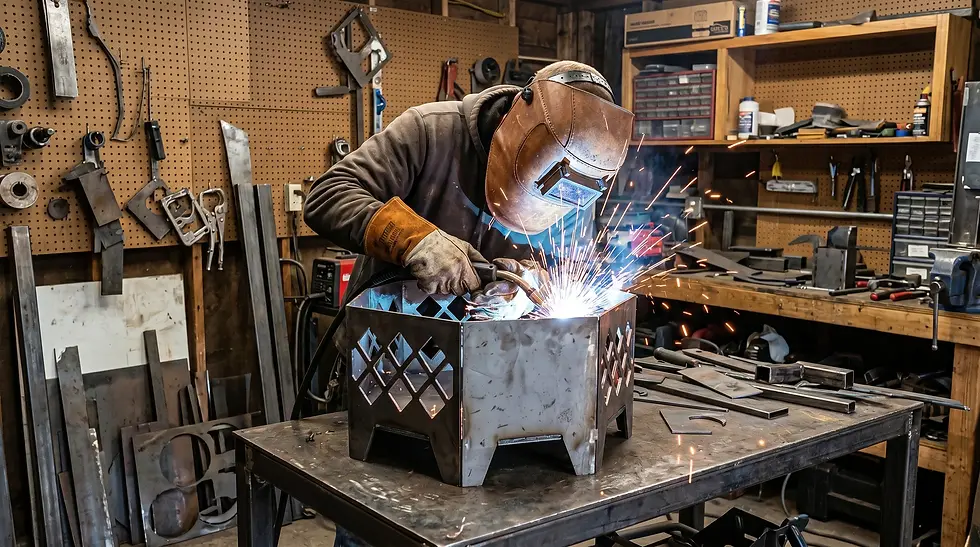
Your initial investment in a welding machine and materials will pay you back over time. Your tipping point can be calculated by the number of projects you complete and the money you either saved or earned in the process. It all depends on how much work you do and the prices you set.
Your Essential Safety Starter Kit
You must equip your home welding workshop with the necessary tools to complete your projects safely and efficiently. It’s especially vital to stock up on personal protective equipment before the first spark is ever struck. Outlaw Leather is a premier, go-to source for welders who value quality and safety. It offers American-made, handcrafted gear that provides professional-grade products for your home setup.
1. Gloves
The best welding gloves for professionals and hobbyists protect your hands from heat, sparks and spatter. Outlaw Leather offers a range of options, including tungsten inert gas, metal inert gas and stick welding gloves, in addition to leather welding gauntlets. Consider the Tig/Multi-Task 1540 or Revolution Welding Gloves in deerskin leather.
Key Features
Grip and finger control
Reduced fatigue during long sessions
Improved accuracy and precision
2. Hoods
Outlaw Leather’s welding hoods protect your eyes and face when welding. They are handcrafted for superior comfort and a custom fit. Choose from LeatherClick, pancake, square and classic hoods that can be customized for your specific needs. Try the Slimline Welding Hood in brown leather or the Pipeliner with a bandana top.
Key Features
Customizable hood
Premium materials like leather, carbon fiber and nylon
Combined style and function
3. Kneepads
Outlaw Leather’s kneepads are designed to protect your knees, support mobility and help you stay comfortable through long work sessions. Heat-resistant and leather options help you avoid strain and stay safe from flames and sparks. Consider the KneePro Ultra Flex III kneepads or the Heavy Duty kneepads with extra padding.
Key Features
Stability on rough or uneven ground
Confident movement into different positions
Longer hours with less discomfort
Beyond the Bottom Line

ROI can be measured in many ways. It’s great to save money by repairing or making things yourself, but you also enjoy the deep personal satisfaction that comes from building something with your own hands. Welding provides you with a practical, lifelong skill and the opportunity for creative expression – all priceless benefits.
Frequently Asked Questions About Home Welding
Here are some common questions you may have about setting up a home welding workshop.
What is the easiest type of welding for a beginner to learn?
Metal inert gas welding is often recommended for its relative ease of use and versatility on common projects. It is a popular choice for home shops because a good machine is affordable and can produce a wide variety of products with a minimal learning curve.
How much space is required for a welding setup?
Any well-ventilated, clear area will suffice for a hobbyist setup. Consider a garage or small backyard shed.
Is welding at home a safe activity?
There is always risk when welding, but it’s safe when proper precautions are taken. Invest in high-quality protective gear for working with high heat and metals.


Comments