
Lofted Barn Cabins: The Smarter Way to Maximize Your Shed Space
- DreamDen AI Editorial Team
- Feb 18
- 4 min read

Updated: Mar 25
If you’ve owned a shed for more than a year, you already know how this story goes.
You start with good intentions. The tools go on one side. The bins line the back wall. The mower sits neatly near the door. It looks organized.
Six months later, you’re stepping over things.
That’s not because you’re messy. It’s because most standard sheds only give you one dimension to work with: floor space. And floor space disappears fast.
That’s why lofted barn cabins are such a practical design. They solve the most common shed problem without requiring a larger footprint. Instead of just expanding outward, they expand upward.
And that one change makes the entire structure function differently.
If you want to see how that layout works visually, browse examples of lofted barn cabin sheds. The difference is obvious once you notice how the roofline creates usable overhead storage.
If you want to renovate your home , Contact our Experts.
The Real Advantage: Separation of Space

The loft in a barn-style cabin isn’t decorative. It’s strategic.
It creates two distinct zones:
A main floor for active use
An upper loft for long-term or seasonal storage
That separation prevents the “everything ends up on the floor” problem.
Instead of stacking bins along the walls until you can’t move, you move the rarely used items up and out of the way.
Holiday decorations? Loft.
Camping gear? Loft.
Backup supplies? Loft.
Now the floor stays open for what you actually need.
Why Vertical Space Feels Bigger Than Square Footage
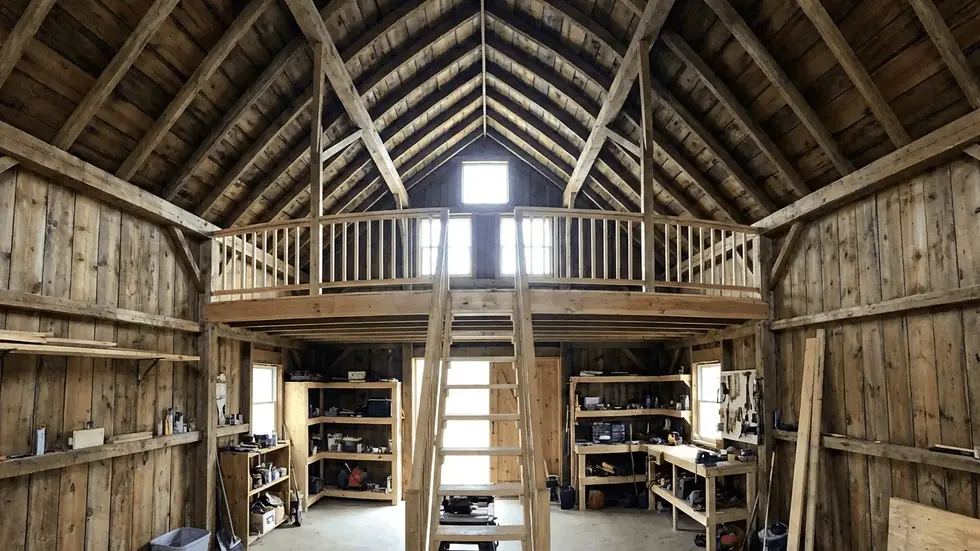
Here’s something people don’t expect: height changes how a room feels.
Even if the shed footprint is the same as a standard design, a lofted barn cabin usually feels larger. The roof pitch creates volume. That extra headroom reduces the boxed-in feeling that smaller sheds sometimes have.
And psychologically, open space matters. A shed that feels tight gets avoided. A shed that feels open gets used.
That’s an important difference.
Common Real-World Uses
Lofted barn cabins aren’t limited to one purpose. In fact, their flexibility is what makes them appealing.
Workshop + Storage
This is the most practical combination.
The loft holds overflow bins and materials. The main floor becomes a legitimate work area. You’re not shifting things around every time you want to use a bench or set up a project.
Hobby Room
If you paint, craft, build models, or restore equipment, you know how hard it is to maintain momentum when you have to clean everything up daily.
A loft keeps extra supplies overhead while your active workspace stays clear.
Organized Equipment Storage
Some households simply have a lot of gear. Lawn equipment. Sports equipment. Seasonal decorations. Patio furniture cushions.
A loft lets you rotate items seasonally instead of stacking them awkwardly.
Hybrid Office and Storage
Some homeowners use the main floor as a backyard office and keep long-term storage overhead. It works surprisingly well because the loft keeps clutter out of your line of sight.
Details That Matter More Than You Think

Not every lofted shed feels the same. A few structural details make the difference between “useful” and “annoying.”
Loft Depth
A shallow loft becomes wasted space. Make sure it’s deep enough to hold real bins and longer items comfortably.
Access
Ladder access is common, but think about how often you’ll climb up. If you’re using the loft regularly, accessibility matters.
Structural Support
Lofts add weight. The floor system and framing need to be strong enough to handle that load safely.
Ventilation
Heat rises. Without airflow, loft areas can trap heat and humidity. Even simple ventilation improves long-term comfort and material longevity.
The Mistake Most Buyers Make
The biggest mistake isn’t choosing a loft.
It’s choosing too small of a footprint and assuming the loft will fix everything.
Yes, the loft helps tremendously. But you still need usable main-floor space. Think through what will live on the ground level and how much room you’ll need to move around comfortably.
If you’re between sizes, slightly larger tends to age better.
Planning for Future Upgrades
Another reason lofted barn cabins hold value is flexibility.
Even if you’re buying for storage now, you might later want:
Insulation
Electrical wiring
Interior wall finishing
Better lighting
Shelving systems
The barn-style roof and open layout make these upgrades easier down the road.
You don’t have to do everything at once. You just need a structure that won’t limit you later.
Site Preparation Still Makes or Breaks the Experience
A shed is only as good as the base it sits on.
If the ground isn’t level or drainage isn’t handled properly, you can end up with:
Doors sticking
Floors feeling uneven
Moisture problems
Long-term structural stress
Before installation, confirm:
The base is level and compacted
Water drains away from the structure
Delivery access is clear
Placement makes sense for how you’ll use it
A little planning upfront saves frustration later.
Why Lofted Barn Cabins Age Better Than Standard Designs
Standard sheds often start strong and slowly become cluttered. Lofted designs resist that because they naturally encourage organization.
They also feel less temporary. The barn-style roofline gives the structure presence. It feels like a small building, not just a box in the yard.
That difference may seem subtle, but over time it matters.
Final Thoughts
Lofted barn cabins are one of the most practical shed designs available because they solve the real problem: limited usable space. By adding vertical storage, they keep the main floor clear. By increasing interior height, they make the structure feel more open and usable.
If you want a shed that still feels organized a year from now, not just on delivery day, a lofted barn design is a smart move. It’s efficient. It’s flexible. And it gives you more function without expanding your footprint.


Comments