
The Ultimate Guide to Bathroom Remodeling in Duluth, MN 2026 Edition

Updated: Jan 3
A bathroom remodel is one of the most significant investments a homeowner can make, often ranking just behind the kitchen in terms of return on investment and daily impact. But for residents of Duluth, Minnesota, a renovation project is about more than just resale value—it is about creating a fortress of comfort against the elements.
Living in the "Zenith City" means embracing a life defined by extremes. We have the majestic, cooling presence of Lake Superior, which can turn a sweltering July day into a breezy delight, but we also endure the infamous "Hawk" wind and winters where the thermometer plunges well below zero. Your home, and specifically your bathroom, must be built to withstand these rigorous conditions while providing a warm, welcoming retreat.
Whether you are restoring a 1910 Victorian in Congdon Park, updating a mid-century rambler in Woodland, or modernizing a bungalow in West Duluth, this guide is your roadmap. We will move beyond the surface-level aesthetics to explore the engineering, budgeting, and design philosophies necessary for a successful Northland renovation in 2026. This is not just about picking pretty tiles; it is about building a space that survives the freeze-thaw cycles and serves your family for decades.
Chapter 1: The Duluth Context – Why Place Matters
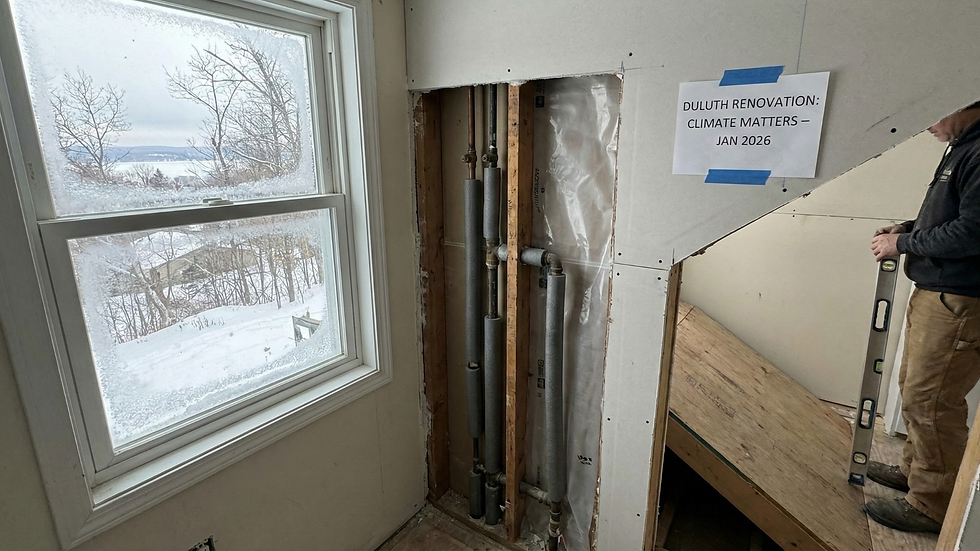
Renovating a bathroom in Duluth is fundamentally different from renovating one in Phoenix or even Minneapolis. The geography and climate of our city dictate specific building practices that, if ignored, can lead to catastrophic failure.
1. The Climate Factor: Freeze, Thaw, Repeat
The most critical factor in Duluth construction is temperature fluctuation. Our climate is classified as humid continental, but locals know it as "unpredictable."
The Exterior Wall Danger: In many older Duluth homes, plumbing lines were run through exterior walls. In 2026, we know better. If your renovation involves opening walls, moving plumbing lines out of exterior walls is a priority. If they must remain, high-grade insulation and pipe sleeves are non-negotiable to prevent bursting during those -30°F stretches in January.
Condensation Battles: When it is -10°F outside and you take a steamy shower, your windows and walls become condensation magnets. This moisture, if not managed, seeps into drywall and framing, causing "sweating walls" and eventual rot. High-performance windows and vapor barriers are not upgrades here; they are essentials.
2. The "Old House" Archetype
Duluth has one of the oldest and most beautiful housing stocks in Minnesota. While charming, these homes present unique challenges:
The "Hillside Shift": Many homes built on the steep grade of the hillside have settled over the last century. It is not uncommon to find floors that slope significantly—sometimes up to an inch over a few feet. A standard cosmetic remodel often turns into a leveling project to ensure your new tile doesn't crack and your vanity drawers don't slide open on their own.
Plaster vs. Drywall: Most pre-1950s homes in Duluth have lath-and-plaster walls. Demolishing these is heavier, dustier, and more expensive than removing drywall. However, plaster is also a superior sound insulator. Deciding whether to repair or replace is a key strategic decision.
3. The Humidity Paradox
Lake Superior acts as a massive humidifier. While our winters are dry, our summers can be surprisingly damp. Your bathroom materials must be able to expand and contract without failing. This is why we see a higher failure rate for solid wood floors in Duluth bathrooms compared to engineered products or stone.
Chapter 2: Understanding the Scope

Before you swing a hammer, you must define the mission. In the local market, projects generally fall into three distinct categories.
Level 1: The Cosmetic Refresh (The "Face-Lift")
Target Budget: $5,000 - $12,000
Best For: Homes built after 1990 or bathrooms where the plumbing/electrical is modern and the layout works.
Scope: This involves keeping the "footprint" exactly the same. You are swapping the toilet, vanity, and faucet. You might paint the walls and replace the mirror.
The Duluth Warning: Be careful of "lipstick on a pig." If you have a 1920s bathroom with original galvanized plumbing, putting a $2,000 vanity on top of it is risky. If that pipe bursts next winter, your new investment is ruined.
Level 2: The "Pull-and-Replace" Renovation
Target Budget: $15,000 - $30,000
Best For: Bathrooms with water damage, outdated tile, or "tired" surfaces, but a functional layout.
Scope: Everything goes down to the studs. You remove the old tub, the drywall/plaster, and the floor. You inspect the insulation and update the rough plumbing valves. Then, you rebuild with new tile, fixtures, and lighting.
The Sweet Spot: This is the most common project type in neighborhoods like Lakeside and Hunter's Park. It fixes the hidden issues without the massive cost of structural changes.
Level 3: The Structural Overhaul (The "Dream Spa")
Target Budget: $40,000 - $75,000+
Best For: Creating a Master Suite, expanding into a closet/bedroom, or aging-in-place modifications.
Scope: Moving walls, relocating the toilet stack (which requires jackhammering concrete in basements), expanding windows, and high-end finishes.
Regulatory Note: This level always requires a full suite of permits from the City of Duluth Construction Services.
Chapter 3: Navigating Permits and Regulations

One of the most intimidating parts of a remodel is dealing with the city. However, Duluth's Construction Services & Inspections department is there to ensure safety, not just to collect fees.
Do I Need a Permit?
In Duluth, the rule of thumb is: If you are opening a wall or changing a system, you need a permit.
No Permit Needed: Painting, changing the toilet (if not moving it), replacing the faucet, installing new flooring (if subfloor is untouched).
Permit Required: Drywall replacement (fire code check), new tub installation, moving any plumbing, adding outlets, or moving walls.
The "Big Three" Permits
Building Permit: Covers the structure, insulation, and general safety.
Plumbing Permit: Required for the shower valve, drain movement, and new lines.
Crucial: In older Duluth homes, inspectors will check if you are connecting new PVC to old cast iron correctly.
Electrical Permit: Handled by the State of Minnesota, but verified locally. All outlets in bathrooms must be GFCI protected.
The Inspection Timeline
Do not close your walls until you pass the "Rough-In" inspection. The inspector needs to see the pipes and wires before you hide them behind tile. If you skip this, they can legally make you tear out your brand-new tile to prove the work was done correctly.
Chapter 4: The 2026 Design Forecast

As we look toward 2026, bathroom design in the Midwest is shifting. The sterile, all-white "hospital look" is out. We are embracing warmth, texture, and "Organic Modernism."
1. The Lake Superior Palette
Local designers are leaning heavily into colors that reflect our environment.
Stormy Blues: Deep, slate blues that mimic the lake on a cloudy day are popular for vanity cabinets.
Pine & Moss: Soft, muted greens are replacing grey as the neutral of choice.
Sand & Stone: Warm beiges, creams, and "greige" (grey-beige) are back, providing a cozy backdrop that feels warmer in winter than stark white.
2. The Rise of "Japandi"
A blend of Japanese rustic minimalism and Scandinavian functionality. This style resonates in Minnesota due to our Nordic heritage. Think:
Slatted wood details (using humidity-resistant Teak or White Oak).
Matte black fixtures against warm wood.
Clean lines with zero clutter.
3. Biophilic Design (Nature Indoors)
Because our winters are long and white, we crave life inside. 2026 bathrooms feature:
Skylights: Adding natural light in windowless bathrooms.
Plant Shelves: Dedicated spots for high-humidity plants like ferns.
Natural Stone: Unpolished, honed marble or limestone that feels organic to the touch.
4. Smart Wellness Technology
The bathroom is becoming a health lab.
Smart Toilets: Bidets are standard now. Heated seats are a life-changer in a Duluth January.
Digital Showers: Preset the temperature to exactly 102°F before you get out of bed.
Chromatherapy: Showers with integrated lighting systems to boost mood during the dark winter months.
Chapter 5: Material Selection – The Durability Test

In Duluth, durability is not a luxury; it is a requirement. Here is a breakdown of what survives the Northland.
Flooring: The Foundation
Winner: Porcelain Tile. It is virtually indestructible, waterproof, and doesn't expand/contract with humidity. Look for "Color Body" porcelain, where the color goes all the way through, so chips don't show.
Runner Up: Luxury Vinyl Tile (LVT). It is warmer to the touch than ceramic and 100% waterproof. It is also more flexible, making it a great choice for older homes with slightly uneven floors.
Avoid: Solid Hardwood. The humidity swings in Duluth will cause cupping and warping in a bathroom setting.
The "Must-Have": Radiant Floor Heating. Electric mats (like Schluter-DITRA-HEAT) installed under the tile are efficient and affordable. They dry the floor quickly (reducing mold risk) and add immense comfort.
Vanities: The Workhorse
Material: Avoid "Particle Board" or "MDF" if possible. In a humid bathroom, these materials swell and peel over time. Plywood or solid wood construction is essential for longevity.
Countertops:
Quartz: The king of bathrooms. It is non-porous (no sealing needed), resists stains, and handles hot curling irons.
Granite: Still a solid choice, but requires yearly sealing.
Marble: Beautiful but high maintenance. It etches easily from acidic products (like some face washes).
The Plumbing: What’s Behind the Wall
PEX vs. Copper: In 2026, PEX (cross-linked polyethylene) is the standard for remodels. It expands slightly if it freezes (reducing burst risk) and doesn't corrode like copper.
The Cast Iron Question: If your home was built before 1970, your drain stack is likely cast iron. These pipes rust from the inside out. A full remodel is the only time to replace this efficiently with PVC. If you ignore a rusting stack, you may be tearing out your new bathroom in 5 years to fix a leak.
Chapter 6: The Remodeling Lifecycle

Understanding the sequence of events helps manage the stress of living in a construction zone.
Phase 1: Demolition & Discovery (Days 1-3)
Dust Control: This is critical. Contractors should seal the bathroom with plastic zippers and use negative air pressure fans to blow dust outside, not into your bedroom.
The "Surprise" Moment: This is when we find the rotting subfloor by the toilet or the electrical junction box buried in the wall. A 10-15% contingency fund is for this exact moment.
Phase 2: Rough-In (Days 4-8)
Framing: Straightening walls. If you want large format tile, the walls must be perfectly flat.
Mechanicals: The plumber moves the drain for your new shower; the electrician runs the wire for your heated floors and new sconces.
Blocking: Don't forget to add wood blocking between studs for grab bars (future-proofing) and heavy towel hooks.
Phase 3: The Waterproofing (Days 9-11)
This is the most important step. Tile is not waterproof; grout is not waterproof. The layer behind the tile matters.
Old School: Cement board with taped seams.
New Standard: Integrated foam board systems (like Wedi or Schluter-Kerdi). These are 100% waterproof and vapor-proof, essential for preventing mold in our climate.
Phase 4: The Finishes (Days 12-20)
Tiling: The slow art. Layout is key—avoiding "slivers" of tile at the edges.
Grouting: Epoxy grout is more expensive but stain-resistant and never needs sealing. Highly recommended for shower floors.
Paint: Use a specifically formulated "Bath & Spa" paint that contains mildewcides.
Phase 5: The Final Polish (Days 21-25)
Setting the vanity, installing the toilet, hanging mirrors, and the final caulk lines.
The Caulk Rule: Wherever tile meets a different plane (corners, floor, tub), use 100% silicone caulk, not grout. Grout will crack as the house shifts; silicone stretches.
Chapter 7: Budgeting for the Northland

How much does a bathroom remodel cost in Duluth in 2026?
The "Average" Duluth Bathroom (5x8 ft)
DIY / Cosmetic: $5,000 - $8,000
Mid-Range Pro Remodel: $18,000 - $28,000
Includes: Demolition, new plumbing rough-in, porcelain tile, standard vanity, decent fixtures.
High-End / Master Bath: $45,000 - $70,000+
Includes: Layout changes, custom cabinetry, natural stone, steam shower, high-end electrics.
Where the Money Goes
Labor (45%): Skilled tradespeople in Duluth are in high demand. You are paying for their expertise and licensure.
Materials (40%): Tile, fixtures, vanity, lumber.
Overhead & Fees (15%): Dumpsters, permits, design fees.
Ways to Save Without cutting Quality
Keep the Layout: Moving a toilet 3 feet requires jackhammering concrete and re-venting the stack. Keeping it in place saves $2,000+.
Standard Sizes: A custom 57-inch vanity costs double a standard 60-inch vanity. Design your room around stock sizes.
Mix & Match: Spend money on the shower valve (hard to replace) and save on the mirror or towel bars (easy to swap later).
Chapter 8: Vetting Your Team

Finding a contractor in Duluth can be competitive. The good ones are often booked 4-6 months out.
Questions to Ask
"Are you licensed in Duluth specifically?" Duluth has specific requirements beyond the state license.
"How do you handle waterproofing?" If they say "we just tile over drywall," run. You want to hear about waterproofing membranes or cement board.
"Who pulls the permits?" The contractor should always pull the permit. If they ask you to pull it as a homeowner, they are shifting the liability to you.
"Can I see a current project?" Photos are great, but visiting a dusty job site tells you if they keep a clean, safe workspace.
Conclusion: Investing in Your Home's Future

Remodeling a bathroom in Duluth is a journey that balances the rugged reality of our environment with the desire for modern luxury. It is about acknowledging that the wind will howl off the lake and the frost will heave the ground, but inside your home, your sanctuary remains warm, dry, and beautiful.
By understanding the unique "Duluth factors"—from the necessity of high-CFM ventilation to the wisdom of heated floors—you are not just renovating; you are upgrading your quality of life. Whether you are preserving the heritage of a 100-year-old home or creating a modern spa, proper planning and skilled execution are your best tools.
As you embark on this project, remember that the best bathroom is one that makes you forget the temperature outside. It is a space where the layout is intuitive, the materials are resilient, and the design brings a piece of the North Shore’s natural beauty indoors. Your dream bathroom awaits—built to last, right here in the Zenith City.


Comments