
Is Your Kitchen Work Triangle Outdated?

You’re standing at the stove, someone opens the fridge behind you, and another person reaches for the sink. That small but frustrating traffic jam isn’t random it’s a design issue. For decades, kitchens have been built around the “work triangle,” a concept developed in the 1940s to connect the sink, stove, and refrigerator efficiently. While it worked perfectly in the past, modern kitchens have evolved far beyond that simple setup.

Today’s kitchens are no longer just cooking spaces. They function as social hubs, workspaces, and gathering areas. Families cook together, guests gather around islands, and daily life flows through the kitchen. This shift makes one thing clear: a design rule created nearly a century ago may no longer fit how we live today.
What Is the Kitchen Work Triangle?

The kitchen work triangle is based on a simple idea connecting the sink, stove, and refrigerator in a way that reduces movement. The goal was to make cooking faster and more efficient by keeping everything within a short distance.
Why It Worked in the Past
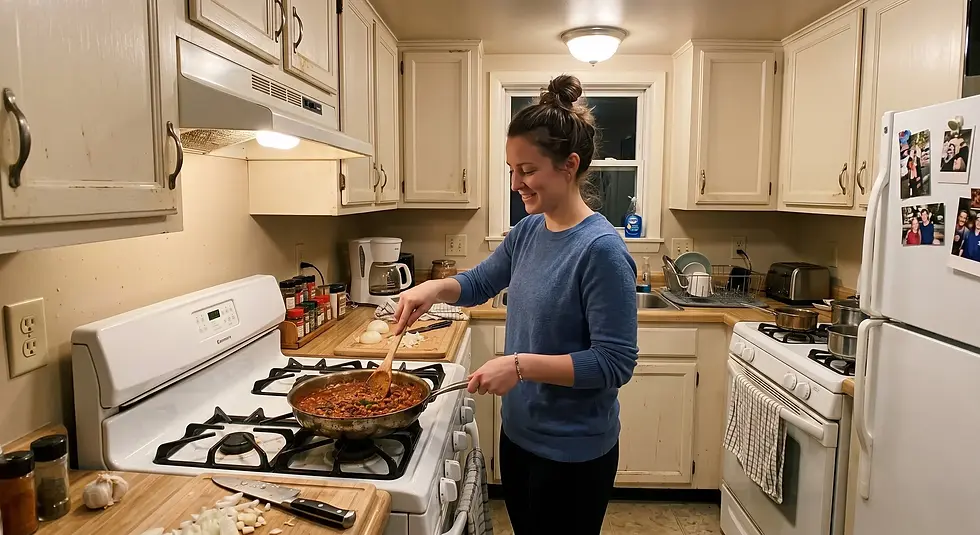
In earlier decades, kitchens were small, enclosed, and typically used by one person. The triangle created a compact workflow where everything was within reach. With fewer appliances and no open layouts, this system was highly practical and effective for its time.
Why the Kitchen Work Triangle No Longer Works
The issue with the triangle isn’t that it’s wrong it’s that kitchens have changed dramatically. Modern lifestyles demand flexibility, and the triangle struggles to keep up.
Open-Plan Layouts Disrupt the Flow

Modern kitchens are often part of open floor plans that connect to living and dining areas. While this creates a more spacious and inviting environment, it also introduces constant foot traffic. People move through the kitchen to reach other parts of the home, interrupting the workflow and turning the triangle into a busy pathway rather than an efficient system.
Multiple People Use the Kitchen

Today’s kitchens are shared spaces. Couples cook together, children help out, and guests gather nearby. The triangle was designed for a single user, so when multiple people try to use the same three at once, it leads to congestion and inefficiency.
Modern Kitchens Have More Appliances

The triangle only accounts for three points, but modern kitchens include many more. Appliances like microwaves, ovens, dishwashers, and coffee machines are now essential. Kitchen islands often add even more functionality, making the triangle too limited to represent the full workflow.
The “Spectator Problem”

Modern kitchens are not just for cooking they are also social spaces. People who are not actively cooking still use the kitchen for activities like making coffee, working, or simply spending time together. The triangle treats these individuals as obstacles, but in reality, they are an integral part of the space.
What Replaced the Kitchen Work Triangle?
As kitchens evolved, designers shifted toward a more flexible approach known as the work zone method. Instead of focusing on distances between appliances, this method organizes the kitchen based on activities.
Understanding Kitchen Work Zones

Work zones divide the kitchen into areas dedicated to specific tasks, such as food storage, preparation, cooking, cleaning, and social interaction. Each zone is designed to support a particular activity, making the space more functional and intuitive.
Why Work Zones Are More Effective
This approach allows multiple people to use the kitchen at the same time without interfering with each other. One person can prepare ingredients while another cooks and someone else cleans, all without crossing paths. By grouping tools and supplies based on tasks, movement becomes more efficient and the kitchen feels more organized.
How Kitchen Islands Changed Everything
Kitchen islands have become a central feature in modern homes, but they also highlight the limitations of the triangle model.
The Fourth Point Problem
An island often serves as a prep area, cooking station, or social hub. This introduces a fourth major point in the kitchen, which the triangle cannot accommodate. As a result, the traditional layout breaks down and becomes less effective.
Why Zones Handle This Better
Work zones easily adapt to additional activity points. Whether your kitchen has three, four, or more functional areas, zones allow each one to operate independently, maintaining efficiency and flow.
How to Transition to a Zone-Based Kitchen

Switching to a zone-based layout does not always require a full renovation. Small changes can significantly improve how your kitchen functions.
Observe Your Current Workflow
Start by paying attention to how you move through your kitchen. Identify areas where congestion occurs or where tasks feel inefficient. This will help you understand what needs improvement.
Organize by Activity
Instead of grouping items by type, organize them based on tasks. For example, keep all preparation tools in one place and create a dedicated area for coffee or beverages. This reduces unnecessary movement and makes everyday tasks easier.
Define Functional Spaces
Assign specific purposes to different areas of your kitchen. Designate spaces for preparation, cooking, and social interaction. Even without changing the layout, this can create a more structured and efficient environment.
Start with Small Changes
You don’t need to move appliances or invest in major upgrades. Rearranging storage, decluttering, and creating small stations can make a noticeable difference in how your kitchen feels and functions.
Does the Work Triangle Still Have a Place?
The kitchen work triangle is not completely obsolete. It can still be useful in smaller kitchens or in homes where only one person typically cooks. In these cases, its simplicity can provide an efficient layout.
However, for larger kitchens, open layouts, and multi-user households, it is no longer sufficient on its own.
Final Thoughts: Design Your Kitchen for Modern Living
The kitchen work triangle was created for a different era one where kitchens were smaller, simpler, and used differently. Today’s kitchens need to support a wide range of activities, from cooking and dining to working and socializing.
This is why the focus has shifted from optimizing movement to enhancing the overall experience. Work zones offer a more flexible and realistic approach that aligns with modern lifestyles.
In the end, the triangle is not wrong it is simply outdated for most homes today. By embracing a zone-based approach, you can create a kitchen that is more efficient, more functional, and better suited to how you actually live.
Your kitchen should not follow a rule from the past. It should be designed around your present.


Comments