
Design Ideas for Small Patios: Turn Limited Space into a Stylish Outdoor Escape
- DreamDen AI Editorial Team
- Apr 8
- 4 min read

A small patio doesn’t limit your design potential it refines it. When space is compact, every choice becomes more intentional, and that’s exactly what leads to better design. Instead of trying to fit everything in, the focus shifts to creating a space that feels comfortable, functional, and visually balanced.

With the right approach, even the smallest patio can become a place where you unwind, entertain, or simply enjoy a quiet moment outdoors. It’s not about size it’s about how well the space works for you.
Why Small Patios Can Feel More Stylish Than Large Ones

Smaller patios naturally encourage better design decisions. Because there’s less room to work with, every element has to earn its place. This often results in spaces that feel more curated and cohesive compared to larger patios that can sometimes feel scattered or underutilized.
A compact patio also creates a sense of intimacy. Whether it’s a morning coffee setup or an evening relaxation spot, the scale of the space makes it feel more personal and inviting. When lighting, furniture, and textures are aligned, the patio becomes less of an outdoor leftover and more of a purposeful extension of your home.
Design Ideas for Small Patios That Actually Work
Built-In Seating That Saves Space

Built-in seating is one of the smartest ways to maximize a small patio. Instead of using multiple chairs that take up space and disrupt flow, a fixed bench along a wall or corner creates a clean and efficient layout. It provides ample seating while keeping the area open and uncluttered.
When paired with cushions and soft textiles, built-in seating doesn’t just save space it adds comfort and style at the same time.
Vertical Gardens That Bring Life to Tight Spaces

In small patios, floor space is limited, but vertical space is often underused. Adding a vertical garden or wall-mounted planters allows you to introduce greenery without crowding the area. Plants soften the space, improve the atmosphere, and make the patio feel more connected to nature.
Even a simple arrangement of hanging pots or a small green wall can transform the entire look and feel of your outdoor space.
Foldable Furniture for Flexibility

Flexibility is key when designing a small patio. Foldable or stackable furniture allows you to adapt the space based on your needs. You can open up the area when entertaining or keep it minimal for everyday use.
This kind of furniture ensures that your patio never feels cramped, giving you control over how the space functions at different times.
Define the Space with Rugs and Lighting

A small patio can feel more structured when different elements are visually defined. Outdoor rugs help anchor the seating area, while lighting adds warmth and depth. String lights, lanterns, or soft wall lighting can instantly create a cozy atmosphere, especially in the evening.
These details may seem small, but they play a major role in making the patio feel complete and inviting.
Minimalist Design That Keeps It Open
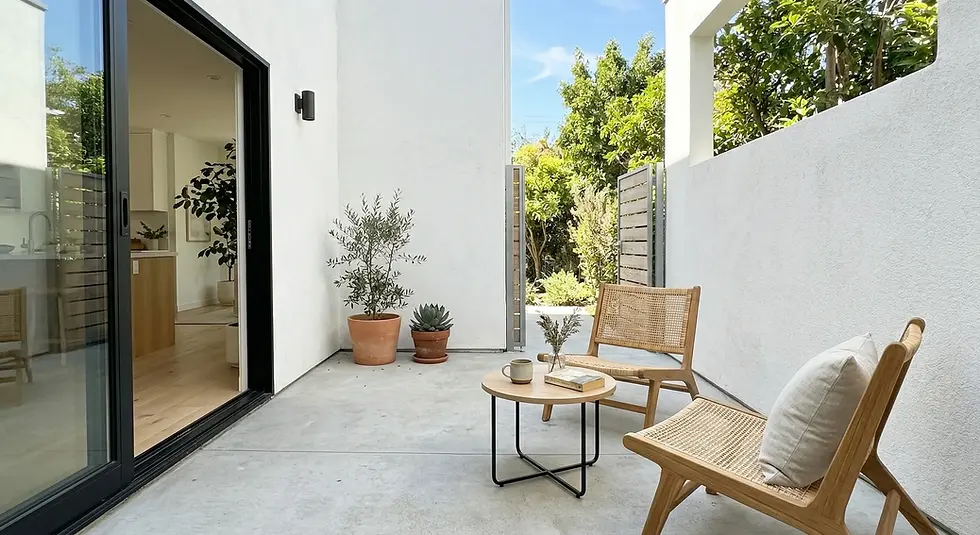
When working with limited space, less is often more. A minimalist approach focuses on fewer, well-chosen pieces that allow the patio to breathe. Clean lines, neutral tones, and simple layouts make the space feel larger and more open.
Instead of overwhelming the area with décor, this approach highlights quality over quantity, resulting in a calm and balanced outdoor environment.
Corner Layouts That Maximize Every Inch
Corners are often underutilized in small patios, but they offer valuable space when used correctly. An L-shaped seating arrangement or a corner bench can free up the center area, improving movement and flow.
This layout makes the patio feel more organized and spacious, even when the square footage is limited.
Multi-Functional Features That Do More

In a small patio, every element should serve more than one purpose whenever possible. A bench with storage, a table that doubles as a planter, or seating that includes hidden compartments can make a big difference.
These features help reduce clutter while increasing usability, allowing the patio to remain clean, practical, and visually appealing.
Designing for Comfort, Not Just Looks

A beautiful patio should also feel comfortable. Soft cushions, supportive seating, and thoughtful layout choices can turn a small patio into a place where you actually want to spend time. The goal is to create a space that feels natural and easy to use, not just visually pleasing.
Comfort is what transforms a patio from a decorative corner into a lived-in extension of your home.
Common Mistakes That Make Small Patios Feel Smaller

One of the most common mistakes is overcrowding the space with too much furniture or décor. This not only reduces functionality but also makes the patio feel tight and uncomfortable. Another issue is ignoring layout, which can disrupt movement and make the space feel disorganized.
Choosing oversized furniture or mixing too many styles can also break the visual flow. In small patios, simplicity and consistency are what create a sense of openness and balance.
Plan Before You Design
Designing a small patio without a clear plan often leads to trial and error. Because space is limited, even small mistakes can have a noticeable impact.
Using tools like DreamDen AI allows you to visualize different layouts, furniture options, and styles before making any decisions. This helps you create a design that fits perfectly, saving both time and effort.
Final Thoughts
The best design ideas for small patios are not about adding more they’re about designing smarter. When each element is chosen with purpose, even the smallest patio can feel stylish, functional, and complete.
A well-designed small patio doesn’t feel limited. It feels intentional, comfortable, and uniquely yours.


Comments