
Why Organic Materials in Interior Design Matter More Than Decorative Objects

Updated: Apr 3
Organic materials in interior design such as wood, stone, clay, cotton, linen, and bamboo do more than decorate a room. They influence sustainability, indoor air quality, comfort, and the long-term value of a home. Unlike decorative objects that may go out of fashion quickly, materials define how a space feels and performs over time.
In simple terms, decorative objects add visual interest, but materials shape everyday living.
This article explores why organic materials matter more than decorative objects, especially for homeowners seeking sustainable, healthy, and timeless living spaces.
What Are Organic Materials in Interior and Home Design?
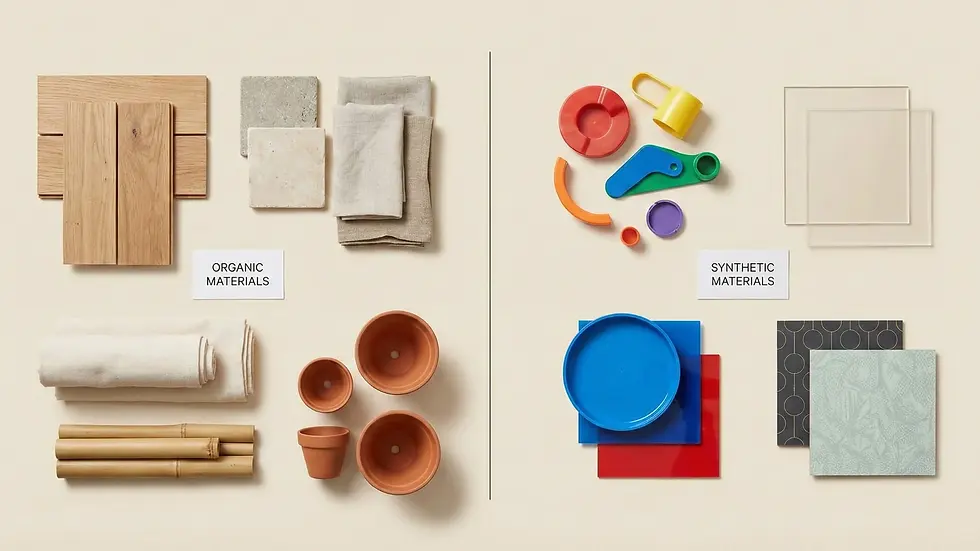
In interior and architectural design, organic materials refer to materials that originate from nature and are minimally processed before use. They are often renewable, biodegradable, or environmentally responsible when sourced correctly.
Common examples include:
Clay and terracotta
Bamboo
Cork
Cotton and linen fabrics
Wool
Jute and natural fibers
These materials contrast with many decorative or synthetic alternatives such as plastics, acrylics, engineered laminates, or chemically treated surfaces designed primarily for visual effect.
Material Quality vs Decorative Add-ons
Decorative objects include items such as:
Artificial sculptures
Plastic décor pieces
Synthetic wall accents
Trend-based accessories
While décor can enhance personality, it usually doesn’t improve how a home performs or ages. Materials, on the other hand, directly influence durability, comfort, and sustainability. It is often better to focus on using texture instead of decor to create visual interest.
Comparison Table: Organic vs Synthetic Materials
Feature | Organic Materials | Synthetic Materials |
Source | Natural or renewable | Petroleum-based or chemically processed |
Environmental Impact | Often lower when responsibly sourced | Often energy-intensive and polluting |
Aging Process | Ages naturally and gracefully | Often deteriorates or looks outdated |
Indoor Air Quality | Typically safer with low emissions | May release chemicals or odors |
End-of-Life Impact | Often biodegradable or recyclable | Frequently non-biodegradable |
Choosing organic materials shifts focus from short-term appearance to long-term value.
Environmental Benefits of Organic Materials

One major reason organic materials matter is their potential environmental advantage over synthetic alternatives.
Lower Environmental Footprint
Natural materials generally require less chemical processing compared to many synthetic materials, which are often petroleum-derived and energy-intensive to produce. Responsible sourcing and local procurement can further reduce environmental impact.
Renewable Resources
Materials like bamboo, cork, and responsibly harvested timber are renewable resources when managed sustainably. Fast-growing materials replenish more quickly than non-renewable resources used in synthetic manufacturing.
Reduced Waste Impact
Homes designed with durable natural materials tend to undergo fewer renovations and replacements. This reduces construction waste, one of the largest contributors to landfill globally.
Biodegradability
Many natural materials decompose safely at the end of their lifecycle, unlike plastics or composites that persist for decades or centuries.
Reduced Pollution Risks
Some synthetic materials involve chemical processes that can release pollutants during production or disposal. Natural materials often require fewer chemical treatments, particularly when left unfinished or treated with natural oils.
Importance of Sustainable Sourcing
Not all natural materials are automatically sustainable. Responsible sourcing certifications and ethical forestry practices ensure materials are harvested without damaging ecosystems.
Sustainability is not just about material type but also about how materials are sourced and used.
Health & Well-Being Benefits Inside Homes

Homes should support well-being, not just aesthetics. Material choices significantly influence how indoor environments affect occupants.
Indoor Air Quality
Certain synthetic materials and finishes may release volatile organic compounds (VOCs), which can impact indoor air quality. Natural materials and low-emission finishes can help reduce exposure to harmful chemicals.
Reduced Chemical Exposure
Untreated or minimally treated natural materials often require fewer chemical coatings compared to synthetic alternatives.
Psychological Comfort
Humans tend to respond positively to natural textures and environments. Spaces that incorporate natural elements often feel warmer and more calming than highly artificial interiors.
Biophilic Design Benefits
Biophilic design principles emphasize connections to nature within built environments. Research in environmental psychology suggests natural elements can support relaxation, comfort, and improved mood..
Comfort and Sensory Experience
Natural materials engage senses beyond sight:
Wood feels warm to touch
Linen breathes better in warm climates
Stone adds cooling properties
Natural textures reduce sterile feeling spaces
These subtle experiences significantly shape how comfortable a home feels.
Organic Materials Create Authentic Aesthetic Value

Decor trends change quickly, but natural materials tend to remain timeless.
Natural Texture Appeal
Earthy interiors rely on natural materials that carry unique grain, patterns, and imperfections that cannot be perfectly replicated. These variations make spaces feel authentic.
Aging Beautifully
Unlike synthetic surfaces that often show wear poorly, many natural materials develop character with time:
Wood develops patina
Leather softens
Stone gains subtle texture
Clay surfaces mature gracefully
Emotional Connection
People often form emotional connections to materials that feel genuine and enduring. A solid wood dining table or stone countertop becomes part of family life rather than disposable décor.
Timeless vs Trend-Based Decor
Decorative trends come and go—colors, shapes, styles change rapidly. Materials form the foundation of a space, making them less vulnerable to trend cycles.
Long-Term Value and Durability

Short-term décor purchases often lead to repeated replacements. Organic materials typically offer longer service life.
Longevity vs Fast Replacement
A well-built wooden floor or stone surface can last decades, whereas cheaper decorative materials may require replacement within years.
Cost-Per-Use Advantage
Although natural materials may cost more initially, their lifespan often lowers long-term cost.
Reduced Waste
Fewer replacements mean less waste generated over time.
Investment Value
Quality materials can increase perceived home value, appealing to future buyers seeking durable and sustainable living spaces.
Real-Life Examples & Design Trends

Modern design movements increasingly emphasize material authenticity.
Homes Dominated by Organic Materials
Many contemporary homes now feature:
Wood flooring
Stone or clay finishes
Natural fiber textiles
Exposed natural textures
These spaces feel warmer and more inviting.
Scandinavian and Japanese Influence
Scandinavian and Japanese design traditions focus on simplicity, nature, and functionality. Materials like wood, paper, and stone play central roles.
Sustainable Design Trends
Current design trends favor:
Minimalism
Sustainable sourcing
Natural light
Neutral palettes using organic materials
Designers Promoting Material-Focused Interiors
Many contemporary architects and designers emphasize craftsmanship and material honesty, prioritizing quality over excessive decoration.
Practical Guide — Choosing Organic Materials Over Decor

Homeowners don’t need complete renovations to start prioritizing materials.
How to Evaluate Materials
Ask:
Is this material durable?
Is it responsibly sourced?
Will it age well?
Does it improve comfort or only appearance?
Look for Responsible Certifications
Common considerations include:
Sustainable forestry sourcing
Low-emission finishes
Ethical production practices
Budget-Friendly Material Swaps
Home improvement ideas on a budget can help you make small changes:
Linen curtains instead of synthetic
Solid wood furniture over particleboard
Natural fiber rugs over plastic-based ones
Ceramic or clay décor over plastic items
Buyer Checklist Before Purchasing Decor
Ask:
Does this item improve comfort or just appearance?
Will it last long?
Is it made from sustainable materials?
Will I still want this in five years?
Often, investing in materials offers more lasting value than adding decorative items.
Conclusion

Decorative objects add personality, but materials define how a home truly functions and feels. Organic materials matter more than decorative objects because they support sustainability, comfort, health, and long-term durability.
Homes designed with thoughtful material choices age better, create healthier environments, and reduce environmental impact. Rather than chasing trends, focusing on natural materials builds timeless spaces aligned with responsible living.
FAQ Section
Are organic materials expensive?
They can have higher upfront costs, but their durability often makes them more economical over time.
Are decorative objects bad?
Not necessarily. Decorative objects can enhance personality, but relying solely on decoration without improving material quality may lead to short-term results.
What materials are best for sustainable homes?
Responsibly sourced wood, bamboo, natural stone, clay, cork, and natural fiber textiles are commonly preferred.
How do natural materials improve indoor health?
They may reduce chemical exposure and create psychologically comfortable environments through natural textures.
Can organic materials still look modern?
Yes. Modern interiors frequently combine minimal design with natural materials for contemporary yet warm spaces.


Comments